
A practical framework for leaders who want clarity and performance Timeless leadership principles that scale…
Be Who You Came to Be | Tara Renze
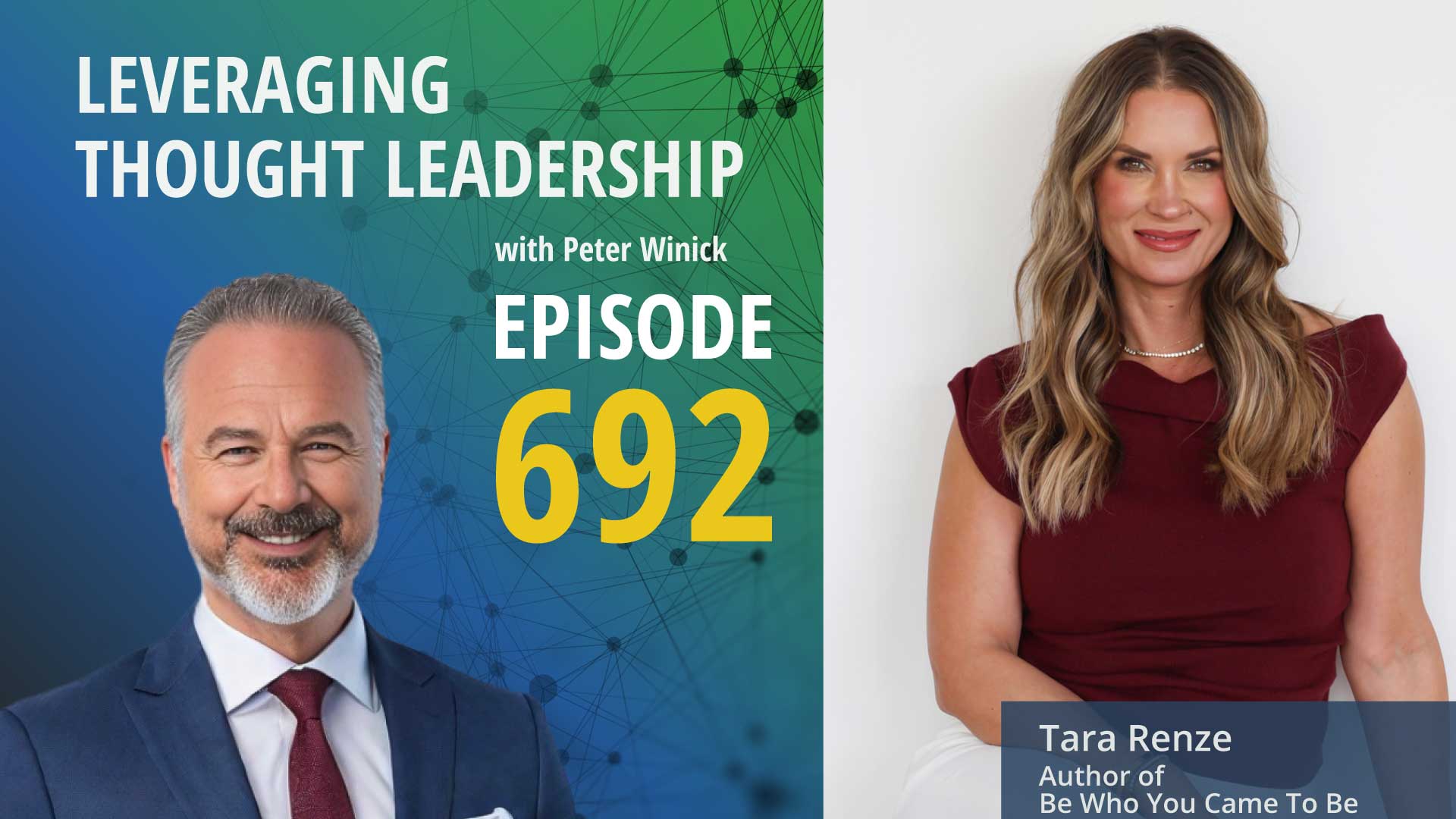



How Emotional Intelligence Drives Culture, Performance, and Belonging
This episode looks at how emotional intelligence and transformational goals can boost performance, strengthen culture, and improve retention—turning inspiration into real action at work.
What happens when a keynote doesn’t just inspire your people…but actually changes how they show up at work and at home?
In this episode, Peter Winick sits down with Tara Renze—author, keynote speaker, podcaster, and an emotional intelligence + positive intelligence practitioner —whose message is as simple as it is disruptive: “Be who you came to be.”
This conversation is about more than motivation. It’s about the business case for human growth. Tara breaks down how emotional intelligence, self- awareness, and confidence aren’t “soft skills”—they’re performance drivers. The kind that shapes culture, fuel innovation, and boost retention because people feel seen, valued, and supported.
Peter pushes into a real thought leadership challenge: you don’t just serve the audience in the seats—you have to serve the economic buyer who funds the initiative. Tara shares how she positions her work, so it lands with both. The individual walks away with a mindset shift they can use immediately. The organization gets stronger talent, better leadership, and a healthier culture.
Then Tara introduces one of her sharpest ideas: Butterfly Goals. Not the usual SMART goals. Not productivity targets. These are transformational, identity- level goals that reignite creativity and personal ownership. And here’s the kicker—companies benefit when employees pursue them, because it strengthens connection, belonging, and momentum across teams.
You’ll also hear how Tara designs her keynote to be actionable, not just energizing. Tools. Simple shifts. Real-world application. Plus, follow-through resources like a downloadable workbook and ongoing “Terrace Tuesday” tips—so the message sticks after the applause.
If your thought leadership lives at the intersection of performance, people, and purpose—this one will hit. Because “be who you came to be” isn’t a slogan. It’s a strategy for better humans and better business.
Three Key Takeaways:
- Stop chasing better habits. Start building a better identity. The biggest breakthroughs don’t come from doing more—they come from becoming someone who leads, performs, and decides differently.
- Confidence isn’t a trait. It’s a skill you can train. When you build emotional intelligence and self-awareness, you create repeatable tools people can use under pressure, not just in perfect conditions.
- Culture improves fastest when people bring their whole selves to work. When individuals feel safe to grow and contribute authentically, teams get stronger engagement, better collaboration, and results that actually stick.
If this episode sparked ideas around emotional intelligence, confidence, and creating real culture change—not just a great moment in the room—your next listen should be the Melissa Davies episode. It’s a practical follow-on that goes deeper into how leadership development actually sticks inside organizations, and how to turn insight into consistent behavior change. Queue episode 317 up next and keep the momentum going.
Transcript
Peter Winick And welcome, welcome, welcome, this is Peter Winick. I’m the founder and CEO at Thought Leadership Leverage, and you’re joining us on the podcast today, which is Leveraging Thought Leadership. Today my guest is Tara Renze. She is an author, a keynoter, an emotional intelligence and positive intelligence practitioner, a podcaster, a thought leader, and then she throws in her bio wife and mother, which I don’t know if those should be the lead or, well, Hux. The lead, probably the lead. Depends on the day, right, so.
Tara Renze Exactly anyway, welcome aboard. How are you today? Tara? Hey, thanks so much for having me out. I’m actually having an incredible week
Peter Winick That’s good, given that it’s Thursday, it’s not Monday morning, so that’s it.
Tara Renze See now, I was out walking my dogs this morning and I was like, oh, it is Thursday, for sure I thought it was Wednesday, but that’s when you know you’re being productive when time is a fly in.
Peter Winick So let me ask you one of my favorite questions because I get to do that. How did this happen? How did you get here? What was the grand master plan that in third grade you decided this is exactly where you want to be right now?
Tara Renze In third grade, I was like, I’m definitely going to be a keynote speaker someday. And, uh, no, you know, it wasn’t, it was in my cards, although if I look back at my life, I feel like everything I’ve done got me to where I am today. So interestingly enough, I actually went to college on a theater and voice scholarship. So I was always into performance. I was a musician. I was the singer. I was, um, into theatrical productions.
Peter Winick You were you one of those like little annoying theater kids? Well, maybe they’re not so that like in the living room with you a lot.
Tara Renze I was that kid, you know, I mean, I literally was and my whole family is very musically oriented so we do all kinds of performances around here. It’s not uncommon to break into song and dance, although our children are complete athletes and I’m like, I don’t know what happened to the musical ability and how it didn’t pass on to them, but so I did that and then I worked in the corporate world. I actually switched my major in college and I went into communication studies and I worked sales and sales leadership for almost two decades that I did in a couple different capacities. And it was during that time that my grandmother wrote this note to my son with her life’s advice. She was 87 years old and she wrote this beautiful little letter to him the week that he was born. He was the first grandchild. And in her beautiful little wobbly black ink, she said, be who you came to be. Love will guide you. And that really ignited a mission in me as a new mother to say, hey, I want to raise these kids, my two boys, to be who they came to be. Not who I wanted them to be, or the world wanted them to be or their dad wanted them be, but really help them figure out who they are. And along the way, I kind of started thinking about that message in terms of my life and the permission to grow and change it of all. This idea that we never arrive, like being who we came to is a lifelong assignment. And then I started sharing the message and people loved it so much that I made it my life’s work back in 2018, which got me back onto the stage again.
Peter Winick So it is, it is kind of a. Now you’re basically, it actually all makes sense because you’re on the stage, but working for corporate, right? Cause they’re paying the bills to get you on the stage and talking about, but talking about your stuff. So it kind of, I always say it’s like, what, you know, what is the, the ingredients of the unique smoothie that is you, right. So it’s
Tara Renze It is.
Peter Winick Makes total sense.
Tara Renze You know, I think it’s why we just always have to trust the path and to just follow what’s the most fulfilling things in our lives and what we’re doing, giving ourselves the permission to change. But when we look back, like, it all connects and aligns. I actually have this saying in life, like it not working out always works out. And I think so many times in our life, when something doesn’t work out or something changes and it feels so hard, we think, oh my gosh, what am I going to ever do? And really, it was just that, you know. Divot, a new direction that we needed to continue actually on the path that was meant for us.
Peter Winick No, and I think there’s this, um, false sense of comfort or security or call it what you will, that everything’s linear, right? If I do this for two years, I’ll get the promotion to do that. If I did this and then save up money and buy you like there’s things happen and then whatever, but then it’s all of a sudden, the, the unexpected that get thrown at, you know, you lose a job or a relationship falls apart, whatever it is that, Whoa, that wasn’t in my, that, that wasn’t the plans that are really the things that help you get to where you’re supposed to be or currently are and figured out how to be. So tell me a little bit about the current business model. So who, who’s paying you to do? Why who’s bringing you in to say, ah, she’s the perfect match for this.
Tara Renze Yeah. Well, when I first started speaking, I spoke predominantly to women, to female audiences. And I, you know, so much of the message in my heart was for working women as a working mom, you now caring for my elderly mother, and just all the things that women go through. And, I feel like so often, women really do lose themselves once they start the family and the career and they’re putting everything before themselves. So, You know, the message originally was written to women. My book actually is written to woman. And then something interesting happened, which was the pandemic, which kind of changed the landscape of business in general. And I think especially how employers thought about their human capital, their, you know, the people that worked for them, their talent. And suddenly the message of being who we came to be really helping other people with their growth as much as their output. Became so important and relevant in the workforce that my message caught a lot of traction to other industries. And even though I said I spoke to women, like it wasn’t like my message was only made sense for women. And it wasn’t even, I didn’t even speak to them as like, you know, girl to girl. It was still a message for the math, but it was tailored to that original audience. And so now I think different types of audiences.
Peter Winick Stay there for a minute because I’ve seen this path before and it’s seems logical, but there are some unintentional consequences from that. So a woman that’s got a woman’s experience, like you do, right? Hey, I’ll speak to women’s group because they’re like me and they can relate to me on my mom, like whatever. And it makes sense. But the, sometimes the problem with that is the first door that you walk through in a company sets the tone. For how they perceive you and what’s next. So if you come in, again, my two cents for what it’s worth from my experience, if you came in through the women’s initiative group or the LGBT group or the Asian left-hander, whatever it is, then there’s a perception of, oh, that’s one of those things, right? And right now, unfortunately, that stops out of favor, but there isn’t anything that your work does or that you talk about that isn’t really or shouldn’t really be at the main table, Which is, okay, this is. A business issue, right, where we’re raising kids, we’re struggling, sandwich generation, et cetera. Yes, maybe women are taking more burden than this, but how does this impact employee retention, customer satisfaction, our creativity, our growth as a company? And I think if that’s your first touch point with a company, it gives you a better position to get to the next step. Does that? 100%.
Tara Renze And, you know, I was fortunate and I, you know, it was fearful. Like, gosh, what if I get pigeonholed as a female-only speaker? And I do think that, you know, it’s kind of, it’s tricky as a public speaker, though, because I do believe that to get, to get traction early on, the narrower the focus, the easier it is to find the right audience for your message, versus being like, my message is for everyone. And so I do think as much as the pandemic sucked, it was fortunate for me because it gave me this time to rework the message, to have it work for other audiences. And again, there was such a need there for like, hey, we not only wanna make our people more productive and better at the job and drive more revenue, but ultimately right now we want them to know that we care about them as human beings. We wanna help them with their emotional intelligence, their self-regard, their self-awareness. We really want to pour into them as individuals. Knowing that that’s what will fuel the output the innovation the culture of the creativity, you know the belonging within an organization
Peter Winick stay there for a minute. So I talk about this a lot with clients and many agree and some don’t and that’s okay. That you really have to serve two masters as a speaker and more generally as a thought leader. One is the user, the butt in the seat at the conference, right? A part of the. The guy or gal sitting there shaking their head and leaning in and going, yeah, I get that. Right. Um, that makes sense. That was a great keynote. Thank you. Thank you, I resonates with me. I could relate. I could think about that. Cool. But then there’s the economic buyer, right? Which may or may not be in the room. And even if they are in the. They have a different set of expectations. What they’re saying is, Hey, we’re gonna pay you this chunk of money. We’re going to give you this time. That’s really valuable of a hundred, 500, a thousand of our people. And as a result of that. That lines up to an initiative that we have, something that we’ve got going on, it’s gonna help us grow, it’s going to help us be more innovative, more creative, serve our clients better, whatever. What’s the language that you speak to the economic buyer? Because I think it’s pretty obvious to the end user, this is going to be a great session, show up. How do you make your case to the economic buyer of…
Tara Renze Yeah.
Peter Winick Some people put this in the soft squishy bucket, which it’s not.
Tara Renze It is, you know, it was interesting. I think when I first heard out, it was this fear of like, is this message soft, which I hate that word, but it is yeah, like, you know, there was a time where a keynote speaker was there to, again, increase sales drive revenue, or they had some, you know, they had, they were CEO of a company, they had done something epic. And that was kind of the baseline for like, what they would bring in. I, you know, obviously as an emotional intelligence practitioner, I know and I believe that the majority of our success in life is not about how smart we are, but it’s about our emotional intelligence, how we choose to show up and how we make other people feel. So you know this be who you came to be message, it has been a really interesting journey to navigate because obviously the end, the end user of the message is the individual sitting in the audience. But guess who, who pays me to speak, the, the corporations, the associations Right now in that
Peter Winick That’s my point is you don’t get the choice of during today’s keynote, which group am I going to make happy? The answer is.
Tara Renze Well, and it is true because and I do you know, it’s been a really interesting journey of the positioning of the message Which as you know is so important of you know It’s going to make your people better individuals. It’s gonna elevate their self-regard their confidence Their ability to self-assess and understand what they’re doing take control of their success which in turn Ultimately fuels everything within an organization, you know your old people are saying we’re only as good as our people but If your people have low self-regard, no confidence, are not creative, are not taking care of themselves, everything else falls short. And so it goes back to this notion of like, when we work on ourselves, everything else gets better. And I don’t think that anyone could ever think of a time in their life where they said, hey, I’m gonna actually start investing in me, in my personal achievement, my creativity, goals that I want. When we do that, guess what happens? We show up better at work, we have more patience, We’re more creative. We have more confidence. Um, we’re more tenacious, we are more forgiving for other people. And so it’s this idea that when people show up as their best, they’re, and they’re emotionally intelligent enough to understand that they’re not their thoughts, their thoughts are data. I get to choose how I show up. It’s kind of, it’s, you know, it the, it is the fuel for everything else that can happen within an organization.
Peter Winick Two reactions to that. First is my perspective, my experience is that great content, great thought leadership is the thought leadership where somebody reads your stuff, listens to you on a podcast, sees you speak or whatever, and they go home and that night at the dinner table with their partner and kids or whoever, they say, wow, I saw this person, let me do it, like they had some really cool thoughts, right? Now, people practicing Six Sigma… Don’t come home, one would hope, and say, Hey honey, I figured out how we’re going to optimize the productivity of our relationship by removing the waste. And here’s how we are going to do this in a Six Sigma way. Not really something you’d say over a candle at dinner and dim lights, a nice bottle of Cabernet, one with hope, right? But when you could, it just feels like you don’t even have to tell people. You know, feel free to use this after five o’clock as well. So do you get a lot of feedback to like, Oh my God, here’s what I did at the dinner table or whatever?
Tara Renze Yeah, I you know the message be who you came to be it’s it’s very simple Yeah But it’s Very profound and thought-provoking interestingly enough when I went to have that trademarks because I knew I was like this is I knew I had something I thought oh my god This is just going to be insane to try to get this trademark No one in the history of the world has ever tried to trademark It has said be who came to me a lot of times people say be you or be yourself or You know be who your
Peter Winick Didn’t the army have be all that you can be wasn’t that the army at one point?
Tara Renze It with the Navy, yeah, we’ll jingle with that, um, but be who you came to be. It’s an entirely different way to think about who you are and what are you doing with your time on earth as a human being. And so there is so much resonance to taking the message, whether it’s back to the office, but more than likely taking it back to the home and saying, Hey, I heard the speaker, she said, be who came to. And then they start thinking about, I mean, people have told me like we, this has become our North Star in our entire household. We use it with our children, I use it with my spouse. It’s so empowering, it’s memorable. And I think most of all, it is just very relatable to every single person in the audience. It is this notion that we’re all ordinary, but we can have an extraordinary life and an extraordinary impact on other people. And so It is interesting, you know, back off.
Peter Winick Because you’re inherently asking, what’s the gap between what you’re capable of and where you are and everybody’s got a gap. It could be a millimeter or it could be a mile and getting people realize, listen, my days here are numbered or limited. And I got to close that gap, right, because I don’t have forever.
Tara Renze Well, I think most of all, we have this notion that we should have arrived. We get a lot of advice in our life about do this and achieve this and try this all up until like our 20s. And then we start putting all our eggs in the career basket and the family basket, which are great baskets. But we start forgetting that as the individual, we are the biggest part of the equation and we’re actually the magic to everything working. And so, be who you came to be is this notion that you never arrive. You’re always a work in progress, there’s always a chance for an up level. And so it gives people this permission to never feel like, which so many of us do, like once I achieve, I think you were saying this earlier, once I achieved this, then I’m gonna have a success. Once this happens or I make this amount of money, where instead it’s like, this is a lifelong assignment. And I love the word assignment because it’s something that we have to think about, we have focus on, it’s required of us, you know, to really make it important. So, yeah, I mean, who knew that, you know, two decades ago when my grandmother wrote this note that it not only would change my life, but now it’s changed, you know, thousands and thousands of lives.
Peter Winick Across the globe.
Tara Renze Baby inherited that.
Peter Winick I think the next time like when you write notes to your grandchildren one day just put the little TR mark on the napkin So they know yeah, kick up some granny if this becomes a thing Oh, yeah, which leads me to my next question actually so now you get them riled up on state, right? They’ve read the book they see on stage. Their eyes are lit up. They’re leaning in you could read their body language and such What if any other? Tools offering solutions do you have for them because This is where I think sort of keynoting sort of hits a wall sometimes. Right. If you sort of lead me somewhere and like, wow, I read your book, see in the room, feeling all your ass. Now what? Yeah. Uh, now, right. Exactly. Where’s that? Yeah. It’s just like.
Tara Renze The keynote itself is full of actionable transformational tools, mindset shifts, and hacks that the audience can start implementing immediately. I always say nothing I talk about is rocket science. Again, it’s very relatable, very easy to implement. In addition, there is a downloadable Be Who You Came To Be workbook at the end. They get my Tara’s Tuesday tips, but ultimately, the whole keynote is this experience of taking the audience member from understanding it to seeing how they can create this. How they can own who they are, and then how do they live it? And this is where the action items come and this is were the fuel really starts happening and the message continues to go is because I challenge the audience members to live it by igniting what I call butterfly goals, which is I invented this butterfly goal because we’ve always had the smart goals and the career goals, but the butterfly goals are this, it’s like the transformation that occurs. If the caterpillar does become the butterfly. And again, it goes back to this, like, we never arrive. And so many times we think, oh, I’m just a caterpillar. And we stop believing that we could be more or do more. And all these simple, creative, personal goals that we’ve had for ourselves, we just let them go. We think I’m too old, it’s too late, there’s no time. And so I challenge the audience to ignite what I call these butterfly goals, which are these transformational personal goals that then, again, start fueling our creativity, authenticity, and allowing us to be who we came to be. So. Mine was, you know, one of mine, of many, was to get on a game show. It was just like, I grew up in the 80s. It was my childhood dream to get on a games show. I’ve lived in Kansas my whole life. So the shot of getting on a game show is very difficult when they don’t film any game shows in Kansas. And so, you now, when I was in my 40s, I’m like, I’m gonna get on the damn game show, and so sure enough, I mean, I got cast on ABC’s 100,000 Hour Period. They ended up flying me to New York. It was a long story on how I got cast, but I did. And then I got on the game show and… I had an epic failure that I just turned the setback into a comeback and ended up winning a decent amount of money on this game show. I share that story. I share the story of like the guy who said, hey, what I really, my transformational butterfly goal is I want to grow a tomato garden. I’ve always wanted to grow tomatoes. I’ve never been able to figure it out. He went and grew the tomatoes and it, you know, the joy of growing tomatoes figured out and then sharing the tomatoes and you know making salsas and you know pots of sauces and all things. There’s the people who, there’s a gal right now who her butterfly goal she messaged me and she said, I loved your keynote so much. She’s like, I have already contacted the city of Cincinnati and I’m trying to figure out how I can get my mural on a wall. Like I’m artists, I’ve always wanted to do this. Very cool. I want to learn how to do a handstand. It’s just, it’s so interesting. And people, it gives them the permission to reignite these fun personal goals that then fuel. What I really.
Peter Winick I think most when you think about your smart goals or what’s the balance of my 401k account going to be when I’m 35 or 40 or whatever, but like, there’s nowhere where they tell you and make a goal to do a handstand by the time, you know, by Tuesday, like, but it’s fun, right?
Tara Renze It’s fun.
Peter Winick And quirky and, and not everything has to have a, be on the balance sheet. And, you know, we’re wires. Listen, there’s so much that we do that is KPI driven and profit driven and all that, which is great, but it’s like, huh, I don’t know how to make marmalade like that can be kind of fun.
Tara Renze Yeah. And the reason these are important for companies, because I think so many times companies are like, well, why do I care if my, you know, my CEO can do a handstand or, you know, My new sales rep can grow a tomato garden. It goes back into the caring about their growth. And it’s not just these transactional things, these transformational things. You know, the guy who grew the tomato said one of the biggest joys was bringing those tomatoes in because they had gone through one of my workshops where everyone was sharing their You know, they’re butterfly, one guy ran a marathon and the whole company showed up with team shirts and they were cheering them on. The guy who grew the tomatoes, he said, the best part was taking the tomatoes into the office. And everyone was so excited for me, which then created the culture of belonging and camaraderie and creativity. And then it gave someone else the permission to be like, I’m just gonna learn how to do a handstand. And now they bring in, like, they post all their pictures of doing a hand stand in front of monuments and on vacations and like, on a stage.
Peter Winick Of the day or their brand and their person.
Tara Renze And it just fuels this creativity, this innovation, this sense of belonging, and ultimately people saying like, gosh, my company really cares about me.
Peter Winick And you realize that your colleagues cheer you on just not just for completing that PowerPoint or the financial report that’s part of your job description, but they’re cheering you on for you, right? Right.
Tara Renze Yeah.
Peter Winick Well, this has been a lot of fun. I appreciate.
Tara Renze Well Peter, no, I gotta know, what’s your butterfly goal?
Peter Winick Yeah, that’s a good question. Well, I’ll give you sort of a left hand.
Tara Renze You know. You know!
Peter Winick So there’s, there’s I was talking to somebody about this the other day. There’s two types of people, right? One, one person has the to do list, right. And then they’re checking things off all day. And then the other person gets something done and then they put it on the to-do list just for the satisfaction of scratching it off. Right. So it depends on the day. I don’t know what my butterfly goal is, right
Tara Renze You do. You do! You know it. You’re like, God, I couldn’t say it on the show. Okay, I have one. Actually, I’ll try. Actually, maybe it may be.
Peter Winick Maybe it’s this one, maybe it’s not. I have sworn for over 15 years that I’ll never write a book. Guess what? I’m a dope and, well, maybe I’m not a dope, or maybe I am. I’ve got a book coming out in Q1.
Tara Renze I love it. Beautiful butterfly goal. That’s as I mean, one of my best butterfly goals was writing that book. I mean talk about a transformation and a personal I mean it’s all behind the scenes and her work of writing a book and then you get to put it out there and then it’s even more fun. You know, you get reviews and I hope that you get a one star review. I have great reviews. I did get a once a review.
Peter Winick I hope your book bonds too, thank you.
Tara Renze You get that, you get the, you know, I’ve got all these great reviews. It’s a great story though. She gave me this review once. She said, I put it in the Goodwill pile immediately. And I was like, oh gosh, the Good Will pile. Anyway, months go by and I get this message from this gal and she said, I found your book today. It spoke to me on a day. I was losing my heart and I was, like, well, where did you find it? You know where? And she said at Goodwill. And it was that moment of like find your raving fans the book will be for the right people and change their lives and that’s the beauty of being who we came to be as we Find the people who love us for us who want us to win who want to cheer us on and those shared values and We are so
Peter Winick and go buy those chip coffee mugs and tattered books at Goodwill. There’s a good thing there. Thanks.
Tara Renze Exactly. You never know what you’re going to find there. The funniest thing, Peter, she said, I found it at Goodwill. I go there to find things that speak to me. It was an Instagram message back and forth. She hit send, and then she goes, I hope that location isn’t disheartening. And I was like, well, it’s actually not because now it’s…
Peter Winick Exactly. Well, this has been great. I appreciate your time and I wish you the best. Thank you. Thanks, Tara.
Tara Renze Thanks for having me on the show.
Peter Winick To learn more about Thought Leadership Leverage, please visit our website at thoughtleadershipleverage.com. To reach me directly, feel free to email me at peter at thoughtledershipleverage.com, and please subscribe to Leveraging Thought Leadership on iTunes or your favorite podcast app to get your weekly episode automatically.

Related Posts
Comments (0)