
Building Thought Leadership That Lasts | Martha Lawrence
The Leveraging Thought Leadership podcast is created by Peter Winick and Bill Sherman and produced by Thought Leadership Leverage.
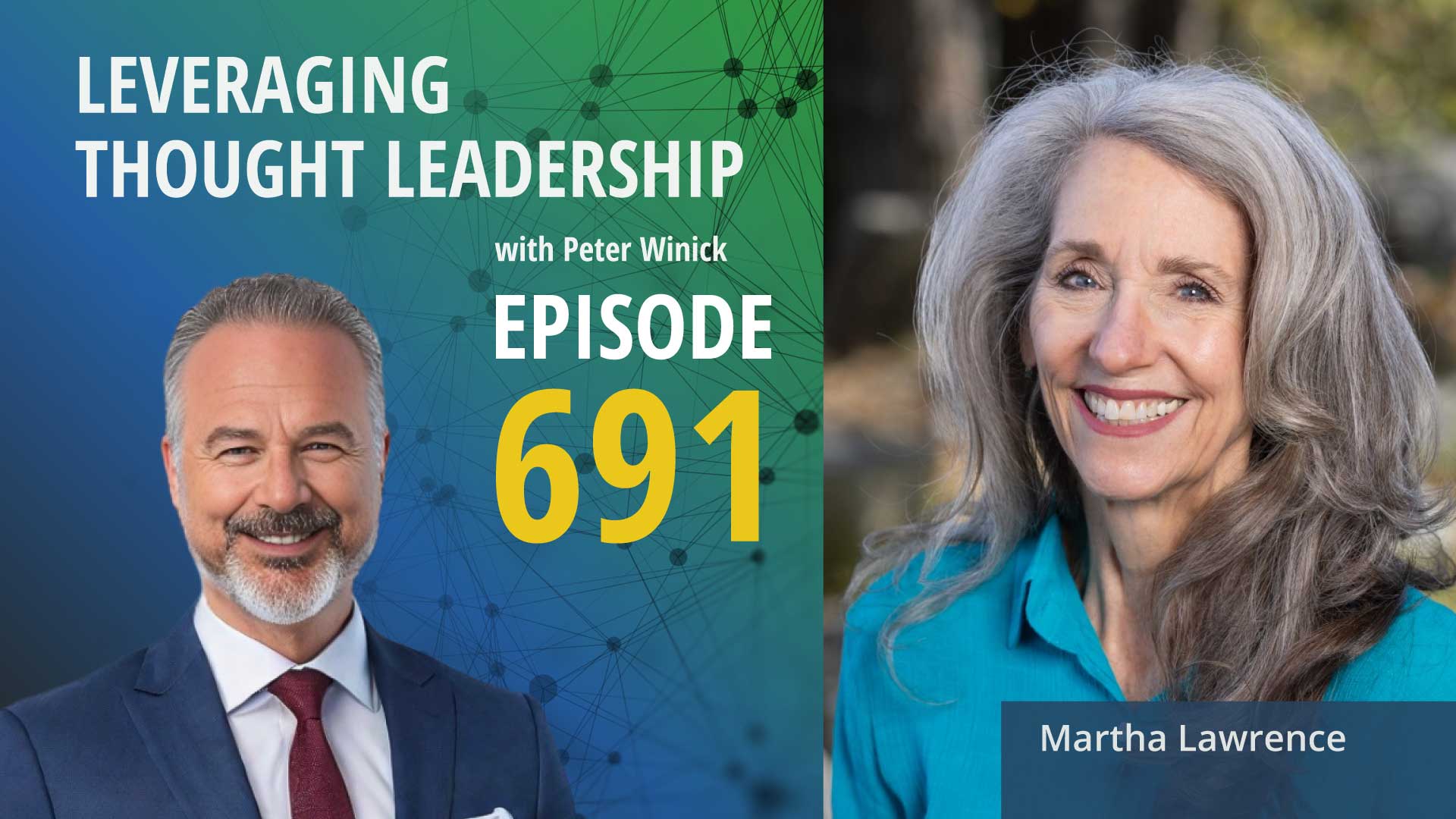



A practical framework for leaders who want clarity and performance
Timeless leadership principles that scale. Servant leadership that drives performance. Building a thought leadership platform that lasts beyond one person. Turning a book into a business engine. Adapting to modern publishing and media to keep ideas relevant and monetizable.
What does it look like when a leadership legend actually lives the principles he teaches?
In this episode, Peter Winick sits down with Martha Lawrence, author of the new biography “Catch People Doing Things Right”, and longtime collaborator with Ken Blanchard—the leadership icon behind “The One Minute Manager”. Martha offers a rare behind-the-scenes view of how Blanchard’s ideas became timeless, scalable, and globally adoptable.
This is not a “how he got started” story. It’s a masterclass in thought leadership that works in the real world. Martha breaks down why Ken’s approach—simple, human, and relentlessly practical—still wins in today’s noisy, distracted, algorithm-driven world. The message holds because it’s built on what never changes: people.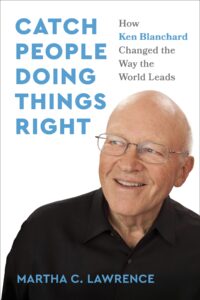
Peter and Martha go deep on what has shifted in publishing and platform-building over the last 40 years. Fewer gatekeepers. More fragmentation. Less time. More pressure on authors to act like CEOs. Podcasting replaces book tours. Brand clarity beats broad exposure. And the book isn’t the business—it’s the business card for a larger value ecosystem.
They also explore what separates a “famous author” from a durable thought leadership enterprise. The Blanchard organization didn’t just depend on Ken as the rock star. It scaled the IP, built culture around it, and created a leadership brand that outlives any single personality. That’s rare. And it’s instructive.
If you care about creating a thought leadership platform that drives real business outcomes—without losing the humanity—this conversation will give you both strategy and signal. It’s a reminder that servant leadership isn’t soft. It’s scalable. And it’s still a competitive advantage.
Three Key Takeaways:
- Simple wins when it’s built on real principles. Ken Blanchard’s genius wasn’t complexity—it was accessibility. The One Minute Manager style made leadership ideas easy to absorb, apply, and share. That “human” voice is now the playbook for today’s biggest thought leaders.
- The message is timeless because leadership is still about people. Even with everything changing—technology, AI, publishing—the core truth remains: performance comes from people. The episode reinforces Blanchard’s central idea that people matter as much as results, and that the best leadership is servant leadership: serve, don’t be served.
- The strongest thought leadership platforms scale beyond the thought leader. Blanchard wasn’t built around a “rock star founder.” It was built around IP, culture, and systems—so the work lasts even when Ken isn’t in the room. That’s how you move from “guru business” to a durable enterprise.
If today’s conversation with Martha Lawrence resonated—especially the idea that simple leadership principles can scale, stick, and drive results—you’ll want to go straight to our episode with Ken Blanchard.
It’s the “source code” behind the philosophy. You’ll hear Ken unpack what servant leadership really looks like, why it works, and how to build a leadership approach that people actually adopt. No theory. No fluff. Just practical, proven leadership you can use immediately.
Listen to the Ken Blanchard episode next and connect the dots between the story Martha shared and the thinking that built a global leadership platform.
Transcript
Peter Winick And welcome, welcome, Welcome. This is Peter Winick. I’m the founder and CEO at Thought Leadership Leverage. And you’re joining us on the podcast today, which is Leveraging Thought Leadership, today, my guest is Martha Lawrence. She’s got a new book that has just been released. She is a former editor at Simon and Schuster, and she’s been the executive editor at Blanchard and has collaborated with Ken Blanchart for more than 20 years on many, many books, but the book that she’s doing No. As I can see on the video here, looks like she’s the author, right? I see her name and it’s called Catch People Doing Things Right. So first tell us about this book and then I wanna go down memory lane a little bit with you, Martha.
Martha Lawrence Okay, sounds great. Well, thanks for having me on, Peter. I love the Leveraging Thought Leadership podcast. You’ve got a lot of great stuff. I think you’re one of the smartest guys around. You know books.
Peter Winick Yeah. Well, we could end now, just to starve a coldly-heated ego. Thank you.
Martha Lawrence I’ve been in publishing since the early 80s and you know, you are really on top of what’s happening in publishing right now. So it’s really fun to be with you. So about this book, yes, I have worked with Ken Blanchard who, does your audience know who Ken Blanchard is? Should I go into that a bit?
Peter Winick If they don’t, then shame on them.
Martha Lawrence Well, he’s, as the American Management Association said, he is one of the foremost leadership authorities of the century. You know, he has just really influenced so many people and we can talk about that more. But I decided to write this book after working with him for so long because not only is he an amazing human being who’s published 70 books and started a global leadership organization and really change the way that people think about leadership. But he actually walks the talk. He is the guy who does the stuff he teaches. So there’s so many biographies today about people who are innovative, but they’re not necessarily great role models, you know? Maybe they’re kind of, you now, not great.
Peter Winick Somewhere between psychotic and narcissistic.
Martha Lawrence Yeah, exactly.
Peter Winick There aren’t a lot of books about nice guys that are really just good people maybe they’re boring reads, I don’t know
Martha Lawrence Well, that’s the thing. And you know, when this book first hit the publisher, it was like nobody’s this nice. And I used to write mystery novels, so it’s like no conflict, no interest, right? And so I really had to dig down with my editor, well, what is Ken Blanchard’s dark side? And they say your greatest strength is your greatest weakness. The dark side is too nice, not enough boundaries, you know. He would he would be penniless if it weren’t for the people around him because he gives everything away He literally gives away tens of thousands of dollars to people who need it just because out of the goodness of this heart So that that’s actually a dark side, but we can get into that later
Peter Winick We should all have such a dark side. Yeah, right. So I wanna, so now let’s go back in time. So you are, you’ve been in the publishing space forever. You’ve written a bunch of books. Give me just a sense of, and obviously being inside of Blanchard and an executive editor and the relationship with Bear Collar BK, the publisher, tell me what’s different now than writing a book you might have written, say 20 years ago, in terms of what’s the same and what’s difference?
Martha Lawrence Oh, well, what’s really different? We can go, we can go back 40 years. Let’s go back, 40 years to, you know, the One Minute Manager, which Ken is probably most famous for co-authoring the One-Minute Manager. When that book came out.
Peter Winick That’s probably sold, what, 20-plus million copies or-
Martha Lawrence Exactly. 20 plus million copies around the world. But when that came out in 1982, the media landscape was so different. I mean, there were these six major publishers, right? And when you hit the New York Times bestseller list back in 1982. Which it did. And it stayed there for three years. Everybody knew about that book because it wasn’t a fractured media landscape. I mean he was on Good Morning America.
Peter Winick Stay there for a minute. So back in the day, when you hit the list, right? Right. It stayed for three years, not all books. Right now, if you do the data, it’s like 1.7 weeks. And then the question is why? Because everybody’s trying to jump the algorithm and buy their way on the list and blah, blah, and I think, you know, the reality is that was a great book and there was a marketing engine and a PR engine behind it and it stuck. People read it and they said, Oh my, I gotta buy 10 of these for my team. And we weren’t, I don’t think we were using viral then in 1982. Not at all. Right. But there was this organic virality that you would tell a good friend, had just read this book. I think you’d like it.
Martha Lawrence The pass-along thing, yeah, absolutely. And so you were able to dominate the public consciousness. But right now, it’s a totally different landscape. The book still continues to sell as the new One Minute Manager. It’s just one of those evergreen books that it has timeless, timeless, simple-to-apply truths in it that people don’t.
Peter Winick Like an old whatever, because I sort of am, if you’re out there and you don’t have it on your bookshelf and you haven’t buy it now, it’s one of the, you know, there’s like 10 or 15 books that should be on everybody’s library. And one minute manager is absolutely one of them.
Martha Lawrence Yeah, and it takes an hour to read. You know, it’s 100 pages and it’s a story. It’s not a dry, boring business book, which is, I think, one of the reasons why it was so successful because at that time, business books, they weren’t even really a category. I mean, people didn’t really read them and along comes Spencer and Ken and they have this easy to read story that’s a pass-along book. So, okay, so that’s 40 years ago. Now let’s go 20 years ago or, you know, I was publishing mystery novels back in the mid-90s. Back in those days, we would get on an airplane and go to different cities. I would do author tours, and I’d appear in a city and do a signing at a bookstore and do local media that way. Now, podcasting, baby, it’s the name of the game. This is how we publicize books now.
Peter Winick I get this question quite frequently from clients, well, how come people don’t do book tours? And I’m like, it’s a math problem. Let’s do some math here. We’re gonna pick 10 cities for you to go to the Barnes and Noble and the independent bookstores. What’s it gonna cost? How much of your time, money to stay in a hotel, travel, whatever? Who’s gonna show up and are you gonna sell any books? And yeah.
Martha Lawrence Yeah
Peter Winick It’s really bad. You might want to do one in your hometown for personal reasons, or, you know, the 5th Avenue, Barnes& Noble, whatever. There’s a handful that are sort of check-the-box ones that you may want to do, but the days of hitting a road show and doing 20, 30 cities in, you know, six, eight weeks, those days are over because it just doesn’t make sense. And why not, you know, we’re sitting here on a podcast. You could do 20 of these in a day.
Martha Lawrence Yeah. And in fact, I have been doing a lot every day and it’s just so much more efficient. You know, I’m one of my old friends from the mystery writing days, Harlan Coban, who writes these big thrillers. And he just did a book with Reese Witherspoon. They co-authored a book together. Now they’re doing a multi-city tour. People buy tickets to that, you know. But honestly, it’s kind of, I don’t think they’re doing it for monetary reasons, probably just to nurture the fans, you So yeah, you’re right, Peter, it doesn’t make sense.
Peter Winick So what else is different? So that being said, what are the things that are, you know, you mentioned podcasting, so you mentioned two things, right? So book tours don’t work. Podcasting kind of replaces that. What are the other things are different? Cause I was just thinking as you were talking before, if somebody were to market the one minute manager today, they probably marketed as the one hour read, right, because brevity is.
Martha Lawrence Thanks for watching. Bye!
Peter Winick Exactly. Is important today.
Martha Lawrence Well, you know, Ken, when that book came out, there was no social media. You know, it was all about getting the print media and getting the TV, radio, and all that kind of stuff. Now, I mean, authors, the dirty little secret in publishing is that authors have always been required to do the business side of publishing. But there was an assumption back when I started publishing books that the… The publisher’s publicity department would help that author get all those bookings and do all that stuff. And they did, and if you were part of the A list, which I was fortunate enough to be, I did have that support from the publisher. If I had known then what I know now about how much more I could have turbocharged my book sales by, you know, I did hire my own publicist, but it’s really about, it’s a business. Being an author is a business, no question about it.
Peter Winick So, today we… Well, so stay there a minute. It’s a business, but the next question on that is, what’s the business that you’re in? So, a lot of people think, well, being an author is a business. The book is probably the product, because that’s a logical, rational statement, right? And I would say, yes, and, right. So, it’s really, really difficult if the book is the only product. So, when you think about a book, you think, what are the line of businesses that you are opening? That are derivatives of the intellectual property and the ideas and such that live in the book. The book is one, whatever SKU is, they would say.
Martha Lawrence Well, it’s the business card for your business. It depends on what you’re doing though. I mean, the book I have written, this is a biography. It’s a scholarly work, although hopefully it reads more like a novel. I’ve gotten a lot of really good feedback that it moves along like a normal and it’s written as a narrative nonfiction. But if you’re a biographer or a literary person, You really do have to have a brand though. That is going to be your brand and more and more publishers are going with a known brand. So even if you’re, it used to be authors thought, well, I don’t want to get my hands dirty in that awful business world. I am just a pure intellectual. And nobody has that luxury these days. So there’s branding of your. Book covers, you know, do they, can people recognize your brand? I mean, I think Ken Blanchard, one of the reasons he was so successful is because he did have a brand. He wrote these very accessible books, even though he comes from a background. He was a university professor for many years before he became a bestselling author and started a leadership development company. He was just such a compelling speaker.
Peter Winick Because right now there’s a bunch of really, really good, what I would call sort of rock star academics, the Brene Browns, the Adam Grants, et cetera, the Heath brothers, whatever, that have crossed into sort of mainstream notoriety. And one of the things they have in common is they don’t write like academics. They write books people want to read. And I think people forget the history of Ken is that he’s a recovering academic and- and- You know, if you were to read the one minute manager and say, what type of person wrote that one would not typically say an academic, no, and insulting way to can is just so approachable and so logical and so, so presentable and easy to consume.
Martha Lawrence Well, see, this is why I love your podcast, Peter, because you know a lot of stuff. And exactly, and in fact, Ken’s academic friends, they were mortified by the one-minute man, I’m sure. They’re like, you can’t publish this. It makes you look like an idiot, you know? I mean, you have so much more theory and substantive knowledge behind you. But funny you mentioned Brene Brown, because she’s You know, she said, somebody handed Brene Brown, the one minute manager, when she got her first management job in the 1990s at AT&T. And she said that book shaped the way I live, lead and parent, the one-minute manager. Ken was talking about love and leadership way before any of us. So this generation’s superstars kind of took a page out of the Ken Blanchard page playbook about you know, being more casual, being more accessible, talking like a real human being. And that’s what’s different. And Ken really was on the cutting edge of all that.
Peter Winick Great. So what, what does success look like for you? Right? So I’m going to talk about you as an author, right? There’s lots of things you could have done in the last year or two, but this is something you chose to do. And, and obviously you have the subject matter expertise and the relationship with Ken, what would you like to happen as a result of this?
Martha Lawrence What does success look like? Well, as far as I’m concerned, you know, it’s already a success because I got a ringside seat to one of the greatest leadership thinkers of the last century, you now, so that, and what I wanted to do was capture his life for it to, so that people would understand where this came from. And so that’s already, to me, I’ve already accomplished that. A year from now, I would just want, other people to understand, to pass along what Ken Blanchard has been teaching. I think it’s a message that really needs to be talked about today. You know, the idea of people are as important as results. You know? The best leadership is servant leadership. You know your job as a, if you’re in a leadership position, your job is to serve, not to be served. And that’s a, a message that I think needs to get out there. So.
Peter Winick Let me play with that a little bit. So one is what I would call sort of the intrinsic reward. Like the reward happened before you got your first hard copy in your hand. The joy of, and you’re beaming as you’re saying that. So I love that because, you know, to get a book across the finish line’s a lot of work and blood, sweat, and tears, whatever. But when it’s a, at least partly a passion project, that’s really important. The other piece that you said that it’s representative. And, uh, of what the servant leadership is, and there’s so much going on today, not just in publishing, but in business and everything else where, oh, well, AI is going to change this and AI is going change that, and that is true. And I am not a Luddite, but the, the ethos or the principles of servant leadership are not something that we’re gonna have to worry that AI is going to take our job because it’s, it’s a better person than we are. Well, or if it does, then you’re probably a pretty crappy person. But like, you know, these are
Martha Lawrence timeless, right? Absolutely. These are timeless principles that he’s teaching. And, you know, no matter what technology we develop, it’s always going to be changing. We’re always humans are going to always have new technology. We’ve been talking about how things have changed in the past four years. But the point is that it’s all about people, what we’re doing. The people are what’s important. And that’s really what Ken’s message was, and is that, let’s not forget the people piece.
Peter Winick And I want to sort of go a little bit behind the scenes because I’ve known Ken for a long time. He’s been on the show at least once, maybe twice, and Vicky and a bunch of other folks at Blanchard. One of the things that’s always shocked me about, maybe it shouldn’t shock me, but it surprised me, about Blanchart as a company is how many people that I talk to there that have been there forever, right? You know, when we talk about every, most organizations are fighting with talent retention in and turn over and. You know, you talk to people that are, I’ve been here 26 years, 30 years, and you’re like, holy cow, you know, wicked, smart people that could be doing anything they want, but they want to be there.
Martha Lawrence Well, that’s what’s incredible. And I think that’s the proof in the pudding, you know, is that Ken started this company in 1979 with this cadre of super, super smart people from the University of Massachusetts and Cornell University. And those original founding associates stayed with the company. The company is now 45 years old. We’ve lost a couple of them sadly, have passed away in the last couple of years. But they’ve stayed with the Blanchards. And people who, they created a culture, what was so cool about the fact that they created an organization rather than just being business consultants is that they had the same problems their clients were having. They were growing an organization. How do you get from six million to 60 million? You’re gonna have all those growing pains along the way. And they put into practice the principles about the culture is important, people are important, you know.
Peter Winick Well, I think the, the other thing that was done was that in most organizations that are built around the brain or the brand or the IP of a thought leader, the thought leaders, the product, the thought leader is the rock star. The thought leader’s the thing. And what I’ve always seen from, from the Blanchard group is that it’s all about the IP. And, you know, not that it’s not about Ken, but I don’t think there’s somebody expecting today to be sitting in a program in Cleveland for Ken to actually walk in with his briefcase and teach it. They might not even know who he is. And that’s, to an egomaniac, that’s like a nightmare, but that’s the beauty of it, right? Is that it will live in perpetuity.
Martha Lawrence I love that, Peter, that’s, you know, I’ve never thought of it that way, but that’s exactly right. And that’s the thing, Ken does not have a big ego. I had been wanting to write this book since like 2005, as soon as I found out that not only was he this incredible author, but that he was actually such a nice guy and such an, I saw his life and I’m like, somebody has to write the story. But he didn’t particularly want a book written about himself. He doesn’t need the credit. He’s happy to share the credit, and people often ask him, you know, you’ve published 70 books. How come so many of them are co-authored? His mom used to say, don’t you want to write a book all by yourself and have your name and big letters on the cover? And he said, mom, one of my highest values is learning. If I write a books with someone else, not only is it gonna be more fun, he’s a huge extrovert and loves people, but I’m gonna learn something. So, you know, no ego. And you’re right, that is why the company is thriving because it’s not all dependent on Ken Blanchard, although it has passed on to his son. Scott Blanchart is now the CEO and, and, you know, Scott used to think his dad was kind of, Oh, maybe a little touchy feely, overly optimistic, didn’t really believe some of these principles actually worked in the real world. And then he did a bunch of research, really hardcore research about. Do my dad’s principles work for the bottom line and discover that in fact they do? You take care of your people.
Peter Winick You know, there are very, very few, I would say, Stephen M.R. Covey, clearly took over the Covey organization, Tom Ziegler over at Zig’s organizations and ZigBag, you know, it’s not typically thought about as a family business, but there are a few really special cases where it is, and that’s pretty cool. Anyway, this has been awesome. I appreciate your time. I’m so glad you wrote the book. I can’t wait to read it. And, uh, thank you for sharing with us today.
Martha Lawrence Thank you, Peter, I’ve really enjoyed our conversation. You’re such a smart guy and I appreciate being on the show.
Peter Winick Thank you.
Peter Winick To learn more about Thought Leadership Leverage, please visit our website at thoughtleadershipleverage.com. To reach me directly, feel free to email me at peter at thoughtledershipleverage.com, and please subscribe to Leveraging Thought Leadership on iTunes or your favorite podcast app to get your weekly episode automatically.
