How AI, Programs, and Trust Turn Ideas into a Life-Changing Business This episode explores how…
How Rituals (Not Routines) Transform Leadership and Life | Erin Coupe
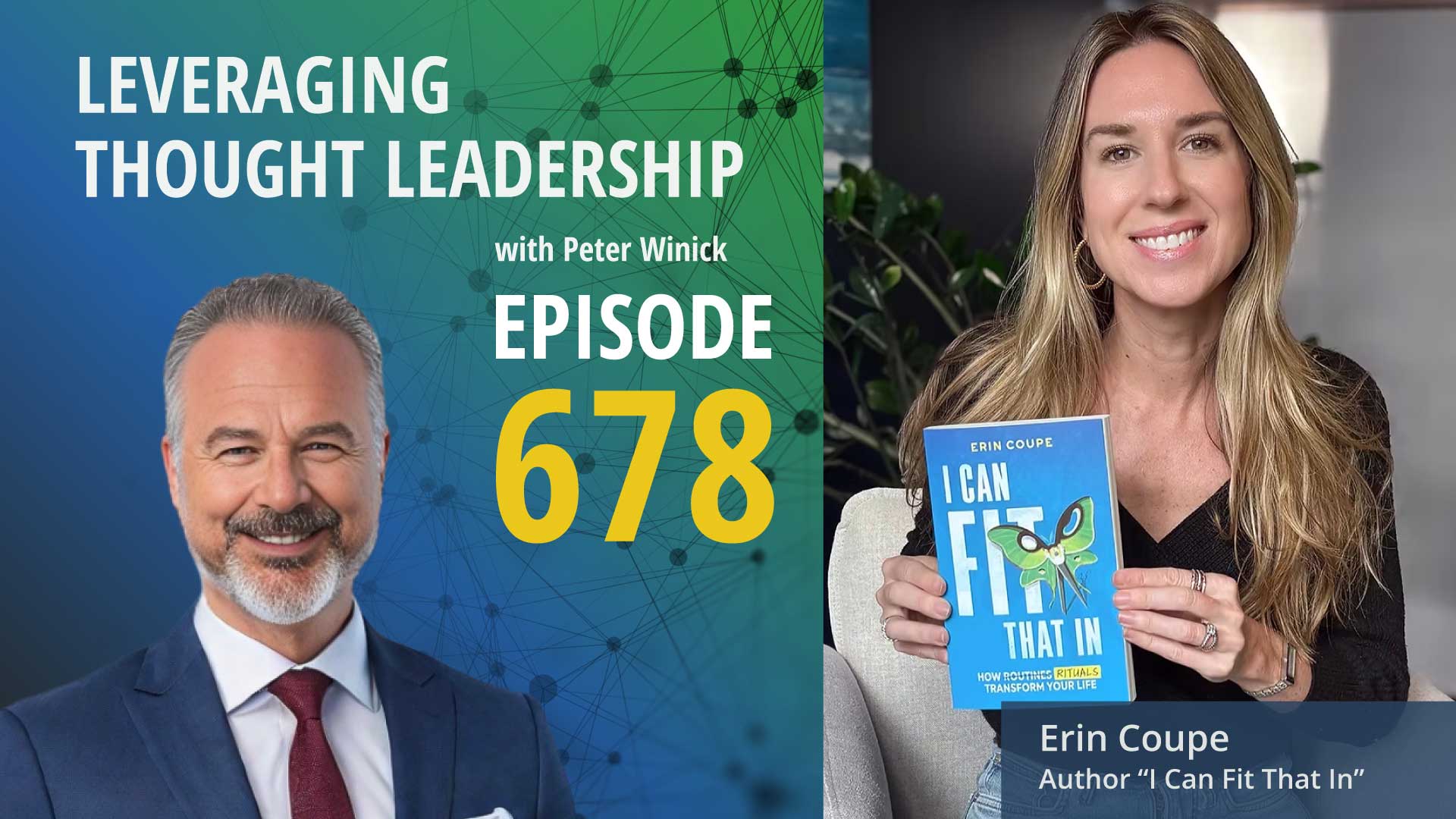


A conversation on clarity, boundaries, and leadership that lasts.
This episode explores how leaders and teams can move from burnout and busyness to clarity and sustainable performance through intentional rituals rather than rigid routines. It highlights the power of mindset shifts, boundaries, and self-awareness in creating meaningful, energized work cultures. The conversation also examines how these practices build trust, resilience, and emotional intelligence across organizations.
What if you could stop running on empty—and still perform at your best?
That’s the question Erin Coupe, author of “I Can Fit That In” (and host of a podcast by the same name), invites leaders to ask. She challenges the old “time management” mindset that rewards burnout and box-checking, replacing it with a human-centered strategy of presence, choice, and renewal. Her message? Productivity doesn’t come from cramming more into your day—it comes from creating rituals that restore you.
Erin works with executives and teams to help them shift from survival mode to sustainable performance. Through keynotes, workshops, and cohort-based learning, she guides people to design their own energizing rituals—intentional practices that bring clarity, calm, and connection. It’s not about doing more. It’s about aligning what you do with what truly matters.
Her approach transforms corporate cultures. Teams that once ran on autopilot begin building trust, transparency, and shared language. Leaders rediscover focus and resilience. And when people take these lessons home—teaching them to spouses, partners, and even kids—the impact multiplies.
As Peter Winick explores in this episode of Leveraging Thought Leadership, Erin’s work goes beyond productivity hacks or quick fixes. It’s about conscious leadership. Healthy boundaries. Self-respect. And recognizing that how we show up—at work and at home—is a choice. Tune in to hear how organizations are embracing her frameworks to create more intentional, energized, and emotionally intelligent workplaces—one ritual at a time.
Three Key Takeaways
- Rituals energize; routines drain. Intentional rituals create meaning and renewal, while rigid routines often lead to burnout.
- Mindset drives performance. Shifting from overcommitment to presence and self-respect builds clarity and sustainable success.
- Culture grows through connection. Shared rituals and language strengthen trust, resilience, and emotional intelligence within teams.
Loved Erin Coupe’s insights on transforming burnout into clarity through intentional rituals? Then don’t miss our conversation with Dre Baldwin on Think Big, Act Bigger. Both episodes explore how mindset shapes sustainable performance—Erin focuses on the inner rituals that ground us, while Dre breaks down the mental systems that drive consistent action. Together, they form a one-two punch for leaders who want to perform at a high level without losing themselves in the process.
Transcript
Peter Winick And welcome, welcome, Welcome. This is Peter Winick. I’m the founder and CEO at thought leadership leverage. And you’re joining us on the podcast, which is leveraging fall leadership. Today, my guest is Erin Coupe. And I’ll give you a little bit on her. She helps leaders, teams, and organizations shift from survival mode and burnout to clarity presence and sustainable performance. Sign me up for that. I’d like that. She’s got a new book out called I can fit that in. And she has a podcast by the same name. So I can go on and on about her other accolades, but I’d rather just talk to her. So welcome, Erin. So I could fit that in. So tell like, where did this come from? And what’s the problem we’re solving here?
Erin Coupe Yes, absolutely. So I can fit that in came from my own journey with personal transformation. And really it’s all about the inner work that I did on myself in order to change the way that I approached my life and my work. So I guess going back several years, I spent many, many years in corporate America and saw the good, the bad and the ugly. And unfortunately I saw a lot more bad and ugly than I did good. And I realized over time, I’m actually a part of that, you know, I’m not perfect and I’m not someone who is unscathed by either my own resentment and anger and that showing up in the way that I showed up or just the fact that I didn’t necessarily have the human skills it took to really lead myself well for a long time and that’s what I wanted to develop in myself. So I can fit that in and became about me fitting in the things that mattered to me so that I didn’t operate from burnout. So I didn’t show up from a place of depletion.
Peter Winick So stay there for a second, because if I’ve got to put the book and the content in a bucket, I don’t think I want to put it in the time management bucket, because that tends to be very, don’t check your email in the morning, like these practical do this, do that.
Erin Coupe Yeah, part of County HACCP.
Peter Winick And they work for about an hour, and then we go back and do the same old stupid stuff. So I would, and push back if I’m not reading the tealage right, put this more in sort of the mindset set, where you might be better use of your time, but stay with that a little bit, because it’s not about getting 40 hours worth of work into a 24-hour day.
Erin Coupe Not at all. And that’s like the last two, three decades of this type of content, right? It was how much can we squeeze into a day so that we are optimizing every single minute, which is just not realistic. It’s not sustainable, right. So what this is, and this is where the subtitle of the book becomes really important. The subtitle is how rituals, not routines, transform your life. Routines in some way, shape, and form become about checking a box. They become about a means to productivity to do things faster, more efficient, more effective, you name it. And when we’re in that way of being, it’s not that it’s problematic in and of itself. There’s nothing wrong with creating new rhythms and structures in your life and sticking to those. That can ultimately just be called discipline. It’s when those routines become draining because we are just trying to just check the box and get them off our plate and or we are doing them out of obligation. We are doing it because we don’t want to fail. We don’t wanna feel like a failure. Low and behold, we end up feeling like failures because we stick to those routines forever. And it’s those feelings of failure that send people down the emotional drain and then down the tubes of the thoughts that match those negative emotions, right? So instead, what I’m saying is, create rituals in your life, which are repetitious rhythms. They’re very intentional. And instead of being a routine, these are about choosing the things that matter to you. But you put them where you want to, when you want.
Peter Winick So words matter, right? I think words matter and routine is like, brush your teeth, you know, file your expense report, do that. You know, it’s like, okay, it might not be anything I’m engaged with, but there’s something, um, something interesting about the ritual word, right. Cause usually you think of a ritual as it could be, you know, one end of the, it could be sacred, it could be spiritual. It could be there’s something special. Light a candle, do like, it’t’s not like, no, the outcome might be, do you do all the other things that you need to do? But how do you differentiate a ritual from a routine?
Erin Coupe Yeah. So a ritual is something that you choose because it energizes or uplifts or empowers you. Now, a ritual can also be with other people. It can be with your co-workers and colleagues, so something as simple as a weather check-in at the beginning of a meeting once a week, and hey, everyone, tell me if you were a weather pattern, what would you be? That’s a ritual. You’re creating connection intentionally. That is a ritual the, you know, with yourself, it could be something like a meditation or brewing your coffee and stillness and setting an intention for your day. It could be grounding yourself in nature. It can be a certain hike you like to do or a walk. It doesn’t have to be a certain type of activity. A routine, on the other hand, like you said, yeah, routines are just things that are kind of, they keep you in survival mode going from point A to point B. It’s about what do I need to get done and when? Now I get it done.
Peter Winick So it sounds like two of the differentiators are sort of agency and personalization. So your routine of brewing a cup of coffee, if I was a tea drinker, I go, okay, well, that’s lovely, but doesn’t do anything for me. Right. We’re only one person. I’m a late night, but like, so there’s, there’s agency and customization. What might be special to you isn’t special to me.
Erin Coupe Spot on. Rich, I talk about rituals as a strategy, but you are designing your own. I am not telling you what rituals are going to work for you. And that’s a big difference, right? The productivity hack books and the time hack books, they’re saying, do this and take three of these and it’ll do this for you, you know, that is not what this is. This is giving you the guidance, first of all, to make that mindset shift from I am too busy. I have no time. I’m so over committed to I can fit that in and then to design the rituals that suit you.
Peter Winick So let’s pivot for a couple of minutes, if we could, into that’s a good sort of setup of what’s the it here? What’s the IP? So that’s pretty cool. And I think we’re all kind of struggling from this to varying degrees. Founder and a CEO of a thought leadership based company, right? Your company is based on this. Who’s paying you to do what sort of things and what are the benefits that the clients are getting from working with this and embracing this type of work.
Erin Coupe Yeah, great question. So a lot of my business is speaking about 50% of that. So I do everything from the keynote speeches, I’ve got to talk soon with 7,000 people. It’s the largest women in tech conference in the world. So everything from that where I’m giving not only the emotionally connected stories to the audience, but then the insights and the actionable tools where they can go and apply these things starting today in their lives. The next step is that I do a series of workshops within corporations. So typically what that looks like, let’s just use a six-month program as an example. It would be three workshops that are experiential learning. So there is me teaching concepts and then giving people the tools. And then people go away and practice them and they come back in between those sessions and between those workshops and we do group coaching. And so in that group coaching, we’re talking about what’s worked, what hasn’t, what’s an obstacle, what’s a challenge, what an aha moment. So everyone is learning from each other as they’re creating this common language. I then do cohorts. So these are private cohorts that people sign up for and they’re very deep and very transformational because we’re moving quickly with a group of people who otherwise don’t know each other, right? So these leaders and executives from all kinds of different companies, all walks of life that purposely enter this container for growth and transformation. That is my favorite work because it’s where I get to really experience most of the transfer portion with my clients. And then executives within organizations will hire me to do another cohort-based type of learning. This is really interesting. For a while, I coached people, and it was executives saying, hey, can you coach my direct reports? And I did that and realized, you know what? Half the time this is really, really uplifting for me. Last time this was extremely draining because not always do people want to grow. Not always do they want to become self-aware. Right? So the ones that are cohort-based within organizations are a lot of fun because those people are opting in to say, I wanna be coached and I wanna grow. So I think.
Peter Winick Comment on that, that the one to many, the workshop, traditional ways we work, we we’ve done things work to an extent, but when you get a group engaged, rallying around an issue or a problem or something, so there’s a self-selection piece to this. Hey, we’re all committed to dot dot dot. And because your work isn’t the 10 hacks too, there, I would argue that if I would be a fly on the wall in one of those sessions, it’s not 80% you, you talking, but they’re sharing with each other. Hey here’s a thing I created and somebody else might go Geez, I’m going to borrow that, but I’m going to put a twist on it to make it more me. And then you might say, well, I actually have this other client that did it this way, right? So it’s really getting, once you give them the language, the model, the methods, and the frameworks, people are smart and actually can help one another through the jacks without having the years that you do of experience in the space.
Erin Coupe Right. And then I don’t need to be there for a long time either. Right? This isn’t therapy. You don’t have to keep coming back and seeing me, you know, and I’m not, I’m not your guru. Right. So it’s like, I like to be there to give the tools, the insights and really get people on their way. But I don t need to stay there forever.
Peter Winick And what are the things you’re hearing, either that you’re capturing the data on or anecdotically where a client will say to you, okay, so I’ve been doing this for four to six months and here’s what’s different and here is what’s better and dot, dot, what are types of things they’ll share?
Erin Coupe I hear, I hear so many things and I feel really fortunate that, you know, my, my testimonials doc is like forever long because I keep adding to it and adding to. I only hear everything from people who are sitting through my keynote saying, you know, oh my gosh, I’ve been practicing, I have been practicing this, you know, new way of breathing as a ritual. You know, every, every time I get off a meeting or every time I have a text message come in from my mom that stresses me out, you people are applying this in work and life, and it is making them more calm and more resilient. You know, it’s the little things like that. Two full-on teams that are saying, we now have built trust and transparency in a way that wasn’t possible for us before, because we’re now connecting intentionally. We are carving out the space in order to do that, rather than just, you know, whatever comes at us and, you now, we’re finger pointing at each other and we’re not building trust and we are not being intentional. So those…
Peter Winick Those are just kind of two on camera. Because one of the things that I’ve observed over the years is that, you know, you can go after this from a B2C or B2B place. Clearly you’re B2P, right? That’s the place I play in as well, right. But you don’t have to explicitly tell people, and I find this really fascinating, by the way, you could use this as home, right, when you think about some of the greatest content, the most powerful and transformative content from a b2b standpoint, it’s things like emotional intelligence. Listening skills, questioning skills, collaboration skills. And nobody explicitly says on page 52 in the book, you can use this with your kids or your, it just happens because like, why wouldn’t it happen? Right. And I think once it, people have taken it home, like, I don’t think people come home or I hope they don’t and over dinner talk about, uh, I just got certified in Six Sigma and we’re going to like increase the productivity of this relationship 2.3%. Right. Like you don’t want to hear that, but if you ship with your partner, how I got exposed to this stuff, I’d like to share with the type of conversation. I think that’s one of the most rewarding things you can hear as a thought leader. How do you, how do you react to that?
Erin Coupe Absolutely, I mean, the people that I’ve seen go through some of my cohorts who say to me, gosh, I would love this for my spouse or for my partner or geez, you know, Erin, do you work with like 25 year olds because this would be great for my son, my daughter. And it’s profound and I always say to them, share it, share it teach them. Go be the teacher, right? You can teach them and I think that that is the greatest compliment to this work.
Peter Winick If you’re enjoying this episode of Leveraging Thought Leadership, please make sure to subscribe. If you’d like to help spread the word about our podcast, please leave a five-star review at ratethispodcast.com/LTL and share it with your friends. We’re available on Apple podcasts and on all major listening apps, as well as at thoughtleadershipleverage.com/podcast.
Peter Winick The, you know, the flip of fitting something in, I would imagine is not fitting something by intent, which is saying no and realize my first knee jerk reaction every time my boss comes to me with a pile of stuff isn’t yes boss guy, like how do you, how do you gracefully say no without sandbagging your career and all that? Right.
Erin Coupe Yeah, you know, and I go through this in the book because you’re spot on, you know, the reason I have a Luna moth with scissors inside of it on the book cover is because the Luna moths symbols transformation and growth. The scissors symbolize cutting things out. So I can fit that in, but I also have to cut out what doesn’t serve me, right? Being able to set healthy boundaries. Healthy boundaries are about how you respect yourself. It’s not about being cold and detached. It is not even about pushing back on people. It just about respecting yourself first. And that is not selfish, it is actually selfish to expect someone not to respect themselves, right? So when you start to do that, you actually teach others how to not overstep, and you show others how not to expect too much out of you that you’re not willing to give. The other thing I’d say is that you do have to intentionally say no sometimes, right, so you have to figure out, I always say like, say no, let go, and speak up. You know, so speaking up isn’t about like, oh, I’m just going to share my voice everywhere and just, you know. Throw it on people or project it onto people. It’s about speaking up and communicating why it is that something that’s just not aligned for you right now. Right, it’s not about being rude. It’s just saying, you know, I don’t really have space for that in my life right now, let’s revisit that next week. There’s nothing wrong with that.
Peter Winick Is there a way that this manifests generationally that might be different? Because one of the things I’m hearing a lot now with CEO, as I get older and grayer, I put myself in the senior bucket, right? Not senior citizen, but like more computer bucket. Right. No offense to my friends at ARP, but you know, you hear things like this generation or my generation or whatever. Does that, is that something like that? Because part of the answer to that is, okay, you can either whine about the millennials or the Gen Zs or whatever, or figure out what’s different about them that’s probably good and maybe maybe God forbid you’re gonna change the way you lead or manage right like you know
Erin Coupe You know, Wyatt, it’s so funny that you’re saying that, Peter. I literally had a conversation with a, a C, a CPO, a sheep people officer at a very, very large organization recently who was expressing that, you know, they have a problem because their CEO has this perception that the people are not giving discretionary effort in the organization. And the reason he has that perception is because they’re required to be in the as four days a week and they leave at $4.55.
Peter Winick On the days we have to be there, right.
Erin Coupe And then on Fridays, of course, they notice that email traffic is way down. Everyone’s working at home that day and they’re not as engaged. However, when I ask about engagement surveys, employee engagement surveys and they are fantastic scores, the stock is doing great, the shareholders and the board are happy. I mean, there’s nothing that points to a problem, right? My point was rather than trying to change all of these people to be people who are willing to stay until 555, you probably have to change the CEO’s perception and help him understand that yes, people don’t work like you did at McKinsey. They just don’t. However, doesn’t mean they’re not productive.
Peter Winick Well, there’s also the, you know, what they call the invisible second shift. So even if I am out the door at four 55, because ABC and D child care, catching the, whatever, you used to be, you left the door, you left the doors, unless it was in your physical briefcase. Right. But now it’s like, okay, we’re all checking in. Maybe not all most seven o’clock once again, before we go to bed. Like, where does that add up? Like that’s a mystery.
Erin Coupe That’s right. Yeah. Yeah, you know, and I mean, you know, you don’t my background. I worked at Goldman in my 20s before we had the ability to work at home. And that was all about FaceTime. You know, you were in the office before your boss and you let up after your boss left. And it was just I know I was there 12, 13, 14 hours a day. Was I super productive? And in some of those hours? Gosh, no, because I was exhausted, right? I was drained. So it’s way better to It’ll probably take an hour.
Peter Winick Well, if that was cultural, if you were the newly minted associate, making a ton of money out of a top school and you decided to roll in at five to nine, not seven 15, all of a sudden brand Aaron is like, uh-oh, that’s in the discount rack, like that, and some of that is just, um, whatever the, the much is mocha, it’s just a silly cultural thing of, oh, if can get in at five, I can be in a four 30 in the morning, or if you can stay till eight at night, I could stay till like, okay, but you, but, you know, to your point, how are you measuring productivity, right? You know, are you through puts and all that. There’s a lot of it is just an optics game. Interesting. What are the other things that you’re thinking about as the books about to come out that you might do or thinking about doing relative to the work the way the way the work is codified in the book?
Erin Coupe Yeah, you know, I mean, one of the things that I’m thinking about is expanding these cohorts inside of organizations and the ways that I go about working with people on a group level. I really like group work. I’m not a one-to-one type of coach. It’s not my energy. I do that with like about five people at a time, but I’m pretty picky on where I invest my resources in that. So I love the one to many and I’m thinking about, I mean, things. Things like you and I have talked about, right? Like how do we make this more widely available to more people in an organization? Not just, you know, 15, 20 people who are the lucky few who get access to it.
Peter Winick That’s one thing. Stay there a minute, because if you’ve got an organization of, or just take it to the team level, if I’m the only one on the team that’s subscribing to this way of thinking, I might be tissue-rejected if the other eight people on the time aren’t sort of experiencing that as well. They’re like, what’s up with this guy? Why is he like, you know, why is he, whatever. I think there is power in people experiencing things at the same time so that. We all realize it’s an experiment. We’re going to try something new. It’s not all going to work like whatever, whatever, but even just verbalizing that and saying, okay, this is, this has new ground for all of us. Let’s go through this together in a supportive way.
Erin Coupe Right. Yeah. I think there’s so much power in that. And again, creating that common language and then also that lived experience together is really powerful. You know, we’re also I mean, humanity is shifting, right, like we are becoming a more self aware collective humanity. We’re becoming more interested in how do we fully trust ourselves? How do we know ourselves? We’re becoming more intuitive. Those are all skill sets that can be honed and also, you know, cultivated so that people are showing up. Truly aligned and no longer in this place of like, woe is me and how am I gonna ever get through my life? It’s like, this is a gift, all right? Like, let’s treat this like it’s a gift. We get to do this. And most of us, if we’re not in jobs that are toxic, which if you are, then find a new job, right? But if you’re not on a job that’s this toxic, then look at it like your livelihood and how can you bring your best self to it and allow it to be what you need it to be in your life, right. So I always talk about like things like purpose and meaning. Purpose is about how are you serving humanity? And meaning is about, how is humanity serving you? And part of that humanity serving is your job. How does that serve you, right?
Peter Winick This has been great. I wish you the best of luck with the launch and the sustainability of the book. Getting out into the universe and, uh, appreciate your time today. And thank you. Thank you, Peter.
Peter Winick To learn more about Thought Leadership Leverage, please visit our website at thoughtleadershipleverage.com. To reach me directly, feel free to email me at peter at thoughtleadershipleverage.com, and please subscribe to Leveraging Thought Leadership on iTunes or your favorite podcast app to get your weekly episode automatically.

Related Posts