Announcing The Thought Leadership Handbook and the real work of turning expertise into impact In…
Leading From the Heart in a High-Speed Culture | Claude Silver
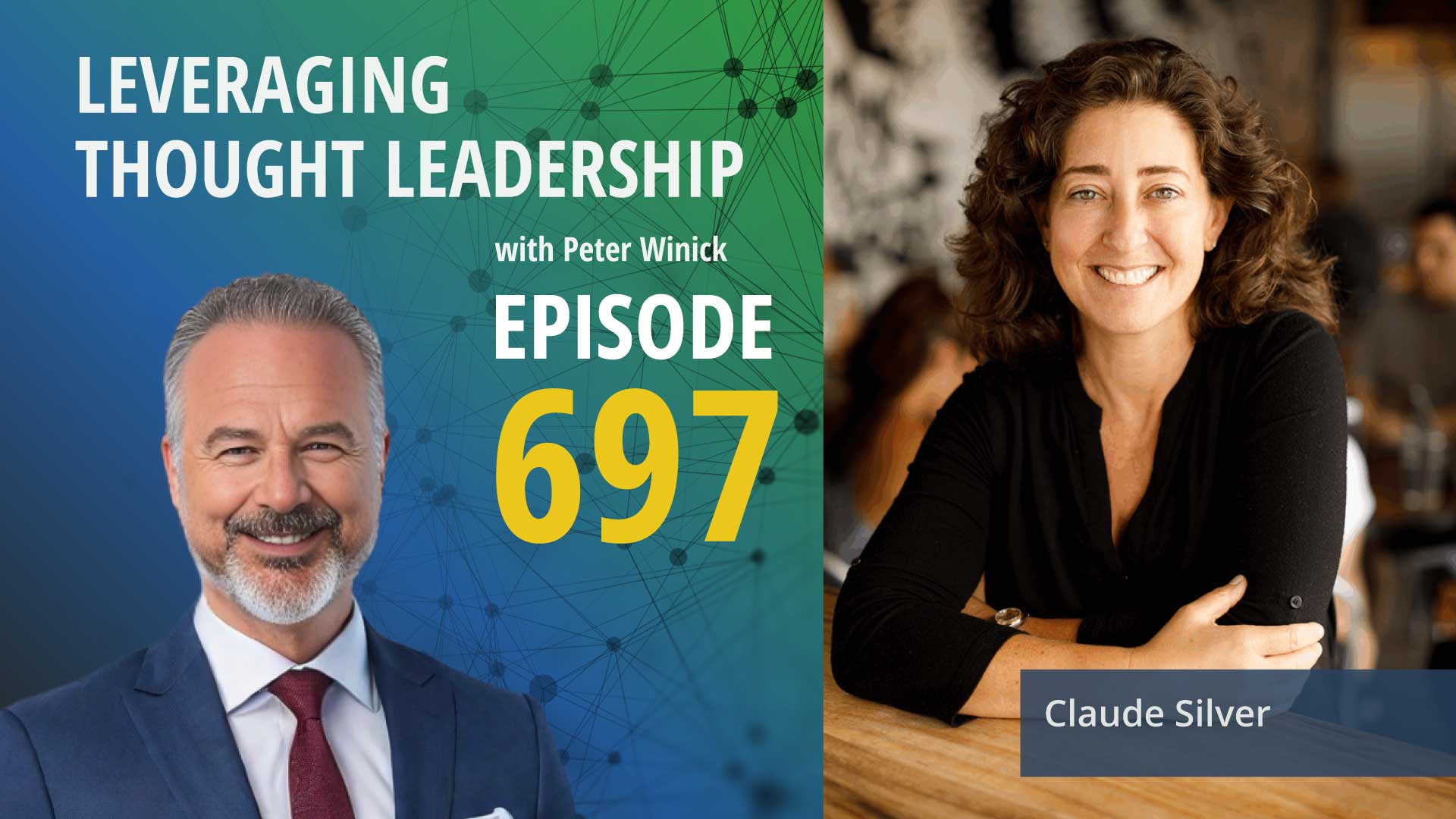



Frameworks for connection, accountability, and performance
This episode examines how psychological safety drives performance, how leaders pair authenticity with accountability, and how culture frameworks become scalable through simple, adoptable language and practices.
What would change in your culture—and your revenue—if people didn’t have to put on “work armor” just to show up?
In this LinkedIn Live edition of Leveraging Thought Leadership, Peter Winick sits down with Claude Silver, the world’s first Chief Heart Officer at VaynerX, to unpack the contents of her new book “Be Yourself at Work” and what it looks like when the pace is fast, the stakes are high, and the workplace is more human than ever.
Claude’s thought leadership is practical, not performative. She isn’t selling “soft.” She’s building the conditions for performance: psychological safety, real connection, and a culture where people can speak up, belong, and do their best work.
You’ll hear how Claude creates language and frameworks that spread. Not as slogans, but as usable tools—like “emotional optimism,” her belief-based approach to empathy and accountability that teams can actually practice.
This conversation also goes where most leadership content won’t. If “bring your whole self” is the invitation, what happens when someone’s “self” is disruptive? Claude breaks down how healthy cultures don’t tolerate consistent bad behavior—and how leaders can address “death by a thousand paper cuts” moments like chronic interruption, contempt, and the slow erosion of trust.
Claude’s message is clear: you are the CEO of you. Self-awareness isn’t a vibe. It’s a leadership requirement. And when people stop pretending—stop performing “credible” and start showing up real—the organization gets stronger, faster, and more resilient.
She also shares how she measures success as a thought leader: not just book sales, but whether her language, models, and exercises enter the zeitgeist—and whether her work can be taught, scaled, and adopted through curriculum and “train-the-trainer” pathways.
And for leaders still clinging to old rules (“check your life at the door”), this episode is a timely reset. The workplace changed. Expectations changed. The best leaders will change too—without losing standards, accountability, or results.
Three Key Takeaways:
- Culture is a performance system, not a perk. Claude’s core idea is that “heart” work (belonging, psychological safety, trust) isn’t soft—it’s the infrastructure that allows teams to move fast, collaborate cleanly, and deliver consistently.
- “Bring your whole self” still requires standards. You can invite authenticity while refusing behavior that erodes the room. Claude calls out the real culture-killers—chronic interruption, contempt, the “death by a thousand paper cuts”—and treats addressing them as leadership, not HR.
- Your thought leadership scales when it becomes usable language. Claude’s impact isn’t just the role title—it’s the frameworks and phrases people can adopt (like “emotional optimism”) and the intent to embed them through teachable curriculum and train-the-trainer paths so the ideas spread beyond her.
If Claude Silver’s message resonated—lead with heart and hold the line on standards—your next listen should be Susan Scott’s “Fierce Thought Leadership” episode.
They share the same core conviction: culture is built in conversations. Claude gives you the human-centered leadership lens. Susan gives you the conversation discipline to make it real—especially when stakes are high and tension is in the room.
Listen to both and you’ll walk away with a powerful one-two punch: how to create psychological safety and how to speak with clarity and courage so accountability doesn’t become conflict—and performance doesn’t come at the expense of people.
Transcript
Peter Winick And welcome, welcome, Welcome. This is Peter Winick. I’m the founder and CEO at thought leadership leverage, and you’re joining us on this LinkedIn live edition of our podcast, which is leveraging thought leadership. And today, my guest is an old friend. Claude, I’m going deeper into that hole – Claude Silver. So I’ll give you that just a quick intro on Claude. She’s on a mission to bring more heart and humanity. The way we lead to work and work. And she’s the world’s first chief heart officer at VaynerX, which has Gary V’s company. Partners with chairman and CEO Gary Vaynerchuk to build workplaces where people come alive, and where they feel safe speaking up, proud to belong and driven by real connection. And her book is be yourself at work, the groundbreaking power of showing up, standing out and leading from my heart. So there is the book which is coming in a little flashy, but welcome aboard, Claude. So here, take you down memory lane. So I remember, it had it was pre COVID, like, yeah, I was jumping? 17. It was probably 17. Yeah, might have been. Yeah. First time you and I met in person, I go to your office at the fancy Vayner offices, which are like in the, in the coolest part of the city. And then you’re not the first HR person’s office I’ve been in. So you have a preconceived notion of what this will look like. And I walk in and I’m like, wait, I’m in my Shrinks office. It’s very, you know, Dr. Malfi, if you will, not that I was ponies of product, but like just a couple of chairs, just chill and relax and like, Oh, that kind Thank you. Sets a tone and we just had an amazing, awesome conversations.
Claude Silver Yeah, that’s what it’s about. It’s literally, I didn’t want any desk in my office. I didn’t want a separation between me and anyone else. And I wanted people to be able to come in and feel warm and like, chat about anything. And plus there’s that killer view down to the Hudson. It’s very peaceful, very zen, and I’d say very me, actually.
Peter Winick Yeah, no, it was totally cool. And then we chatted about you maybe one day, possibly maybe thinking about kind of sort of, maybe there’s a book. Something like that. In me. And then here we are, slow forward, not fast forward, seven, eight years later. Oh my gosh. And I just finished it, We Prefer Life. It’s a great book. And I don’t say that. Me too. But this concept of being yourself at work, when we’re living in a world where, well, that at-work thing needs further definition, because that meant something else. Pre-COVID, we all know what that meant. And then being yourself is not. What are you saying? What a concept. Yeah. So tell us about, I mean, where did the concepts come from, and then? Yeah, how did you think it’d be?
Claude Silver Well, you know what I originally, I wanted the book to be called something like show up as your messy self. Something like that. Okay, of course, I wasn’t going to put the word messy in a title. Although I talk about a lot in the book, as you know, yeah, when I meant by messy was like your real self, the person that has emotions, the that has good days, bad days, the dog gets sick, the kids throw Cheerios on the floor, you get a flat tire. The real, real. And that’s to me, I think, like, we all need to, I’d like us all to acknowledge that we’re not in, there’s no perfect package here. There’s no utopia here. Like, you know, we have a life, and our life can be busy, mess, whatever. Hey there.
Peter Winick A bit, because you and I are both probably the same age, Gen X, whatever. And I mean, I literally remember in the late 80s, early 90s, when I was first working, that it being said out loud, you know, check your ass at the door. Like we own you for eight or 10 hours. Yeah, won’t care if your dog died, your mother’s had cancer, like, don’t care. Check your shit at the do and you do what you do. Right. And it was, and that was the world we live in. Now there were exceptions to that because You had mentors that you found your people, you know? Of course. But that was really a vibe. That was really the, is, we’re motion-free now and.
Claude Silver Yeah, we don’t want to know about those don’t really want to know about your life. We definitely don’t know about your problems. And like, we really don’t wanna know if you have therapy, like, and now, the world has changed. Whereas like, I know everyone has a therapy, you know, they’re leaving at three, they are leaving at two, they were leaving, whereas like, God forbid, I had to leave the office at four o’clock back in 2006 for a dentist appointment, you know, I would pray to get one after I would, you know, you just wouldn’t talk about
Peter Winick or they tell she must she must be going on an interview she’s unhappy like
Claude Silver Exactly. Like, or it was like, oh, half day, you know? Yeah, yeah. Right. Which is like, so mean to someone now that we know, like, what really happens, like people have doctor’s department, people have people have. So yeah, you and I grew up in a place where it was literally like, we don’t want to know.
Peter Winick Part of the, I would imagine, and I’m just thinking out loud here, that the book resonates easier, or it’s easier for the book to resonate with a generation beneath. And the struggle that we have as leaders and managers at our age is, wait a minute, you’re changing the game on me. The boundaries keep changing and the, what can I ask, you know, mental health in the workplace and psychological safety and can I say this out, like, you wanna be helpful, but you don’t know where those borders and boundaries are weather. Pronouns are so many things and you want to be good and you take care of your people, but you don’t know like where’s the playbook.
Claude Silver Yeah, I mean, that’s the thing. I was actually just talking about that today with someone that I want to bring in to do some sensitivity training. I’ll call it something different than sensitivity. Yeah. But really, like real talk, like, I don’t know what to call that person. Or what do I do when I overhear someone use that word with that person? Like, yeah, or someone asked me if I’ve lost weight, and I’m uncomfortable, like the whole gamut and we haven’t even, you know, and I’m not even talking about the color of my skin, the color, right, everything. So we’re actually, it’s like so on my mind, because if we don’t do something about it and have real talk and and real talk courageous conversations, name it what you will. Yeah, we’re gonna continue to fumble over ourselves and our culture. And I’m just talking about The Culture of Vayner, we’ll start to erode in a bit because the environment gets so affected when you know, when there’s a chip in the armor, when there is a chip.
Peter Winick Yeah. Well, and when you’re not, you know, I mean, I think the flip side of being yourself at work is not, not being yourself at work, but what if yourself is a jerk?
Claude Silver That’s the thing. That is where the culture has to be able to police.
Peter Winick And tissue rejection.
Claude Silver Yeah, literally, it’s tissue reject. It’s like, is it okay to have a holes here? Is that like, do you have that gung ho like, you know, charge? Or we’re lucky, like Gary’s an absolute gung ho charge, but there’s three holes. Right. So what happens if there are jerks is that gets surfaced. And we talk about it, you Know, if it’s something if I’m doing that conversation, it’s like you know hey, I just want you to know like That attitude’s a real vulnerability for you. You’re such a high performer. However, your attitude really stops people from wanting to be with you. What are we gonna do with that? That’s how I have that conversation or how I would hope leaders have that conversations. As having jerks and a-holes is not, it’s not conducive to the environment that I certainly wanna be in. And it doesn’t make me wanna work any harder.
Peter Winick Right. And that’s different than I think, then, you know, and you speak about this a lot in the book, everybody’s got bad days, so we’re not going to judge somebody on the one day they came in cranky or.
Claude Silver No, it’s a concept.
Peter Winick Yeah
Claude Silver you consistently are interrupting that constantly in that meeting every every single meeting if you’re interrupting you need to be heard so badly we need to talk about that yeah subtle but that’s you know to someone else that’s death by thousand paper cuts that’s literally okay I can’t really name it but when this person’s in the room I know I just feel small oh that’s because you’re being interrupted every time makes a lot of sense to me yeah so I
Peter Winick talk a little bit about your journey and it’s early in the process as a thought leader. So you’ve got a very demanding full time, to say the least, right? Yet, you said I’m still going to do this because writing a book is not easy. Promoting a book was not easy, etc. What either insanity or passion or some combination of both said I got to do This and I want to do and here’s why.
Claude Silver So about 10 years ago, so before you and I met, I had said to Gary, you know, I wanna write a book. I told him in particular because there’s no one that holds someone more accountable than Gary. And I couldn’t just be like telling my best friend because my best friends will let me off the hook, right? So I told them, I knew I wanted to write about hurt in the workplace. That is what I knew. And why did I know that? Because when he and I, were just before we drummed up this role, this title of Chief Heart Officer, I said to him, because I had been working there for about 16 months, like, hey, this is great, I just don’t wanna do advertising anymore. And he said to me, all right, well, what do you wanna do? And I said, I only care about the people here, I care about heart beat. So I always knew I was gonna write a book about the heart in the workplace, your identity in the work place. And I knew that even prior to Vayner, I had amassed so many learnings, You know, I’m getting old over here. And so it wasn’t until COVID hit where I had thinking time. Right. I had time to start to think. I hired an agent and I just like, Yep. I just word vomited everywhere. And we started to get to a formation of something. And then, you know, and then I started and stopped and got, you know, insecure. I have nothing new to say and this and that. And I’m like, well, God, I don’t know if there is anything new to say, but the way I say it is going to be the new part. Right? Like, I’m not saying you should.
Peter Winick The way you say it, and then the vulnerability, right, because a lot of people can get out there as the expert or the academic or I’m the head of it, you know, like, here’s all my accolades, and I went to Harvard and blah, blah, blah, bla, blah. But you sort of go the other way, right? And say, here, here are my warts at all. Here’s the stuff that I did, the good, the bad, the ugly. And then whether I can relate to those specifics going off into the wilderness or whatever or not is really the point. It’s like Yeah, we’ve all got those stories. Why do we, like those are swept under the rug because now I’m like a rock star on corporate, I don’t talk about that. And I think just setting that tone is pretty cool.
Claude Silver Thank you. I really, I appreciate that. And I mean, you’ve known me now for a while. It is definitely what you see is what you get. I want people to feel comfortable around me for sure and safe. And when they read that book, I didn’t want them to feel preached at. I have nothing to preach. I have to preach and maybe not anything to teach. But what I can say is, listen, it’s tough in the workplace right now. It’s tough no matter how you slice it. Most importantly, you wanna get yourself right. You wanna get to know yourself. You are the CEO of you, it’s one of the first chapters. Know that, and then because you know that and you have self-awareness and you’re working through your imposter syndrome and the lie exercise, take that into teams. Be your best self in teams. Don’t shrivel, don’t shrink, don’t do the things you used to do. You just did this entire self- awareness journey in the book or through the book, like don’t, I want you to show. Strong. I want you to show up and be and take up space. And that looks different for each and every person.
Peter Winick Yeah. One of the things that’s interesting about that is, you know, you don’t come up as a typical HR head of HR at a, you know, fast growing whatever. Cause there’s sort of the stereotype of what that might be.
Claude Silver Didn’t do HR at all. I stayed away from HR. Right. It was a it would have been a creme de la creme job for someone like me who loves psychology, you know, who studied deep psychology and spirituality, but I stayed awake. No, thank you.
Peter Winick And then I think the other thing that’s interesting is having a real organization to use an experiment. This isn’t just theoretical. And then what struck me early on in getting to know you is there’s this brand of Gary that’s just so big, right. And his personality and his drive and his yo grind and hustle and all that sort of stuff. And not that I would say he comes across as heartless. But you don’t think of heart in that you just think of like, wow, this guy is on my he’s up 24 hours. He’s up at three in the and he’s doing it. Like, and he’s working, working, working the immigrant story, like all this. And then you’re like, wait a minute, he created this or supported this chief heart officer? Like, did somebody get him on an off day? Like, how did that happen? But it makes perfect sense because I see there’s a yin and a yang to you. Grass.
Claude Silver And there’s a difference between Gary V and Gary Vaynerchuk. Yeah, yeah. I work with the human, not the brand. And the human couldn’t be more empathetic. The human couldn’t be more, what you see is what you get, this is me, you know, like, and I love that. I wouldn’t be able to just, I wouldn’t be able work with someone that didn’t acknowledge how important this work is, and he does, and he blesses it, and thus, we do, we do it, right? So I’m extremely lucky and through that journey, I’m able to, you know, find patterns, see what’s going on, see like, wow, that person really could use some training or some coaching.
Peter Winick But I think there’s also a culture there because it is still startup II, even though it’s funny. Yeah, try new stuff. There’s lots to bet the house. And if it doesn’t work, it’s an experiment. And we learn and we move on where you get to the fortune 500. And the level of experimentation is close to zero. It’s like, we could be up, you know, quote one 0% better on our retention this year. It’s like, oh, my god, there’s purgatory for me to even think about that.
Claude Silver Yeah. Yeah. And so what better place, what better fertile ground, it’s a playground for me to do this, for me to play, to experiment, to bring different things in. Just like it is for us to go, you know, we’re going to start something with collectibles, because Gary really believes in the collectible market. Well, I don’t know anywhere else that’s doing collectibles. We’re going give it a shot. If it fails, we learn. If not,
Peter Winick Very cool. So let’s assume it’s a year from now, right? So the book’s been out, it’s smashing success, blah, blah blah blah. How would you other than book sales because that which kind of don’t matter? Yeah, what are the metrics? What are the things that you’re looking at? That would say yeah, that was a success.
Claude Silver This is so great that you’re asking me because without the book, I’ve seen this happen on LinkedIn. So phrases that I use, for example, slides that I share, whatever, that nomenclature has been used. Emotional optimism is something I started saying probably eight years ago. And it came from a conversation that Gary and I had where we put those two words together. And I see that used all the time. It’s a hashtag that doesn’t belong to me anymore, right? On, on, on.
Peter Winick So stay there in it, because I think that what’s beautiful about that is you have to realize as a thought leader, yeah, there’s a personality as a brand, there is a human that created this, obviously, but the way to get to get it spread is a function of the models, the methods, the frameworks, the language, the definition, you know, the the you know we think about words like emotional intelligence, you mentioned imposter syndrome, like These are all things that came from different streams of thought leadership. Yeah, when we started trusted advisor, like I can give you that. Oh, we know what that means. But it’s like, wait, where did that come from? Green from 25 years ago, or
Claude Silver Yeah, it gets in the zeitgeist. It gets in the water. Yes, if it makes sense to people, truly thought leader, advisor, those things make sense if you think about it, if you just break it down to what it is. So, so anyway, back to that, you know, I started seeing that happen probably about I don’t know, the seven, seven, six years ago, and things were being replicated that I had said and whatnot, which is always a wonderful. It’s a great feeling because I know it’s sticky and I know I have so much part and integrity in what I’m saying, that I just want it to be used in the same way. Obviously I have no control over how someone uses it once it’s out of my hands. But so for the book, I would love principles of the book. Whether or not it’s the three E’s, whether or not its the lie exercise, whether not it is the seven rules of team citizens X, Y, Z, I’d love to start seeing that more in the zeitgeist, right? More you know, one of the next things I plan on doing is, is rolling out a curriculum. Right. And what I’d like to do is roll out a curriculum to both train the trainers. Right. Give this to someone. Yep. And also, you know an easy online curriculum if someone just wants to do the lie exercise because they’re going through an imposter syndrome right now. So that, that to me would equal success because then the work is proving itself. When I could see a point.
Peter Winick In the not too distant future, where it’s this combination of bottoms up and top down, meaning somebody came from a place like Vayner, right? And when we did things here, it was different. I didn’t know that maybe I was 25 and didn’t really know much else, but it felt different. And here’s why that was great for me. And then at top down going, all right, we do need to rethink the way we’re doing.
Claude Silver That’s totally, I love that. That’s exactly what would be great, which is yeah, in those early ages, it’s not that we’re sleepwalking. We just wanna prove ourselves so badly, right? We really, really do. And you can tell that something might be a little bit different here because your roommate hates her job and she complains all day long that her manager is whatever. And that doesn’t happen to me. I’m really happy. I go into work and it’s like, I actually learn something every single day. And then, yeah, to be met with the sandwich of, like… And as a leader, I changed too. I changed person through this because the book is Be Yourself at Work. You and I both know, and you know me well enough to know, it’s be yourself, dot, dot dot. I just happen to work. And I have that as my playground. But what we’re talking about in the book, it’s all just, it’s emotional fluency. It’s just. Yeah. Being more human, that’s all. And what holds us back from it and what propels us forward. And we need one another to do that right now. I think that we know that society and the world is in a very different place that it was in. Three hundred, and certainly when you and I were getting up there, so there’s a lot of anxiety, a lot fear, a lot, AI’s gonna take my job.
Peter Winick Especially in the creative, especially in a place like you, yeah. So one of the things that was interesting to me about the book was some of the stuff that’s not in it. And what do I mean? Well, there’s lots of stuff that it’s not. But what I mean by that, oftentimes sort of, people try to put together forensic data to validate their case. And I had thought, maybe getting into this book, like, oh, and there’s gonna be a little, a lot of dropping data around. Retention, productivity, turnover, blah, blah. You know, the stuff that one would think HR speak with sort of this faux data metric. Sorry to my HR friends, whatever. But it was kind of interesting to me, there wasn’t a lot, wasn’t any of that there. No data. Really writing to the individual. Yeah. To the, or not to the C-suite, not to whatever. So my question is, talk about some of the proof points of this isn’t just the right thing to do, or a good thing to, it’s actually good for a business. Little in there.
Claude Silver Right. And so that’s, those are the KPIs that I can, I’m sorry, the KPI, the ROI, whatever I can give at any day, but I didn’t want a book. I don’t want to open up a book necessarily and get data thrown in my face. I would rather research the data. I would either rather ask for it. That’s just the kind of person I am. If it was like your book, it would have looked very different. It would have, the title would have been different probably too. There are experts out there doing that all day long. Amy Ebbenson, she’s got a lot of data, right? Yeah, yeah, yeah. Susan David, she has a lot data. Simon said, a lot a data. I’m not a data junkie, I’m a not a researcher. And, you know, yeah I can pull in data that’s already there, that’s in Gallup and McKinsey, which I have tabs open on my computer, but at the end of the day, the only data that I really care about, which is something that we are getting close to quantifying, really, is the ROI of being kind at work.
Peter Winick Yeah, that’s, I mean, that sounds great, but it also doesn’t sound easy. So a couple of things I see react to that is you’re eating your own dog food because you’re not a data person, not peppering the book with data because some publishers said, Oh, it’ll help it sell and, you know, eat it into the C suite, throw in some numbers and blah, blah, blah, so I think that’s really. Aligned with the values of the book. Cause sometimes people write a book and they get into this head space of I am author author means this, I have to You know, so being your being an authentic person, you know, and it’s always good to meet lots of these folks. And it’s interesting in some instances, they wrote the book they needed to read Yeah, what’s the outcome of their own personal therapy or overcoming this or whatever. I think in your case is just hey, it kind of open kimono if you
Claude Silver It is, it’s literally like, hey, this is who I am. So you need to know like who is writing to you. These are the ups and downs I’ve had in life. This is what I’ve observed. This is I’ve been a part of and observed. And like, this has, you know, all of the years I’ve been in the workplace, I haven’t really strayed from these principles.
Peter Winick Were they using those words or whatever?
Claude Silver Like, right, I didn’t have the term emotional optimist back in the early 2000s, but I am an optimist. Like I, and for me, optimism means belief. Right. And when I share like emotional optimism with someone or I share optimism with some of what I’m saying is I believe in you. Yeah. And that’s what we need more of. I got your back. I feel you empathetic. And I got you back and I believe in you. And let’s like, let’s go. I’m gonna, I’m going to walk next to you.
Peter Winick So besides people going back to the question I had earlier around using the language, using the model, using whatever, what else do you hope will be different a year from now?
Claude Silver I tell you what, I hope a year from now, we are not we individuals aren’t feeling grand statement, but are aware, at least more aware of the armor that they put on every single day to walk into that workplace, or to get on a zoom. So whether or not they have to cover themselves up, they have to pretend they’re a PhD, they have to XYZ. If we could even get that if I could get people more aware. Of what they’re actually doing and the cost that has to them, that would be a huge step forward. Because at least…
Peter Winick Yeah. So I love that. And I was, I was doing a call earlier today and someone we were doing a recording and said, oh, I, he emailed me earlier about, you know, are we going to record this? Do I need to reject? I’m like, just be you. Right. Like, and it’s like, you know, the way you and I are dressed now at the beginning of our careers, somebody would say, oh this must be two, two pals and having a chat and are sad or working. You’re both kind of just chill and whatever. Just chill a bit, we’ll share.
Claude Silver Or share knowledge.
Peter Winick But even, you know, that armor piece. I remember the days I went and put on a suit and a tie. Like I was somewhere in the back of my closet. I think there’s like 50 times. Yeah. Right? It was.
Claude Silver You know, women feeling like they have to wear high heels or whatever, like, you know the working girl days. And listen, if you want to wear heels, God bless, but if you feel like you need to, because you need to get noticed, or, you know, right. That’s a whole nother thing. So if we can bring the awareness, and then of course, what would be amazing is that for people to start recognizing that when they take when they take stuff off, how do you feel when you unload the weight that you’re carrying on your back every day because I’m hiding at work.
Peter Winick Yeah, enough.
Claude Silver That’s where the magic happens.
Peter Winick The last sort of thread here that I want to touch on is you’re on the other side of this now, right? Rook is written, you’re a published author in that you’re obituary, whatever, whatever. What was the most surprising and then what was the more rewarding thing about the process? Forget about book sales and fame and all that stuff, but from pen to paper or keyboard or whatever to seeing it land with a thud on your desk.
Claude Silver I think the most surprising thing was how much of me I needed to write. So how much to me, I knew I was, and I said this to the publisher, I said, this to Janet Goldstein in the beginning, I do not want to come off as a fraud. Like I’ve got it all figured out. So I got to share some of the, the yuck I have to go. And I was I’m fine doing that. You know, I am because I want to be believable. But I didn’t realize all of the stories I would have to go into necessarily to prove a point, right? Because there isn’t data, so you do tell stories that you’ve witnessed or not. So I guess that was a big one for me because it was a real excavation. Like it really wasn’t, you know, and I had to remember, oh, Claude, you walked into this, you chose this.
Peter Winick No, you talked about like, you know, the relationships you’re in, your identity, your, like, there’s not…
Claude Silver So that, what, what I liked about that though, Peter is like my aim is true. Like, I’m not here to pull the wool over anyone’s eyes. I I’ve seen a lot in these 50 plus years as everyone has, and I’m here to share it. If people, I feel as though it will be impactful for someone or also just like get us on the same playing field. I am no different. Right. Right. I am not. So that I would say. Was the most surprising and also very rewarding because it’s out there now. Whatever, you don’t know all my dirty secrets, right? I’m not gonna go look. And you’re not gonna do that either. But like, I think you can see me as a human being rather than when I, after I do a keynote or after I this and people are like, I wanna be just like you. And I’m like, no, no no, you need to be you. Right. You don’t wanna be me, I’m me, I got me, worry about that. And then I would say one of the things I loved was the creative portion. It was like picking out the colors, defining the font, designing how little things were gonna look inside, which I had no idea I actually would have a stamp on. And being able to name things, the lie exercise, you know, the archetypes of leadership. Like those are things that I came up with, which like, who knew?
Peter Winick Right, that’s a thing.
Claude Silver Yeah, and there was a lot of creativity there, and that was very cool for me to be able to like, it was not just stories I’m telling, I’m actually creating an experience of when you open this book.
Peter Winick Well, this should be great. I appreciate your time and you’re crushing it.
Claude Silver Can’t wait to see your book.
Peter Winick To learn more about Thought Leadership Leverage, please visit our website at thoughtleadershipleverage.com. To reach me directly, feel free to email me at peter at thoughtledershipleverage.com, and please subscribe to Leveraging Thought Leadership on iTunes or your favorite podcast app to get your weekly episode automatically.

Related Posts