Building Books That Strengthen Brand and Influence A sharp conversation on publishing strategy, book positioning,…
Rethinking Executive Coaching for Modern Leaders | Kendra Dahlstrom
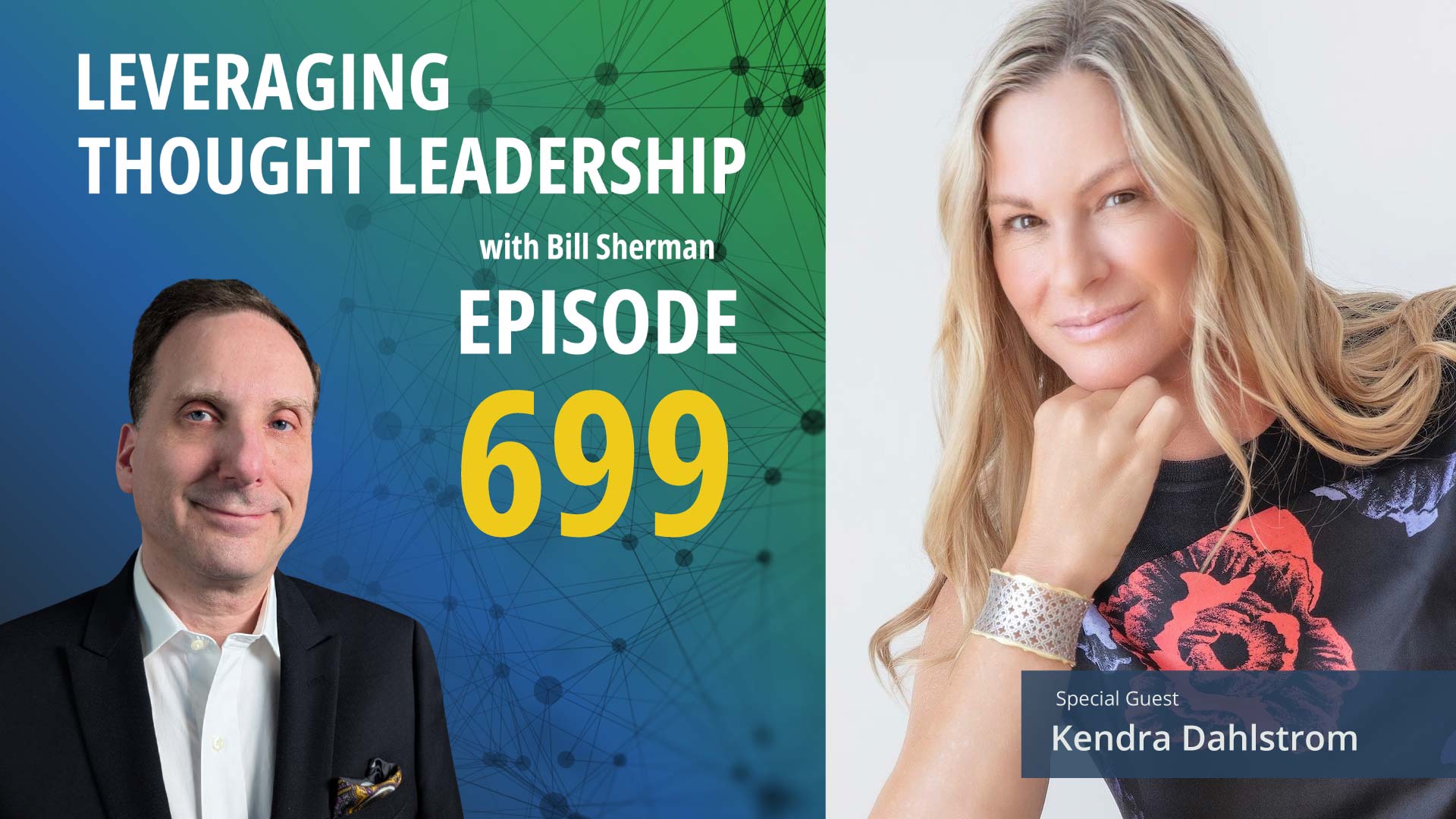



How trauma-informed leadership can improve emotional intelligence, decision-making, and workplace performance.
A sharp conversation on executive coaching, emotional regulation, trauma-informed leadership, and the future of leadership development inside organizations. The episode examines how deeper personal work can lead to better leadership, stronger teams, and more meaningful culture change.
What if the leadership issue in front of you is not strategy, but an old wound you have never fully resolved?
In this episode, Bill Sherman talks with Kendra Dahlstrom an executive coach and host of “The Unworthy Leader” podcast about the deeply personal path that led her into thought leadership, and why she believes the future of leadership development must go far beyond traditional coaching.
Kendra shares how her own experience as a coaching client changed the way she worked, lived, and led. What started as personal growth became something bigger. Senior leaders began turning to her for guidance in high-pressure moments. That trust revealed a new role: trusted advisor, coach, and thought leader.
The conversation explores the real shift from being an internal leader to building an independent coaching practice. Kendra is candid about the hard part. Selling coaching is personal. When you are the product, rejection can feel personal too. She explains how learning to value her work, define her frameworks, and sell without losing generosity became essential to building a sustainable business.
Bill and Kendra also dig into what makes coaching credible and scalable. Kendra explains why leaders want a bespoke experience, but still need a repeatable process they can trust. She discusses the balance between personal connection and structured methodology, and why clients are often buying trust in the coach as much as the framework itself.
One of the most powerful parts of the episode is Kendra’s discussion of trauma, agency, and leadership. She shares how her own lived experience shaped her approach to coaching. Her belief is clear: unresolved trauma does not stay at home. It shows up in meetings, reactions, communication, and performance. She makes the case that leadership development should address emotional triggers, somatic awareness, and inner healing, not just surface-level behavior change.
The episode then turns toward the future. Kendra outlines a bold vision to reshape leadership development inside large organizations. She wants to move this work from one-on-one executive coaching into teams, programs, and eventually enterprise-wide culture change. Bill helps pressure-test that vision, asking the key business questions: Can it scale? Can it be measured? Can it improve productivity, retention, and performance? Together, they frame a practical and provocative roadmap for what next-generation leadership could look like.
This is a thoughtful conversation about trust, transformation, and the courage to introduce ideas that may feel uncomfortable at first. It is also a strong example of thought leadership in motion: personal, distinctive, and designed to challenge conventional thinking. Listeners will come away with a fresh perspective on coaching, leadership, and what it truly takes to create lasting change.
Three Key Takeaways:
- Thought leadership often starts when trust shows up before a title does.
The guest’s path began when leaders started turning to her for advice in high-stakes moments. That trust revealed her value as a coach and trusted advisor before she fully claimed that role herself. - Better leadership requires deeper inner work, not just better tactics.
A core theme is that unresolved trauma, emotional triggers, and past experiences can shape how leaders react at work. The conversation argues that self-regulation, agency, and somatic awareness are not “soft” extras. They directly affect how leaders show up in the boardroom. - The future of leadership development must be both human and scalable.
The episode moves beyond one-on-one coaching and explores how this work could expand into teams, workshops, and enterprise programs. The focus is on making leadership development more effective, more measurable, and more relevant to outcomes organizations care about, especially productivity and performance.
If this episode sparked your thinking about how better leadership starts with deeper self-awareness, emotional regulation, and real inner work, then Joseph Press’s episode is a strong next listen. In Kendra’s conversation, the focus is on what happens inside the leader: the wounds, triggers, and patterns that shape behavior at work. In Joseph’s episode, the focus shifts to what leaders must do next: think beyond reactive habits, lead with greater awareness, and prepare their organizations for an uncertain future. Together, these two episodes give you both sides of the leadership equation: how to lead yourself more intentionally, and how to lead your organization more effectively through change.
Transcript
Bill Sherman What happens when people start turning to you for advice? Not because it’s your job, but because they trust you. For Kendra Dahlstrom, that moment marked the beginning of her thought leadership journey. After experiencing the impact of coaching firsthand, she found herself becoming the person others relied on during high-stake moments. Over time, that trust evolved into a calling. She’s guiding senior leaders at Fortune 50 companies through complexity, identity shifts, and the inner work that leadership demands, but rarely names. I’m Bill Sherman, and you’re listening to Leveraging Thought Leadership. Let’s begin. Welcome to the show, Kendra.
Kendra Dahlstrom Thank you for having me.
Bill Sherman So, where I want to start is a question. You go from hiring coaches to coaching? There’s a bit of a transformation there and it gets into your origin story and thought leadership. So let’s set the table of what were you
Kendra Dahlstrom Thank you for asking, I hired a coach because I wanted to just become a better employee, a better colleague, coworker, and person. And through that journey, as I started to learn more about myself and feel and experience the pressure valve, release a little bit in terms of how I operated and how I was able to really experience life, I started using some of my teachings and learnings. Organically, it wasn’t even planned with the executives I was supporting at these 1450 companies and with my colleagues and friends and other leaders. And then they started to come to me for advice and ask questions. And I started to realize very quickly that I was suddenly a trusted advisor. And I really loved that role. And what I really wanted to lean into was that I wanted to make a difference. I wanted it to make an impact in a positive way. And at the same time, I wanted to do something I felt really passionate about. And that for me was the convergence of those three things. And naturally and organically just led me into offering coaching back to executives and coaching within 1450 companies as well as independent consultancy. So the thought leadership behind that really was just following the thread of passion and purpose and belief.
Bill Sherman And also, if I hear correctly, you had benefited from having a coach and there’s a piece of either being asked to share or wanting to share forward.
Kendra Dahlstrom Absolutely, and it’s both. It’s wanting to share because you have had such personal transformation and it has been so impactful on your life, so you want to share this gift and insight with others. And then there’s also the aspect of others seeing changes in you and getting curious and asking new questions.
Bill Sherman So what did that feel like that the moment of transformation when you went from being the coachy and the leader to the coach talk about the internal transformation on that and because it sounds like it was more of a journey first you got questions and then evolved into a coach what was that internal state like
Kendra Dahlstrom Well, initially I didn’t recognize that it was happening, right? Cause it happened probably over a period of about a year, 12 months. So initially I was just like, Oh, I’m excited to talk about this. So I’ll just talk about it. And then it, when it really hit me was when I had one executive call me. Out of the blue. So, which is kind of odd. They, you know, usually it’s, you have a planned meeting in your calendar and said, do you have few minutes to talk? And said, I’m going into this meeting and I need your advice on how to best position and say this and how I should show up because this is going to be a challenging conversation. And so I took a deep breath and then I just coached him through it, asked him some open ended questions and then offered my consult at the end. And then when I hung up the phone, I thought, wait a minute, what just happened? He just, he trusts me, which is great, but more than I had. Really giving myself credit for, I think, in the relationship and that he just called and asked me for advice before he’s going into this big meeting with other executives. So that was sort of the moment where I had this aha and realized that not only did coaching really benefit me personally, but that I could actually use it and share it with others to benefit them in their lives. So that is the beginning of it.
Bill Sherman Well, and there’s possibly a recognition there where you were the person on speed dial of I’m going into this meeting. I can call one person. Who do I talk to?
Kendra Dahlstrom Yeah, and I know, I mean, I was shocked. I thought, oh my gosh, I’m the, who wants to be a millionaire, Regis Philbin. Right, right. You know, what do they call that? Call a friend?
Bill Sherman Yeah. So as you moved on into the coaching journey, right. And you go from that immediate moment of surprise of, Hey, wait a minute. I can be this resource to others. Describe what your coaching life looks like now in terms of the work that you do and thought leadership.
Kendra Dahlstrom Yeah, I love it. So I will be transparent and honest and say the biggest challenge for me during that transition was going from a, a salaried employee, so somebody on speed dial as a trusted advisor, a thought leadership advisor, executive coach, as a salaried employee to somebody who’s not a salaried employee. And so that’s as big of a mindset shift for me as it was for them, because it’s a lot easier to work with someone when you know that you’re not really writing the check per se. Like it’s coming from the BU, it’s come from the corporate funds, right? The shareholders, whatever. But when it’s out of your own discretionary budget in your BU or even your own personal pocket. It’s like, well, how much do I really need that executive advice or help? So it’s kind of like that fine line between like having a friend that’s a therapist that you know you can call and ask questions, Bill, versus like you’re paying the therapist for each visit. Like, how important is this? Do I really, do I need an answer so bad that I’m gonna pay the therapist?
Bill Sherman Right. And from your side, you’d rather have people scheduled and schedule a series of sessions rather than just a la carte wait for the phone to rent, right?
Kendra Dahlstrom Absolutely, right. And that’s just for likelihood and pipeline and all of those things. And so that, you know, so the huge shift for me was know my value. Don’t give way too much, but you know still be in service and generous, but don’t give away too much. Know your value and don’t be afraid to ask for it. And really having to lean into sales a little bit, which is something I was really uncomfortable with.
Bill Sherman And that’s where I was going to ask you about. So when you’re inside the organization, yes, you may be selling an idea or selling your value ads so that you get recognized either for a project or a team or a role. But it’s a different form of selling than when you are on the outside as a service provider. Talk about, you know, that transformation, if you would Kendra. How did that go? Was it easy? Was that hard?
Kendra Dahlstrom Well, so I’ve been at it for about, you know, at my, I’ve had my independent consultancy for about 10 years now. So I’ve done that for about ten years. And here’s the deal. First of all, when you’re selling yourself as a service, like it’s not necessarily like a product, like software as a surface, or even if you have, you now like marketing people out there, it’s, it not necessarily easy to sell. But if you some kind of formula or something that you’re selling. It’s a lot easier than it’s like, I’m just selling time to be with me though, because I know I can support you and help you achieve your goals. And then it feels very personal if it’s rejected because it’s not the product. It’s like you are the product and so you really need to understand that. And then you also need to work through all of your own personal stuff because when you’re in a business where you’re selling time with other people to be with you so that you can help them be their best self and give them advice. And of course, I’m bringing all of my knowledge of 25 years and all these formulas and frameworks and all of these things that I bring to the table. But at the end of the day, they’re really buying you. If they like you, they are going to buy you. And if you have stuff that you’re bringing into that conversation, whether it’s subconscious or conscious, it gets in the way of you being able to fully serve them. It gets in the way of you being able to not be triggered. By things they may say or even reactions they have. And then you take it personally, what it had nothing to do with you. So it really gets in the way of you being able to operate as your best self. And so it takes a lot of personal work. At least that’s my experience. And it may be because I have a lot of trauma in my background. I don’t know, but for me, it took a lot personal work, iterations, years over years to be able to get to a place where I felt like, okay, I can actually sell myself and do it in a way that doesn’t feel pushy or doesn’t feel like I’m not being assertive enough and I’m valuing my worth and all those things.
Bill Sherman So there’s several things in there that I want to circle back to. Okay. One is you talk about having a process and methodology, something that you’re selling, even if it’s service related, rather than product, so that, like you said, the tension is you’re not just selling time and if someone says, no, it’s not a rejection of view, right? And so did you have? That process? Did you have that framework? Did you have to build it as you win? How did you come to processes and frameworks?
Kendra Dahlstrom So it took me time, which is interesting, because I had been a certified project manager and running large initiatives for Fortune 50 companies. So you think, of course I have a process. But the way that there’s different aspects to how you approach coaching, one of the main aspects is just show up and serve. And there’s nuances in that, but that’s the essence of it. And so in that I thought, I’m just gonna show up. I’m just gonna deeply listen to people and I’m gonna ask them open-ended questions and they’re gonna tell me their challenges and then I’m going to help them solve that. And at the end of the day, that seems pretty simple. I mean, it’s straightforward. However, if you don’t have a framework that you can use as a use case, because everything else, because if you do, it becomes bespoke. And so as much as everyone wants to feel like an individual and you want things to be bespoke, at the same time, if you have a consistent process that you can refer back to, and I could say, You know what, Bill? I just was working with a client last week and one the month before, where I took through this exact same process and here were their results. It’s gonna make you feel more confident in me as a coach and it’s also gives me more confidence as a Coach that I can walk you through it. So I had to, by default, start formulating a framework that I felt, that’s why I use framework, right? It’s loose enough that I could move it around so it can be bespoke. But that I could at least refer back to, to say, look, here’s what I offer, here’s how I bring people through it, and here are common outcomes.
Bill Sherman And also being able to predict ahead of time, moments of resistance, because I think nobody wants to be that first test case and everybody, like you said, wants to be bespoke, but they don’t want to be the guinea pig, for example, right? So I had a client and we were working on codifying some of their thought leadership a couple weeks ago and I asked him make a list of 40 assets that you have stories, data, examples, case studies, not articles, not videos, not finished product, but what are the raw ingredients of that? And he looked at me and I could see the fear in his eyes when he said You could see he locked down. And I said, look, here’s what happens. Most people that do this exercise get jammed up somewhere between 10 and 20. And by the time they get to 40, as long as they push through it, they realized they could generate another hundred it’s like, okay, I’ll trust you. Right. And off he goes. And then the following week, when we have the conversation, he comes back and he says, yeah, you’re right. I’m at 80 and I could go to 200, right? But that, yeah, that ability to predict and to say you’re not the first one, even if this feels scary, I have a vision of the road ahead and I’m here with you, right.
Kendra Dahlstrom Yeah, I mean, and that’s the thought leadership part of coaching, right? Bang! Right! Yeah, love that. What a great story. I really like that idea. So…
Bill Sherman I want to continue circling around. You come up with processes and frameworks. How much when you sell, are you selling the processes, frameworks, and tools? And how much of it is still Kendra? Like you said, Hey, I’m 10 years in on this. Is it 70 30 one way? Is it 50 50? How do you position?
Kendra Dahlstrom I think it’s probably 80% me, 20% tools and frameworks. I do have clients who will come in and really over-rotate into like needing certainty, needing frameworks, needing process, but those are also the people who expect me to deliver the results for them. And so we get to have a very interesting conversation about, look, I can bring you everything in the world, but if you’re not going to do the work. And you’re not willing to work through the rough patches, then you won’t get results regardless. Right. And so I’ve learned to sort of either have that conversation with clients up front or potential clients and either they walk away and I’m not the coach for them, which I’m fine with, or they say, oh, and I said, this is a good coaching opportunity just around this. And they realize, oh okay, there’s some interesting work that I can do here as well. I think it’s the end of the day, it’s still me that they’re buying. Let’s be honest, Bill, I have my proprietary framework and trademarked and this and that, but if somebody could probably Google and find something pretty darn similar out there. So it’s not like anything I’ve created is the new theory of gravity or anything. I think there’s going to be someone else or some maybe even cross-section of two that are people out there doing something similar. At the end of the day, they’re really buying me and their trust and faith in me and my track record and how they feel when they’re with me and do they feel like I’m the person that they want to go on this journey with.
Bill Sherman Well, and we can break this out in some ways. So there’s you as an individual, your story, your experiences, there’s also the process, right? And some process and frameworks work better for some people than others. Like you said, not everybody’s a good fit as a client, right? And it’s better to know that upfront rather than on session three, right. Yes, and then Issa on that really is contextual. Do you meet their velocity? Do they fit yours? Does your story and, or, you know, your life experience aligned with theirs. And that very much sort of encapsulates the coaching modality. So for example, if you were getting your content out through workshops, you would have a different relationship. If you were doing it as keynote, it’d be different, but you’re in a modality in a delivery format where you are part of the equation. So you mentioned trauma earlier and it informed how you work. Are you willing to share some of that? And for the purpose of talking about how it informs your work today and going forward.
Kendra Dahlstrom Absolutely. So, you know, the short of it is born and raised in a family that, you know, had a divorce at two. And, you know, through my childhood, I was put in some pretty unsafe situations with adults, and I’ll leave it at that, as well as real toxic family system behaviors, everything from codependence to, you know, narcissistic behaviors and patterns to emotional and verbal abuse. And so… Kind of went on and off for probably decades, even though I had left the house, those systems typically stay intact for a long time. And how it really informed the way I show up is a few ways. The first is that as I started to do my own personal work, Bill, and my own trauma-informed work, I realized choice is important for anybody, but it’s especially important for anyone from a trauma- informed background. Because if you feel like it’s like, oh, you better do this or that’s going to happen. It’s what we call a double bind and it will immediately activate the amygdala, stress someone out, put them into PTSD. It could put them in to all sorts of things. And I didn’t realize that that had been happening to me over and over again. It’s sort of this black and white world we live in. And so I became really uncomfortable living in the gray area. And so through my own work, one thing that I really focus on when I’m even talking to people and enrolling them. In, you know, whether to work with me or even in our own work is this idea of agency and choice and the liberation that can really come with always giving people options and choice so that they can have that sovereignty and agency to make their own decisions instead of that sort of abusive, voluntold layer that we can have. So that’s one way. Another way, I think, is just really understanding the depths. Any kind of trauma and it doesn’t have to be pervasive like mine was, it could be a one time incident or whatever, trauma is relative. And so that’s one thing I really want your listeners to hear is that there’s no comparison. And we often find ourselves in that like, oh, well, this person had these things happen and mine was only this. It’s relative, trauma as trauma, okay? If it impacts your body, if it impacts your cortisol. Feel your amygdala activating or your body responding in some way, like a headache or tightness in your chest or whatever it is. What I really had to do myself and I’m now bringing to my work is all the aspects of somatic awareness and embodiment because I believe there’s so much knowledge that our bodies hold and so much wisdom that our body holds about what we need in each moment, but we are taught to step it down and ignore it because we’re adults now and we should be over that because it’s been 20 years and little do we know, it’s still showing up in the boardroom.
Bill Sherman Well, and if I remember correctly, is that trauma can show up in your DNA generations one or two after a major trauma event. And so, you know, if that is true, then how do we tell ourselves that, you know, it didn’t make an impact 20 years ago because it does.
Kendra Dahlstrom Absolutely, and that’s absolutely correct. And so with my clients, we’ll often do something called a genogram where you go back three generations and you write not only traits of people, you can also write like addictions, like my grandfather was an alcoholic or those kinds of things, but also potentially personality things like if they had mental health issues, all those things, or oh, my grandmother was born in a prison camp. Those kinds of thing, you map it all out and it’s pretty amazing. To see how those can be carried down. And so I truly believe that I’m here to break the cycle of a lot of that generational trauma. I believe many people in that gen X fold are here for that because if you look back at World War I and II and Vietnam and those are these areas that we’re dealing with, there’s a lot trauma there.
Kendra Dahlstrom Absolutely so.
Bill Sherman About sort of your journey. We’ve talked about how you engage with clients. I want to turn to a third chapter of this conversation which is where do you see yourself going in the years ahead? Where does this take you?
Kendra Dahlstrom So this aligns nicely with thought leadership because I’ve always felt that thought leadership’s an interesting one. I believe that it’s about blazing new trails and putting new ideas and thoughts out there that are authentic to you and pressure testing it. And some take off and don’t. And that’s the risk that we willingly take as thought leaders and provocateurs, right, out there. And so… One thing that I really wanted to do is I want to change the landscape of leadership development in corporations. For a long time, I kept wondering why am I still in these corporations? Like I wanna be doing some of these other things. And then I realized that I am there on assignment. I am their because it is my purpose to change leadership development in these large corporate structures and introduce, you know, they do some somatic work and whatnot, but really introduce healing. At a whole new level and whole new scale and really introducing that inner child healing, which so many executives will roll their eyes and say, oh, we don’t need that. Or why would I want to talk about that at work? I’m an adult, I’m a professional. And that’s not what I’m proposing. I’m not proposing that we talk about it at work in front of each other. What I’m posing is in private, we all acknowledge that at the end of the day, we’re just grown little kids. And then if we had any sort of trauma or influences that were. Impactful to us in a negative way and we didn’t get closure on those psychologically. It’s been proven that the loop will continue. And so oftentimes when we have a dysregulation, an emotional reaction that doesn’t seem in proportion to the actual event itself at work, we blow up at someone and we get overly upset about an email, it’s likely in reaction to that unclosed loop. And so my Coaching in my program through integrating and introducing this work can help resolve some of that. I think we’ll have much more self-regulation in our emotions and we’ll better leaders.
Kendra Dahlstrom So I hear a couple of things here.
Bill Sherman One, it sounds like step one, if I was to tie it to something that’s already become mainstream in the organization, emotional intelligence, but when it was first launched was considered, oh, that’s squishy. Why do I need to be aware of, you know, my own emotional state? Yeah, well, now people realize. If you’re not aware of yours, guess what, you can’t show up, you cant bleed, right? What it sounds like here is you’re saying, okay, let’s advance these conversations. Emotional intelligence, just being aware or able to regulate your emotion isn’t enough. How do you close some of those wounds that you’ve been carrying or the scars or stressors or trauma, whatever it is? I have yet to meet anything other than a handful of people who have gone through life and everything has been sunshine, rainbows, and unicorns, right? Very few of us get to an adult stage without some stressor, without some pain, right. So how do we resolve that and let that go? But if I hear you talking about this, transforming leadership programs is different than doing. Executive coaching work. There’s a transformation there. Tell me about that and where you see yourself going.
Kendra Dahlstrom Yeah, so I think it’s yes and is the answer. So I think in order to transform leadership programs, I need to start with the leaders. They need to experience this themselves and then they need to advocate for it, for the people that help be my cage agents in that process.
Bill Sherman HR isn’t going to feel brave enough to bring this in without a senior champion saying, yeah, let’s do this.
Kendra Dahlstrom Yeah, and no corporation will do it without that, right? We need that back to the use case example, right. So I think it’s really important to just start there. So I it is a one-on-one thing, but my dream and vision would be that then they start saying, I wanna bring this to my team. I wanna to bring this the culture at the company. I want people to start to look at these mental health numbers and overall wellness numbers and we’re looking at leadership development program and It’s hard to measure leadership development programs, and at the same time, they’re continually failing and they have very low adoption rates. So what’s really beneath that? Well, what’s beneath that is everyone wants a nuanced experience, but everyone’s, let’s say, wounds or challenges are so different, it’s hard give a nuanced experienced at scale. But the one thing we all have in common is if we can go back to any sort of these young adult or inner child wounds. That would be the root cause and the commonality between it all. So that would be my vision is that we start with executives, we roll it out to their teams, and then we can start to pilot it with a few forward-thinking corporations who are willing to take a look at this approach and then we can get some real metrics for some real studies and use cases.
Bill Sherman So again, a couple of interesting things there. Do you see that as something scalable? And I’m putting this in the conversation of, okay, does it still require coaching as you scale through an organization? Is it you? Is it not you? Can you teach others to do this first and foremost? And then you mentioned the thing that every organization loves is, can we measure the effect? Whether it’s on retention, engagement, performance, growth, profitability, there’s a handful of things that every organization would care about. They might use different terms, but at the same level. How do you reach scale within, like you said, a Fortune 50 organization, which is massive? And then how do you show the impact?
Kendra Dahlstrom Great question. So I think first, scale is a challenge. It’s not going to just be me, it’s going to be, you know, me and a handful of other coaches doing this work or me creating some sort of certification or program that other coaches go through and, you know, we offer and scale, hoping to write a book in the future. So that would be great to, know, have on hand and it would have some very practical tips and pragmatic steps. So hopefully anybody who reads the book can just go do it. They don’t have to be certified, right, to go do. I mean, that’s my goal is I wanna make this accessible. I don’t want it to be so, I guess, proprietary that it’s like, oh, you have to go through me to get this, you know. I think these are things that are gonna benefit the world and make it a better place. So I wanna to make it accessible.
Bill Sherman So that’s a point. Well, and there will be people who will read the book and say, okay, I can do this. There will be others who like, yeah, get me a guide, get me someone who can take me through this, right? And so in writing a book like that, you have to make it accessible enough to that first audience, the DIYers, if you will. So the activities or whatever you’re putting in there actually work for most people individually. And that’s hard. You almost have to deconstruct yourself and say, what is it? Something that I can share that doesn’t require.
Kendra Dahlstrom Yeah, I love that. That’s a great way to put it. And that’s exactly how I wanted to show up, right? And then there would be a next layer, like workshops, like as you imagine, right, and obviously keynotes and those kinds of things. But I think workshops would be next layer. Maybe there’s an online program at some point. And then for people who really are like, no, come in and teach the top 20 leaders at our company how to do this kind of thing. So I think there’s going to be, that’s one way it could scale. But my goal is that, you know, providing resources and whatnot to people. And completing a community around this that can drive the change would be my priority because I can’t scale and I don’t necessarily want it to all be on my shoulders anyway. I don’t operate that way and that’s not the model that I wish to really follow. I think that that’s the initial part to your question. I think the second part would be as we look to measure it, I think there’s a few things. I think at the end of the day, if we really start to, like if I jump over to just like the complete like internal family systems, inner child recovery work, at the of the end the day what gets in the way is a trigger, and at the, end of day when you look at the trigger, it really impacts productivity. I mean, you could use other metrics, I think it’s Productivity is probably the simplest one. So we’d have to do probably a series of qualitative and quantitative metrics over, I would say, probably at least three years. And the reason why is because some of that is gonna be subjective. And so you wanna make sure there’s consistency in that subjectivity. So it’s gonna say, hey, Bill, before you take this training, how often are you triggered by these things? And then in six months. Okay, on a scale of one to 10. Oh, you went from a 10 to a seven, great. Okay, now what’s the trajectory of that in three years? Are you at a one, are you at the two? Right, so I think it’s gonna be really important to, we’re gonna have to get subjective metrics because at the end of the day, we know that if the person heals or even if they feel like they’re healing, that’s what’s gonna make them happier and more productive and better in their job. So they have to be part of the equation. I think we can also come up with some wellness metrics and leadership team metrics in terms of overall communications, productivity, cohesion metrics, using some of the former Lencioni measures and whatnot, how they hang. It’s really important that we start to look at, what is the primary metric? And then that would be the leading indicator metric. And then everything else would be lagging indicators.
Bill Sherman Yeah. And so what I like about this is you’re already thinking at scale and saying, okay, how do I show the impact to an organization, not just on the individual level? Because at the price point of executive coaching, that multiple doesn’t work. But how can you give people a taste of the idea? Start moving the numbers. And not only do good for the individual, but also then good for the organization about things that the org cares about.
Kendra Dahlstrom That’s right, that’s right. And the reason I chose productivity, just to add a little more depth is when we start to really look and understand triggers, it’s really a current experience that you don’t realize, but you’re reacting from a past experience, right? Your emotional state is actually going in the past. And so your reaction is more about the past than it is the current experience. It doesn’t mean that the current experience is fair or feels good. It’s just you’re being. Pulled into your history. And so what that tends to do is there’s about 10 different coping strategies that have been found through psychology and science that are the most common. If I look at a common thread through all of those, it really usually impacts productivity. It’s like you don’t sleep well at night, you have insomnia, you’re up that night, you feel really stressed out the next day. Sometimes you will have a whole body reaction and you get sick and you’re in bed the whole next day, so I think productivity would be the most. Effective marker.
Bill Sherman And it’s also one that the organization deeply cares about, especially if you’re looking at folks who are knowledge workers or organizations that are high revenue per employee losing productivity is a hit to the revenue, right? But it could also be with, you know, factory floors now that are so technologically driven. You need every human on that floor to oversee. What else is being done on automation. So there’s a lot of ways to say how the person shows up, impacts profitability, and if you can make that more visible, then yeah, then it’s a justifiable investment. So as we begin to wrap up, Kendra, we have covered a lot.

Related Posts