
Neurodivergent Talent Doesn’t End at the Hiring Door | Caroline Maguire | 745
The Leveraging Thought Leadership podcast is created by Peter Winick and Bill Sherman and produced by Thought Leadership Leverage.
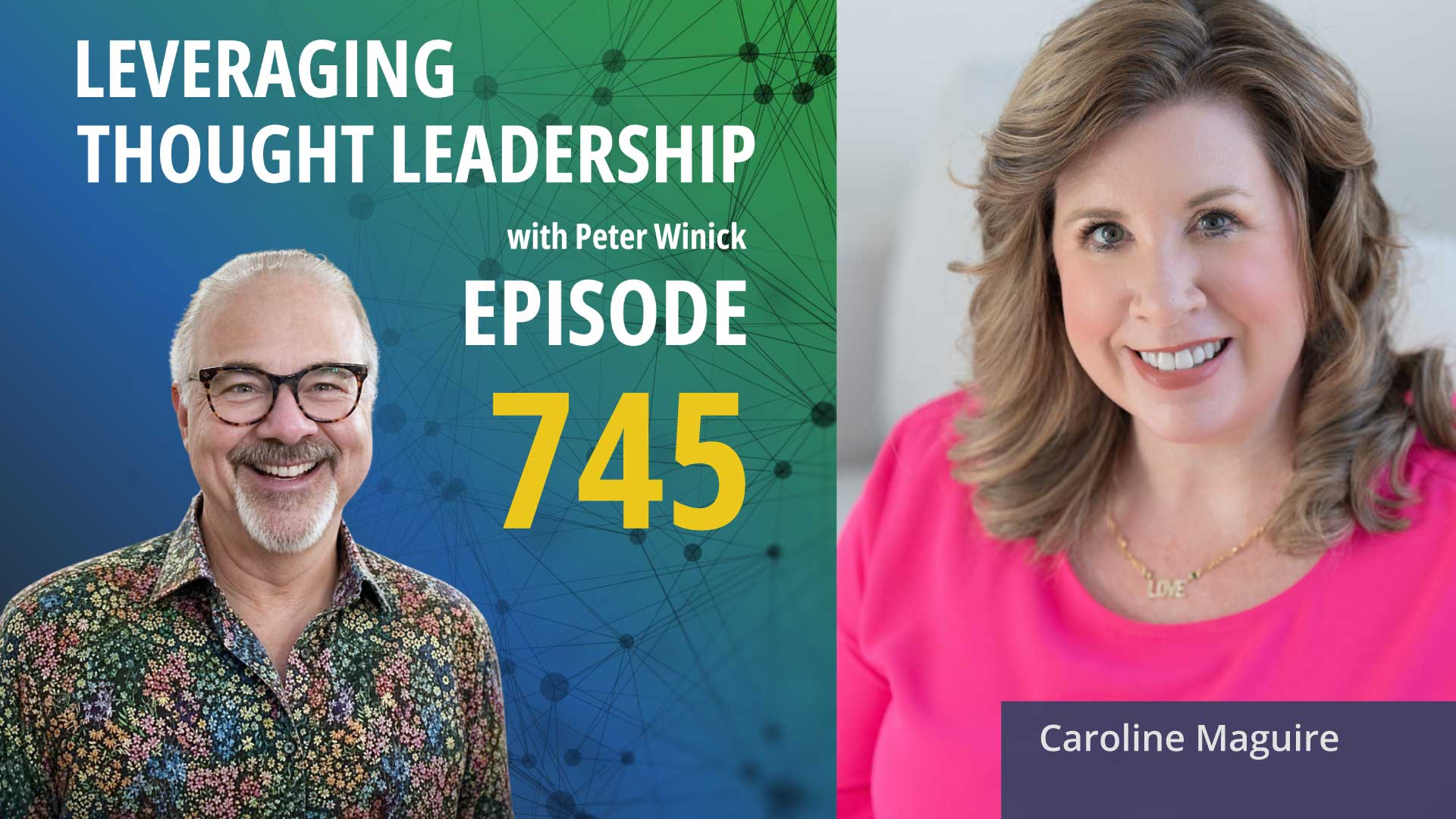



How belonging, workplace friendship, and explicit communication drive retention in tech-driven organizations
Hiring neurodivergent talent is only half the equation. This episode explores why inclusion efforts stall after the hiring door, how vague management language fails neurodivergent employees, and why workplace friendship drives retention. The takeaway: train managers proactively, or your most innovative hires will quietly walk away.
Companies are hiring neurodivergent talent to build their algorithms, power their hedge funds, and design their AI. Then they lose those people, and nobody can explain why. In this episode, Peter Winick sits down with Caroline Maguire, social-emotional learning expert and author of Why Will No One Play With Me? and the new Friendship Skills for Neurodivergent Adults (Hachette). Caroline has spent more than two decades on a problem that, as she puts it, “people really didn’t talk about”: the social gaps that make it harder for neurodivergent people to connect, communicate, and belong.
The conversation starts with timing. When Caroline wrote her first book, publishers wouldn’t offer a big deal for anything with diagnostic labels in it. By her second book, diagnosis rates had surged, and she pitched that shift as a market opportunity. Peter uses this to make a broader point for thought leaders: build on ideas that are evergreen, then connect them to whatever wave is coming. You can’t control the wave, but you can watch for it.
From there, the focus moves to the workplace. Most organizations, Caroline argues, think the work ends once someone is hired. It doesn’t. Instructions like “show me everything you’ve got” or “be a team player” mean very little to someone who doesn’t easily read social cues. Managers have to boost the signal and be explicit. That change, she points out, makes them better managers for everyone. The business case is direct. Gallup data still shows that what people want most at work is a friend. There’s a loneliness epidemic in offices, and people who don’t feel integrated leave. Sometimes they leave for less money. Most companies only call someone like Caroline after the damage is done, which Peter compares to buying a burglar alarm after the house has been robbed.
Caroline also explains how she takes her work to market. She uses a book to attract media attention, works her network hard to reach decision-makers, and gets in the door by training senior leaders and line managers.
If you lead teams, build talent strategy, or are trying to carve out a niche of your own, this episode gives you a clear way to think about the market and the people in it.
Three Key Takeaways:
- Hiring is the starting line, not the finish line. Organizations recruit neurodivergent talent for how they think, but without training managers to communicate explicitly, those hires struggle to integrate and often leave.
- Belonging is a retention strategy. Employees who don’t feel connected at work are more likely to leave, even for less money, so workplace friendship and social skills are business issues, not “soft” extras.
- Find the problem nobody’s talking about, then own it. Caroline built her niche by spotting a well-documented problem the field ignored, earning the credentials to back it up, and timing her book for when the market was ready.
Caroline Maguire’s path is a working example of how thought leadership gets built. She spotted a problem nobody was talking about, earned the credentials to own it, and timed a big book to the moment the market was ready. Then she used that book to bring in media, open doors with decision-makers, and turn her expertise into paid engagements. That path from idea to impact is what The Thought Leadership Handbook: How the Experts Elevate Their Big Ideas—and How You Can Too lays out, step by step.
Peter Winick wrote it with Bill Sherman and Naren Aryal, drawing on more than 700 conversations from this podcast. Inside, you’ll find the patterns behind successful thought leadership journeys and five avatars to help you identify your own path. You’ll also get practical frameworks and tools for making your ideas visible, trusted, and scalable. Learn more at thoughtleadershiphandbook.com, and order your copy today from Amazon, Barnes & Noble, Bookshop.org, or Amplify Publishing.
Get Your Copy of The Thought Leadership Handbook at:
Amazon
Barnes & Noble
Bookshop.org
Amplify Publishing
Apple Books
Transcript
Peter Winick And welcome, welcome, this is Peter Winick. I’m the founder and CEO at Thought Leadership Leverage and you’re joining us on the podcast which is Leveraging Thought Leadership. Today my guest is Caroline McGuire. She founded and facilitates a comprehensive social emotional learning SEL training methodology for adults, parents, clinicians and academic professionals on how to develop critical self-awareness, self-management, social awareness, relationship building and responsible. Decision-making skills in themselves and others. She wrote a book called Why Will No One Play With Me. She earned her undergraduate degree at Trinity College and a Masters of Education Early Childhood Development from Lesley University. She’s got a private practice and does all sorts of cool things. So welcome aboard, Caroline, how are you?
Caroline Maguire I’m well, and also I just wrote another book, Friendship Skills for Neurodivergent Adults. So I have many hats that I wear.
Peter Winick Yeah, so let’s talk about the origin story on the neurodivergent adults work that you’re doing. So where did that, how did that become part of the portfolio and part of the markets that you serve?
Caroline Maguire So I have always worked with folks with autism, folks with ADHD. I’ve always worked for the adults, but I’ve also worked with children as well. And when I went around the country marketing while no play with me, so this was pre-pandemic, pre-Zoom being the way we do everything. I just found that so many adults were like, we know I don’t know how to make friends And so I started thinking of the idea of writing a book for adults. When I wrote my first book, the publishing industry wouldn’t give you a big book deal if you had any diagnostic labels in it. But by the time I wrote this book, I said, you know, listen, this is a huge market, this has millions of people. The diagnostic rates have exploded since the pandemic. This is an opportunity. Let me use diagnostic labels and this, and let me you know, get a big book deal with diagnostic labels. So I was able to kind of just ride the wave of the times and the change in data, really. And publishers loved it.
Peter Winick Stay there a minute because you know I see this all the time in lots of different things where there’s a moment in time where something’s in vogue and there’s a moment and time where some things out of vogue. And we have no control over that. So if you look at you have no control right? So I think that one of the things I look at when I’m evaluating a thought leaders stuff if you will is okay what are the things that are evergreen? What are the things that are true regardless of what’s in fashion or or what’s in vogue or is the stock market high or lower or whatever, right? Like these things will always be true and then you layer on top of that, okay, well what’s going on right now or is coming up around the bend that I can make a connection to? So it’s interesting that neurodivergence isn’t new, right, there’s been neurodiversion people for millennia, right, but the way it’s spoken about now, the way. Organizations are saying, actually, in a talent crunch, we need to look in places that we didn’t look before. So it’s not because we’re good people, maybe we are, maybe we’re not. Right, no. But that’s not really the point, right? The point is, okay, there are certain roles that are really, really hard to fill, and I’ll be, and that’s stereotypical, but you know, like IT roles or tech roles or the programmers that have always been labeled differently. But we didn’t use clinical terms. But now we know clinically there are terms that certain people do better in certain roles. And if I have a talent crunch, I better, like your book and your work helps them figure those, all those things out. So touch on that for a moment.
Caroline Maguire Yeah, I mean, that’s absolutely true. And we have no control over the wave, but we could pay attention to the wave. Correct. And so, I think that’s another opportunity too, is to say, what are the signs that the times have changed? And so yeah, absolutely. The way we think about neurodivergent people has changed and then a talent crunch and like, let’s face it too. If you are looking for someone whose brain is to notice the details and build off that data, we are your market, right? This is something we do really, really well. And so, you know, I think the way businesses have started to think about it, maybe they’re good people, maybe they don’t really care. I want them to hire people is to realize that like there’s certain people who fit into these roles. And what I do is I help. Not only individuals, but companies say like, but how do you communicate with these folks? Right? And how do you harness the power?
Peter Winick So A. if I’m an organization, I realize, okay, I need this type of talent. Oh, I could go looking over here for this type of talent, that’s cool. But it doesn’t end there, right? Because we’ve taught people to manage or lead in a certain way, right. Like if you look at, like, if I were to say to you, let’s spend five minutes and design a management one-on-one course, we could probably do that fairly well. Because we’re two semi-intelligent people, right, it would need to be, be clear, set, expect, hate, blah, blah blah blah, right! Then we have to say, okay, but I’m giving you this other population. And it’s not that all those go out the window, but we have to retrain the managers to say there’s a different way to manage these people than the way that you’ve successfully managed. Taught to manage before, right? And if we don’t do that, we’re setting up for some tension.
Caroline Maguire Yeah, and like one of the really simple things that people don’t understand is that if people don’t read social cues easily or they don’t read those kind of nuances easily, then you can’t say things to them like, show me everything you’ve got or be a team player because they don’t know what that means. So we have to retrain managers to say, not anything blunt or rude, but like when you do this, I want you to communicate with these people. You have to boost the signal, in other words, and you have be more explicit, right? And what I find a lot of times is that people think it ends at the hiring door, right, just like people don’t know how to interview, right. People don’t how to to interview. People don’t know how on board. People don’t know how train. And so it’s a great opportunity, but like any population, you have to realize how you communicate and adjust your communication style, which I would also make you a better manager, right? I would argue that makes you a better manager too. Cause what is, show me everything you’ve got, or, you know, like these vague statements people make. I mean, I don’t remember- What does that really mean? Yeah, what does it mean?
Peter Winick Be more creative. Okay, well, what does that mean? Right, yeah. So talk a little bit about the intersection of the opportunity in the market. So there’s a time right now, and it’s probably not going away anytime soon, where there’s bigger demand to understand and hire and place neurodivergent. So that’s one part of the question. The other part of question is why you, why now? Why are folks, and I don’t mean that in a sarcastic way, but okay, why are you uniquely qualified to be delivering this message? Talk a little bit about that.
Caroline Maguire So 21 years ago, when I started, I, this is going to sound bananas to some listers, but I realized that there was this issue with neurodivergent folks. And I’m one of them, by the way, I have ADHD, I have a buffet of learning disabilities. And I realized we, we never talked about the fact that people didn’t have friends, they didn’t some social skills, that there were these social gaps. And I started out, that’s why I got a master’s degree. I was like, okay. I see this. I see this as my place in the market. I’m trying it out to see if I can help folks with this. I’m I’m good at it. Let me go get the training and the credentials so that I have the background. And so that’s why me, because I’m the OG person who talked about this. Like it’s really bizarre. I mean, people listening to this who know us as a population will be like, yeah, everyone knows this is an issue. But people really didn’t talk about it. It was one of those weird things that I which is. As a person fresh out of coaching school, you know, I trained for a couple of years, I did a sort of more extensive training and a lot of coaches do. And I was just like, why is no one talking about this? So again, it was an opportunity in the marketplace. I did it from altruistic reasons. I really felt like I could help people. But I also said, this is something that every single person walking through. And I was working for a really famous psychiatrist called Ned Hallowell at the time. So we had people from Japan flying in to see him. And everyone from all over the world had this same social communication struggle. And there was data and there was science. So I was like, why aren’t we talking about this? And I think that’s a really big, if you’re in an industry and you notice a problem and there’s data that it is a problem, go make that your niche because people weren’t talking about it. And I just kind of decided like, I’m gonna see if I can make this my area of expertise, which allowed me to not have to compete with everybody else. Cause there was only.
Peter Winick If you ever wondered how strong ideas become visible, trusted, and scalable, that’s the work behind the Thought Leadership Handbook. Bill Sherman, Nara and Ariel and I wrote it for experts who are ready to move from insight to real impact. Learn more at thoughtleadershiphandbook.com and order it today at Amazon, BNN, Bookshop, or Amplify. Right which is great, right? So that’s the Once you are able to get into the nitty-gritty of the issue and then the client goes Oh, yeah, that makes a lot of sense. We see that here that makes sense, etc Then you’ve you’ve gotten one step ahead of them by qualifying why you Yeah, clearly I would be the one that you’re talking to about this right because right there are others that might be in this space They come out of academia, which might be great, but maybe they only have more of a academic understanding as opposed to a human understanding. Not that academics aren’t human, we could, well that’s a debate, but we could have that later, but maybe on the-
Caroline Maguire have the boots on the ground, right? Like, they don’t have the boots on the ground. They haven’t, they haven’t seen the real implications. Maybe they’ve just studied it.
Peter Winick END Connect the friends bucket of work to the current bucket of word, right? Because if you have struggle making friends and now you go into the workplace, which is very social for most, not all, right, you don’t just say, well, I could be really friendly from nine to five, but from five to nine, I have no friends, right. Like, it doesn’t work like that. So how does that impact the team efficacy and there’s a whole bunch of work on best friend at work and all that. So touch on that a bit.
Caroline Maguire So yeah, so Gallup still shows that the number one thing people want at work is a friend. And you know, when I went to write this book, I was like, okay, that is what it was 10 years ago. Let me make sure this is what still is. And I dug into the research and it absolutely is. There’s also a loneliness epidemic at work. And employers are literally trying to figure out how do I make people more connected? Because if they’re not connected, they’re more likely to walk away. Right. And so that is part of it is that if you don’t know how to make friends, there’s a really good chance you don’t know how to communicate with your peers, make people feel welcome in a team, effectively work together. And just also the old fashioned thing. Of networking still exists today, right? All of the, how do you win friends and influence people? How do you get things done? Yes, there’s more systems, there’re more processes, there’s tech, but at the end of the day, people after people tell you in the workplace that the way you get thing done is through relationships. Yep. And if you don’t know how to do that, then you’re at a real disadvantage.
Peter Winick Correct, so talk for a bit about all right. It’s a real problem. You’re qualified to solve it How do we get this into the marketplace right? Who do you? Work with how to what is an intervention or an engagement or whatever look like and how do you position and market that? In a way that is effective for you, right because you’re you’re in essence selling Variations on the theme of your thought leadership
Caroline Maguire Yeah, I mean, I think the biggest thing is that, you know, one reason I did a book and I did a big book is that books attract attention, right? So there’s a few different vehicles. One is they attract media attention, they attract articles, they attracts podcasts, and then people hear you and they say, Wow, we have that problem. And I don’t know what this person presents as their way of doing this, but like we have this problem. The other way is that you solicit. And because my superpower is networking, I do a ton of networking and I do a ton of who do you know that I know that it would be the decision maker to bring me in. And I do lot of training because at the base of it, people who want to hire neurodiverse people have great intentions, let’s give them that. We’re gonna give them great intentions. And they don’t know anything. They literally don’t anything. Even if they’re like, well, I think this could be good because I have an autistic brother or an autistic kid or something, they still don’t really know anything, so a lot of what I do is training the upper management to understand that they have to trickle this down throughout the management. That’s usually my entry point to anything is just. That problem where like, this isn’t working, we thought this would work and now it’s not.
Peter Winick So what’s the trigger? What are the triggers and I mean are companies doing this preventively or are they doing this after the you know You buy a burglar alarm after your house was rock
Caroline Maguire You buy a burgler alarm after your house was robbed. I think when you see people in Forbes, wherever, and they’re talking about how they’re gonna do these initiatives, they don’t seem to understand the need to train, especially like the line manager level people, right? So it’s great if your CFO understands, but how much are they interacting with the people you’re hiring?
Peter Winick Not much.
Caroline Maguire No, what I find is that they’re, they’re doing it after, you know, the after the fact, after the success rates aren’t great after the, you know, the, the managers are complaining, after they see someone who is, you know, we’re in the world of AI, we are in the world of tech. So, they need people.
Peter Winick If that’s the way folks are doing it, I would imagine if you had your way, they would be doing it prophylactically. Yes. So what’s the storyline you would tell them to say, do this before you need it, do this, before the house is on fire.
Caroline Maguire I mean, my elevator pitch really would be these are people you’re hiring because they think differently. They are making your algorithm head fund. They are building your AI in a way that’s brilliant and unique. That unique brain has two sides to it. And one of them is something that works for you, but it’s only going to work for If you learn how to communicate at all levels and how to effectively bring someone into the company. One of the things that research shows is that people leave because they don’t feel integrated, right? Which goes back to the Gallup friendship thing. They feel like, yeah, you hired me to make your algorithm and that’s great, but like, I can make anybody’s algorithm. And now I don’t a part of this workplace. It’s not my home. It’s a place I’m attached to. And we know that employees stay. Even with less money, which I think is bananas, don’t do that, employees, get your money is if they feel attached, if they feel integrated. So I, my sales pitch would be you need to do this proactively because otherwise that’s why your people are going to leave.
Peter Winick And it’s gonna be the surprise, right? Everything seemed to be going swimmingly, and then this high performer that’s neurodivergent just was like, because they didn’t feel the connection, something else came along, and they’re out. And you didn’t even see it coming, right, and then like, peace out, you can’t figure that out. So that’s sad. This has been great. Any last thoughts on maybe your most recent publishing experience that you’d share?
Caroline Maguire I had a really positive publishing experience this time. I really did. I had great publisher Hachette, second biggest in America. I have a great British press too this time and I would say like my final thoughts are really that these soft skills, even in a very tech driven world really matter and so.
Peter Winick Probably more so in a text-driven way. More so, yeah.
Caroline Maguire And also it’s lonely to not feel connected to people. It’s better if you have a friend at work, right? So yeah, so friendship skills for neurodivergent adults is for folks to figure this out and have a playbook. And businesses, they’ll leave. So we need to train people.
Peter Winick Thank you. This has been great. Caroline, thanks for thanks for coming on today. Appreciate it. Thank you
Caroline Maguire Thank you for having me.
Peter Winick To learn more about Thought Leadership Leverage, please visit our website at ThoughtLeadershipLeverage.com. To reach me directly, feel free to email me at peter at ThoughtLeadershipLeverage.com, and please subscribe to Leveraging Thought Leadership on iTunes or your favorite podcast app to get your weekly episode automatically.
