
Turning Positivity Into a Thought Leadership Business | Ramon Ray | 710
The Leveraging Thought Leadership podcast is created by Peter Winick and Bill Sherman and produced by Thought Leadership Leverage.
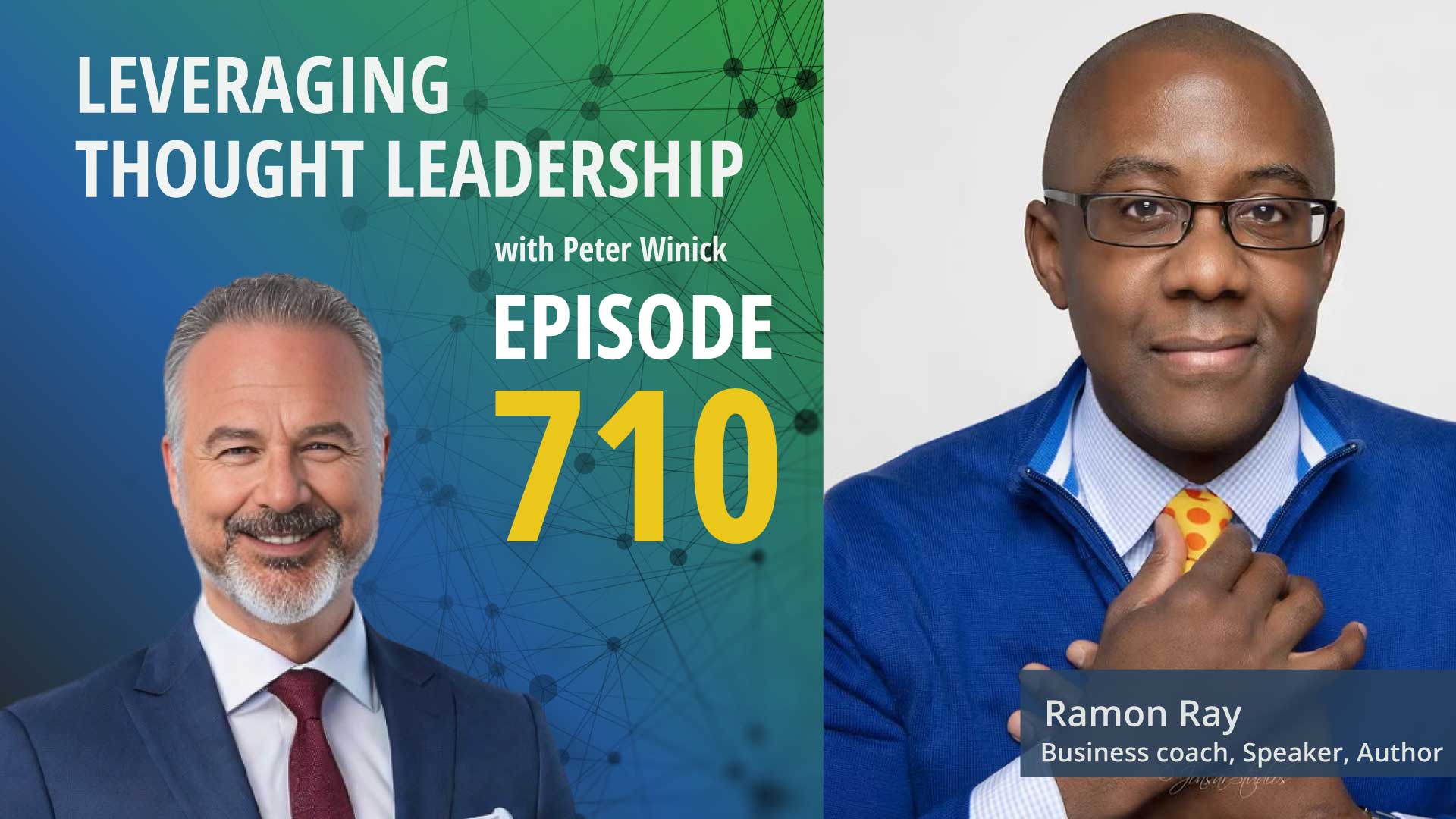



Lessons in speaking, sponsorships, coaching, and the power of being memorable
This episode explores how thought leaders turn personal brand, speaking, books, events, and coaching into connected revenue streams.
What happens when positivity becomes more than a personality trait—and turns into a business asset?
In this episode of Leveraging Thought Leadership, Peter Winick sits down with Ramon Ray, founder of ZoneofGenius.com, author of The Celebrity CEO, How Entrepreneurs Can Thrive by Building Community and a Strong Personal Brand, speaker, event producer, business coach, and advisor to small business brands.
Ramon has built his thought leadership around a clear market position: helping entrepreneurs grow with energy, clarity, personal branding, and practical business strategy. His work spans speaking, live events, content, sponsorships, coaching, and community. 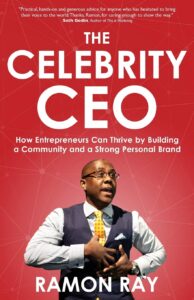
But the real lesson is not “be more positive.” It is sharper than that. Ramon shows how a distinct personal attribute can become a business advantage when it is connected to a real audience, real value, and real revenue.
Peter and Ramon explore how speakers and thought leaders can avoid getting high on their own supply. The job is not to be the star. The job is to serve the client, understand the room, and create value before, during, and after the engagement.
They also dig into the business model behind thought leadership. Events can feed coaching. Content can feed sponsorships. Books can feed relationships. A keynote can open doors. The pieces work best when they are connected by a clear brand and a consistent promise.
Ramon also shares why books are more than products. They are gifts. They carry authority. They create memory. They keep working long after the launch window closes.
This conversation is a practical look at how to turn expertise, energy, and audience trust into a durable thought leadership platform.
Three Key Takeaways:
- Your personal differentiator has to connect to business value. Ramon’s positivity and energy are memorable, but the real power comes from tying those traits to clear outcomes: better events, stronger client relationships, brand sponsorships, coaching, and community growth.
- Thought leadership is a connected ecosystem, not one product. Speaking, books, events, content, sponsorships, and coaching all reinforce each other. Each channel can create trust, generate leads, and open the door to another revenue stream.
- The best speakers serve the client first. A keynote is not about ego. It is about understanding the audience, making the event host look good, and delivering value that extends beyond the stage.
If Ramon Ray’s episode got you thinking about how speaking, content, relationships, and personal brand become real business value, listen to Peter’s conversation with Jill Schiefelbein next.
Both episodes explore how thought leaders turn expertise into revenue through visibility, service, referrals, and smart positioning.
Together, Ramon and Jill offer two practical models for building a thought leadership business that is clear, credible, and commercially viable. Listen to Jill’s episode here.
Transcript
Peter Winick And welcome, welcome, welcome. This is Peter Winick. I’m the founder and CEO at Thought Leadership Leverage. And you’re joining us on the podcast, which is leveraging thought leadership. Today, my guest is Ramon Ray. He is an author, a speaker, an advisor, a guru of sorts to entrepreneurs. And he’s been in this space for quite some time. So I’m honored to have him on today. So welcome aboard Ramon.
Ramon Ray Hey, Peter, glad to have you. Thanks for having me. Let me have some value for your audience and thanks for the amazing work that you do in the world to make the world a better place in some way, shape, or fashion. So glad to be here.
Peter Winick Thanks. Appreciate that. So let me start with one of my favorite questions, which is sort of, how the heck did you get here? Right. Like what was the, cause I’m always fascinated with the journey, with the path, with the serendipity of it all. Like how did, how did this happen?
Ramon Ray Sure. I mean, I think like many stories, we already know, you know, uh, how they, how they built it and stories of Wal-Mart, I’m not there at all, but meaning those stories that we know that have an affinity for us low, consistent work, cause I know, so well, and the bottom line is who I am today. As you said, yes, I am the founder of zone of genius.com. We help thousands and thousands of small businesses grow and start their businesses as a event producer, uh, genius talks as a business coach and more. And how I got there, uh the sort short of it is spent many years working at the United Nations. How I got, there was a lady in my church said, Ramon, you know, they hire extra people during the general assembly in the fall where all the heads of state come in, why don’t you apply and get some extra and get some work and get money and I applied there and I was there for over 10 years while there, Peter, I got bit by the entrepreneurship bug, you I discovered for me the internet and bulletin board and prodigy and all those kind of things and the two pivotal moments I can remember somebody asking me Ramon can you speak for us somewhere this was years later and I said yes to that and there got my professional speaking and then other thing was that hey Ramon, can you do some things for us and let us sponsor your brand. So the short of it.
Peter Winick Back that up a little bit. So when somebody doesn’t just randomly come up to, you know, an introverted actuary and say, Hey, can you speak to us? My friend, what was it about the things you were doing, your reputation, personal brand, like why would of all the people at the UN right there say, ah, this young fellow would be great at that.
Ramon Ray Yes. Good question. And again, that was a separate context. But I had my UN and then I had my quote unquote side hustle. So who got it?
Peter Winick We got it. Okay.
Ramon Ray Yeah, but um, but really a friend of mine and another tip lesson of the day is build good relationships a friend Of mine alone. I know you I know the work you do. I can’t be somewhere as I recall Can you speak on my behalf and okay my place and so I spoke and that was just one of many You know, it doesn’t happen overnight But you do that kind of thing over and over again and there goes your line of business as a speaker so that’s kind of how it started somebody who knew me saw value kind of like me and you let’s say and They opened the door for me and 20 something years later I’m an in-demand motivational keynote speaker.
Peter Winick Love it. Love it so break apart then your, let’s start with your work in terms of the, the gist and the essence of your book, your thought leadership and your content, and then I want to get into sort of the business side of that. So what is it that you’re mostly known for? When people think about you and your brand and your stuff, they say Ramona is the X guy. What, what do you hope access or where do you think access?
Ramon Ray What I hope it is and what it is could be different.
Peter Winick Well, yeah, yeah. It’s in.
Ramon Ray It’s in my subject line I think is probably the most thing I hope is unapologetically positive and a cousin to that is he’s high energy. Now does that that doesn’t translate into money off hand but honestly I think that’s what most of my professional friends will say Ramon made us deal good. Ramon was positive he was a dose of goodness in our life so that’s one. How does that translate I think?
Peter Winick But wait, wait, stay there. Cause that’s a personal attribute. I’ll attest to that because in every touch point you and I’ve had, I’m like, this is just a positive guy, right? Like, so that’s one of the takeaways. Now that being said, you know, in the course of my work and such, I don’t know that anyone’s calling me saying, Hey, Peter, do you, you know, a positive guys that I could send, spend a lot of money with, right. So connect the dots there for me.
Ramon Ray Absolutely, so when it comes to the three things I do, which are brands working with me, who are looking for influencers, that’s one line of work, two, those who want me to help them grow their business, or three, those who have come to the event that I produce, that ties in, because hopefully Peter will think, you know what, I remember, that’s right, this guy, I forgot his name, Ramon, he was just a great guy, don’t know exactly what he does, maybe, maybe he’s not a fit for you, but he’s easy to work with, he’s a nice guy, and he’s in the space in some way. I have a conversation and Peter, that’s all I need. I may not be the right fit for somebody to introduce me to, but the lesson learned for all, not just me, but to teach, to help others learn, is that I think that you’re right. It’s a personal attribute, but you can leverage the one or two unique gifts that God gives us all for a business. Peter, you may be a more stoic guy, as an example, stoic, more serious minded, but you may great with numbers, like that’s your special sauce. People may not remember you as the fun guy. It’s okay. They may say, but you know what, Peter? We gave you this problem. He like got to the problem quickly. That’s your gift. So stay.
Peter Winick There for a minute, because I think that, you know, part of your world is the world of a speaker. And I would say, most of my clients speaking is one of the bullet points on their resume, if you will, it’s something they do to some, it’s the top line item on their P&L. To others, it is an occasional thing. And, I think they often forget because it’s such a weird business in that, getting paid a ton of money for everybody to pay. Absolute attention, fly all around the world to see you. You’re treated like gold. You get the big suite in the hotel and blah, blah, blah, bla, bla. Right. Well, not all. Yeah. Well, we’ve all done the gig in Poughkeepsie and whatever. But my point is a lot of speakers get a little bit high in their own supply and forget that they’re in, they’re in the business of serving the client. Right. And the fact that the client got a hundred or a thousand or whatever, many people to show up and hear them speak. It’s not really about them. And I’ve seen some, some folks get so ridiculous in their demands or their this or their, you know, what they’re looking for, or I’ll do this and I won’t do this, and instead of a really good speaker does their homework and figures out, Hey, I’m here to serve you. What are the things you want me to say? What can I do? What can they do to make you look good? Oh, miss or miss or mister, whoever hired me. Right. And I think they, it’s not about you. And I think that’s an important piece for speakers to remember.
Ramon Ray I love that. And I think you’re right, Peter. No, if all of us are serving each other, if I’m serving the client, if I am doing the best I can, you’re 100% right. Then we would do, and I hopefully by God’s grace that it’s something I don’t forget. I mean, I have my issues I can improve on, but I definitely remember, and it’s not about me yet, but I want to get paid. I want it to be compensated. Of course, yeah. And so eventually it’ll turn back to me, but if I take care of Peter, Peter, okay, you invite me to think about Peter. Who’s coming? Peter, remind me what you do again so I can shine the light on you as I close and say, go see Peter. Yeah. Peter’s gonna be like, dang. Come to one of my events if you’re shining the light on me and we’re eating together. That’s how you
Peter Winick So you’ve got a couple of distinct lines of business, right? There’s the event piece, the speaking piece, the community piece. How do they, how separate are they?
Ramon Ray And how connect. Yeah, they’re introspective to some way, because I produce so much content, but the event businesses in my email newsletter and other publications that I have, people sign up and people are going to the unapologetically positive endear themselves like what Ramon has. I thank God for that. So that’s one aspect. And we want to come to Ramon’s event. We know it’s going to be fun and informative. First fun. And if you happen to learn something, that’s a bonus. So first fun, second informative. So that the event line. As they come to the event one, I can say, Hey, listen, Here’s what I’m doing. If you like this, if you want to work with me, do X, Y, Z. And so that will lead to the coaching side and the brand sponsorship. That’s a kind of a separate area because that I work with. There are other Oasis’s, but it’s somewhat connected because they’re seeing my content. They see Ramon out there as somebody who is a influencer. Like Mr. Beast, the super vocal he had with Salesforce. They saw him. He’s not in their demo, but they’re like, dang, this guy reaches hundreds of millions of people. How can we work with him? So that’s the center there.
Peter Winick Got it, so how. You know the barrier entry in some of these businesses is fairly low, right? A lot of people you go to an NSA conference or something like that. And there’s a lot of people that have dreamed of being a speaker because their friend told them when they gave a wedding toast to their brother-in-law, Oh my God, you’re so awesome, whatever, you know, nobody tells their friend you would be an amazing dentist and then they go to dental school, right. Like, wow, the way you floss is like no other, like you’re just the best flosser, you should really go for that, right, but. Some people, whether it’s charisma, whatever, and people push them to do that. What is it that you’re doing, have done, and will continue to do to stay on top of your game?
Ramon Ray Yeah, I think that a few things and one is opportunities like this. I say, yes, if I can add value to someone like Peter and I can, I can have a conversation with him, a smarter guy than me in many areas, it’s a yes. And that’s one saying, yes. Number two is I think to add value and to hone our craft. I’m on clubhouse quite a bit. The social audio app people have thought it was.
Peter Winick Okay, yeah
Ramon Ray But I’m there so much you, you can’t mess me up with a mic dropping screen out working a baby screaming, you just can’t, it’s, I’ve done it so much. And again, everybody has different expertises. So don’t everybody say, I want to be a speaker, but if you want to be a Speaker, the more practice you’re at it, you get the humor, you get, the line, you, get the serendipity, you get the, when the moment, when the pause for effect, all that stuff. You hone your skills, the more and more.
Peter Winick You do it. Right, right. That’s interesting. Where do most of your engagements originate? And I want I want to get into sort of, you know, industry specialization or geographic specialization? Is there a pattern of organizations that bring you on more than others or organizations, maybe the other side of that, that would ask you to come on board and say, you know, I’m probably not the fit for you. My friend, so and so would be better.
Ramon Ray Yeah, for the brand sponsorship side, it’s definitely those larger brands, usually the global brands that have a distinct line of business for small business, whether that’s a five million, 50 million, which is huge for this tiny businesses, whether it’s two, three, four, 10 million in sales. So that’s they have a some SMB component in their line item. Hey, work with you to be our flag bearer, my client, Bit Defender, they’re big, big as India security company. So that’s one. The other bucket, I think could be of So that’s a large B to B brand. Those who hire me to speak at events, uh, that’s usually a trade show and association, a conference like that. They may have smaller budgets, but they’re looking for a speaker. They may not all be able to hire Damon John. And to the point, the place that Damon John is at Cody Sanchez, uh many of the sharks, uh Simon Sinek and others, they may say, Hey Ramon, yeah, we, we hire these big dogs, but can you come in and host the event for us? Can you be added a plus one to maybe speak ahead of them? That’s where I shine.
Peter Winick Got it, got it. So it’s sort of in that space. Sometimes it’s interesting to realize who the, the six-figure version of the five, you know, figure speaker is and say, Hey, there’s a lot of people that can’t afford Simon or Damon or whatever, and park your ego. You can make a great living being in the sort of aftermarket for that. Or the, yeah, bring, bring it on. Right. Like, you, yeah.
Ramon Ray Live for 7,000, 10,000 25,000 all day or have Damon, but now you need a few others to sprinkle in. Hey, Damon is 150 is a hundred, whatever he is pay me 15 K 20 K. We’re good. I’ll see you next week.
Peter Winick Now, do you do a lot of your own negotiations or do you have people that handle that for you? Because that’s a tough issue for a lot folks.
Ramon Ray Yeah, generally I do it. My business is small enough to right now. I have a good friend of mine, Lee Hayes, and she’s a speaker wrangler to negotiate the deal, especially when you have good inflow, since mine are not so much, you know, eight times a year, 15 times a years, depends on what I want. Easy enough. And usually people come in if they’re the right company. Ramon, what’s your fee? 20, 25,000. We don’t have 20,000 we have 19. Is that okay? Yes, done. I’m gone.
Peter Winick Give me 19,000 and a bagel, right? Like, there you go. So I want to, um, send away a little bit into your thoughts on the publishing landscape, so tell me about your, your last book, how you chose to publish it and what the Delta is between what your expectations were and, and how it landed.
Ramon Ray Sure. I think if Seth Godin says books are a gift is how are they a gift to the gift to, the person who’s reading it because it’s something tangible could be digital, but something they can hold in their hands. They can remember, which is the emotional connection and the very few people read it, but that’s something from you they can get and, or the few percentage that do open it that may read it from cover to cover. They can learn my latest book celebrity CEO. People can download free stuff on that from celebrity CEO dot com. People have shown it to me with bookmarks. Said Ramon, this is a simple book that helped me to understand the power of personal branding. So I think Seth is right. It’s a gift to people and if you do it right, it’s a give to yourself that keeps on giving because yes, you may wanna sell your book, but I’ll tell you the little secret, not a secret. Me, I have hundreds of books in my garage. When I go to speaking events, I give them away. Now, A, hopefully sign up to my email list to get the book, that’s your car. And or Maybe I work with the event host and they pay me a little more, figure it out and we give it away and I get some amazing pictures and video.
Peter Winick Yeah, yeah
Ramon Ray Next event.
Peter Winick Yep. Yep. And I think the other thing that people don’t realize with a book, no pun intended, is it’s got a long shelf life, right? So you’ll probably, and you’ve experienced this, getting a lead from a gig you did five years ago. You’re like, I don’t remember being like, oh, that thing. But they held the book. Like I for one feel guilty throwing the book away, right. Like there’s just something bad. Like you don’t do that. Like it’s whatever. So it might be sitting around on your shelf and, and, you know, the whole book industry runs around. Launch date and release date and 90 days after and all that sort of stuff. But like a book, like you said, it’s a gift. It’s a personal thing. I like the framing of that. And then giving it away when you actually, the author hands a book to someone, whether they paid for it or not, there is this sort of psychology that goes there like, wow, Ramon went through all this energy and he gave it just to me and he maybe scribbled his name in it with a little smiley face or, you know, whatever, like that, like, I’m not gonna throw that out. That’s kind of a neat, I don’t have zillions of those things. That’s a different sort of thing. So, so what’s, what’s next for you? So we’ve got, you know, everybody’s wrestling with AI and what it’s doing and how you’re using it and all that. And this isn’t really an AI question, but what are you thinking about and hoping for the next 12 to 18 months in terms of what we, what what’s going to be the same in your business? What do you hope might be a bit different?
Ramon Ray Yeah, I have three or four people that are my North stars. One is Tyler Perry, Tyler Perry producer. He produces events. He has all kinds of things he does working with partners and he also acts in his own experiences. So Tyler Perry is one. Kevin Hart many people know he’s the comedian. He has a talent and he have other things that he does in movies and acting and producing, et cetera. Other person I’ll give an example to is Hala Taha. You’re gonna know her look of Hala Taaha. She’s an amazing YouTuber. One of the biggest podcast people around. So I say that, Peter. Because for Ramon Ray, it’s very simple. I will continue to be the talent, the show of being showing up unapologetically positive with a smile and fun, making people feel great happens to know the lens of that is going to be through business and those will fester into our foster into live events, in-person experiences, bringing people together. Number two, our online content podcast, live video and more. And then third coaching saying, Hey, if you want some of this I can help you or referring them to people like Peter and Peter works for you to help it do your thought leadership better That’s where Ramon’s going.
Peter Winick Love it. Love it. And maybe give an example of something you were excited about and didn’t work. So for example, when you talk, when you said clubhouse, I’m like, geez, I remember that during COVID. It blew up like nothing I’ve ever seen before. And maybe something was in the, you know, we weren’t leaving our house. We were, we were taking shower. Like the whole non-video thing was sort of interesting. And then I like, frankly, I haven’t heard that term in years, but you found a platform that you like. What are the things have you experimented with that maybe didn’t work and why.
Ramon Ray Oh, so many things in the past two, three, four years, Peter, post COVID, especially it’s been brutally tough for me. It’s been really tough to know who am I and what am I doing? Uh, so I’ve tried a number of things. I tried in fact, coaching before I had a community. I built it on mighty, mighty network, which is a great network, but it just wasn’t a fit for me is a bit too big for me, so I just opened up a school group. But the point is I’m going back into coaching. So I have a community, it’s recurring revenue. And sometimes Peter, you do things on the first time it doesn’t work out. But you keep at it, you innovate, you change it. Know it’s in the right direction, but maybe what’s right. I’m the right way you do it again. And so now I’m doing coaching and I’m loving it.
Peter Winick Yeah. What is it that you love about coaching? Is it the immediate sort of impact you can see? Or because there’s a self-selection piece, right? Like most jerks don’t want to be coached, right? Sometimes I would argue that those that need it the most are the least likely, but what is it? That you enjoy about.
Ramon Ray Sure. I think two things. One, I must say, I like the recurring revenue as a business. People’s 49 a month, it’ll go up to 149 a month. That recurring revenue is one part I wanted to do as a Business Thinking because I didn’t want to be beholden waiting for a brand sponsor. So this is very, I have to figure out how to break into coaching for recurring revenue. That’s one. But number two, Peter, seeing that people are really saying they enjoy it, they’re learning, they’re excited. It’s now invigorating.
Peter Winick Me. Oh, that’s cool. And you’re also, as a thought leader, learning from, I think a lot of times, whether it’s advisory or consulting or coaching, it feeds the brain in terms of, oh, there’s something people are thinking about. If I was only on the stage, I wouldn’t really know about that because they’re saying this to me, you know, privately. And then you hear it once, you hear twice like, okay, there is something in the zeitgeist now that people are anxious about this or excited about that or bored with this. Cool. Well, this has been a lot of fun. I appreciate your time. I appreciate your energy. And for those of you that can’t tell, it’s like the positivity is certainly contagious when you have a conversation with remote. So reach out.
Ramon Ray Thanks for having me, Peter, appreciate you.
Peter Winick To learn more about Thought Leadership Leverage, please visit our website at thoughtleadershipleverage.com. To reach me directly, feel free to email me at peter at thoughtleadershipleverage.com, and please subscribe to Leveraging Thought Leadership on iTunes or your favorite podcast app to get your weekly episode automatically.
