
The Business Behind the Keynote | Andy Freed | 713
The Leveraging Thought Leadership podcast is created by Peter Winick and Bill Sherman and produced by Thought Leadership Leverage.



How professional speakers turn thought leadership into lasting revenue.
This episode explores the strategy behind professional speaking, from speaker reels and client prep to shorter keynotes, pricing, follow-on opportunities, and staying relevant in a changing market.
What separates a paid speaker from a true professional in the thought leadership business?
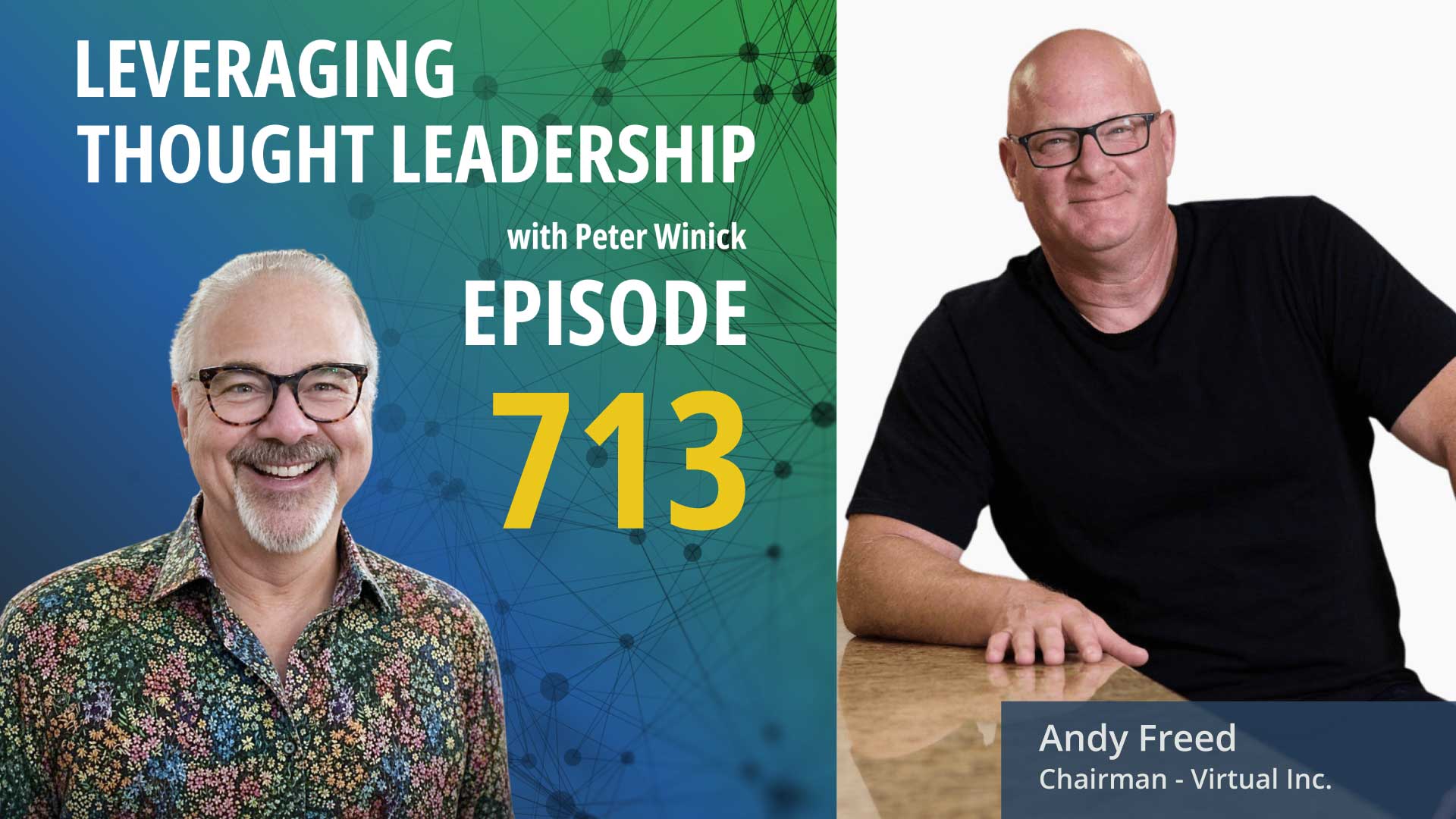
In this episode of Leveraging Thought Leadership, Peter Winick sits down with Andy Freed to unpack what it really takes to build a sustainable speaking business. Andy brings the perspective of a speaker bureau veteran, entrepreneur, founder of Virtual Inc, and author of Lead Like the Boss. His lens is practical, direct, and grounded in what clients actually buy.
Andy makes one thing clear: being good on stage is not enough. It is table stakes. Great speakers need sharp video, clear market positioning, and proof that they can deliver value in different formats. Big stages matter. So do boardrooms, executive off-sites, and virtual environments.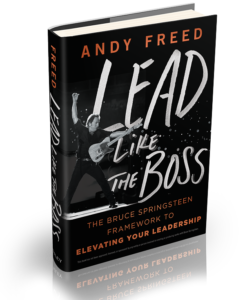
The conversation digs into what happens before, during, and after the keynote. Andy explains why the “gig” starts long before the speaker walks on stage. Every client call, every prep conversation, every detail matters. The best thought leaders do not show up and perform a canned talk. They listen. They adapt. They speak the client’s language.
Peter and Andy also explore how a keynote can become the opening move in a larger thought leadership business. That might include consulting, advisory work, training, leadership development, or deeper client partnerships. Andy’s answer is direct: nail the keynote first. Deliver so much value that the client naturally asks, “What else do you do?”
They also tackle shorter keynotes, changing audience expectations, the role of books in speaker fees, and the pressure on thought leaders to stay relevant. Andy reminds us that longevity in speaking requires renewal. Your core ideas may be evergreen. But your examples, applications, and relevance need to evolve with the world.
For speakers, authors, consultants, and experts who want to turn thought leadership into revenue, this episode is a practical look at what separates amateurs from professionals.
Three Key Takeaways:
- Great speaking is only the starting point. Professional speakers also need strong positioning, clear marketing, and credible video that proves they can deliver.
- The keynote starts before the stage. Prep calls, client language, audience needs, and customization can make or break the outcome.
- Relevance drives longevity. Thought leaders need to refresh their examples, applications, and delivery so their core ideas stay connected to what clients face today.
Enjoyed Andy Freed’s take on building a professional speaking business?
Then listen to Peter’s conversation with Keld Jensen.
Both episodes go beyond the keynote. Andy focuses on positioning, video, client prep, and creating value before and after the stage. Keld adds a global view on standing out, using books strategically, and building demand in the market.
Together, they show what buyers value, what speakers need to prove, and how thought leaders can turn expertise into sustainable revenue.
Transcript
Peter Winick And welcome, welcome, welcome. This is Peter Winick. I’m the founder and CEO at Thought Leadership Leverage, and you’re joining us on the podcast, which is leveraging thought leadership. Today is going to be fun. My guest is Andy Freed. Andy just wrote a book called Lead Like the Boss, which is a reference to Bruce Springsteen that we’ll get into a minute. But he’s got another gig, right? Like so his main gig is he is the chairman of his company, right? He’s got 20 plus years of experience. He’s gotta be in government. Harvard University, Master of Public Policy. So interesting fellow, but somehow, amidst everything he’s got going on, he’s like, I gotta write a leadership book based on Bruce Springsteen. So I had to take advantage of this opportunity. So welcome, Andy, welcome aboard.
Andy Freed Thanks for having me here.
Peter Winick Cool. So first, let’s start with some of the back story. When you and I spoke a little while ago, you mentioned how many Bruce shows you’ve seen. So this isn’t a theoretical. This is an applause.
Andy Freed How many times have you seen The Boss?
Peter Winick But about 95 shows. Got it, got it. And what was it, you know, what was the spark? Why did you say, I gotta write a book about this and here’s how I need to frame it. Because there’s been lots of books written around Bruce in terms of just movies. There’s like, this isn’t the first time somebody’s noticed that this is an interesting gentleman. Right, but tell me your take on this.
Andy Freed So my take, I’ll be honest, a little bit of self-preservation. So I was coming home from a show in Phoenix, Arizona, in about, I think it was 23, 24, and said, geez, I got to justify that. I just went out to this thing, um, you know, because, uh, lo and behold, there was a client meeting there, but I stuck around for the show. So I got, I should write something about why I was there because I learned a little something when I was, there wrote something up on LinkedIn that Wind up. Not really going viral but getting pretty picked up by a lot of people who said this is interesting stuff because I wrote about just the lessons I had learned from watching the way Bruce interacted with his band and watching the ways he interacts with the audience.
Peter Winick So stay there for a minute. So I think that’s, you’re going through that quickly, like of course I wrote that up. LinkedIn and other platforms, you know, with Substack, whatever it is you might be using, are great places to throw stuff up just to see if there’s a there there, right? So you didn’t say, I’m gonna write this little piece on LinkedIn, and then that’ll turn into a book, and then I’m going to do this, that, and the other thing you’re like, let me just share this, right. And then, you now, there was validation. And lo and behold, there’s some.
Andy Freed And it went on, absolutely.
Peter Winick Yeah, so that tells you that you struck a nerve because it’s probably not what people typically expected to come out from Andy Right based on your brush what you’re doing. Whatever’s you’re like, why is this dude riffing about? You know a springsteen show and what he observed. So anyway, I think that’s a good takeaway for folks to say Well, here’s something I’m doing. It doesn’t dead-on fit into what people expected me, right? But let me throw it out there and let’s just
Andy Freed And that was what social media was supposed to be. Yeah. It was supposed be social. I mean, idea that you could throw out ideas and actually have some dialog about stuff. It’s turned into something else, but there’s still elements where you can do that on social media, for sure. You’re absolutely right there. Very cool. So now, how do you determine what the gist of the book is? Yeah, so that got it started and then I started looking deeper at it. So what first drew me to it? I’ll say kind of the first lesson I kick away. Um, and one of my first things that I, that I still love so much about Bruce shows was as the kind of example of Bruce’s leader is, you know, Bruce at the end of a show, you on the last tour, he played with 19 people on stage while at the of every show. He retreats to the back of the stage and as they’re leaving, leaving the stage to the end the night, he shakes their hands, whisper something in your ear to thank them for a good show. And that’s whether it was. You know, Gary Calland, who he’s been playing with since 1973, or there’s people on the tour last time, they just started playing with this tour. Um, or he thanks every one of them. And what they say is for 10 seconds every night, Bruce Springsteen makes me feel like the most important musician on the face of the earth.
Peter Winick Let’s stay there a minute as a business guy. You’re a chairman. Number one, a one to 19 ratio is not ideal, right? It’s been taught that it’s one to eight, one to 10, one to 12, whatever. And I’m assuming that just because there’s 19 people on the stage, there’s probably another multiple of that doing things. If you don’t, no, no question probably another 50 or I don’t know whatever the math is, but it’s not 20. So The fact that he acknowledged each of those 19 and could have said, well, the chorus, Sally leads the chorus and there’s three ladies in the chorus. Like I just talked to Sally. Those are not my, there’s a skip jumps or whatever. To go to each one and acknowledge them. Now we know this as leaders, right? This is not a new revelation. But when you saw that firsthand and said, oh, wow, because when we make up our own.
Andy Freed To see, you have to see that he also gets that, you know, Jake Clemens gets a hug, somebody else gets a high five, somebody else gets something whispered in his ear. He knows what matters to them. But like, imagine if like, when you hear them say, like, I feel like the most important musician on the face of the earth. Imagine if your whole company felt that way every day because of something you
Peter Winick Well, the other thing I would say is most rock stars, not most, but many, and I think this applies to most CEOs or many, ultimately become divas. You know, when you’re the CEO, you’re not worried about the Uber, the car’s waiting downstairs for you. Somebody took care of your lunch.
Andy Freed I’m the first one to leave the stage. Yeah. Right. I’m gonna leave the state before you guys do and drink and I need all the refreshments.
Peter Winick And we could justify, and this even goes to organizations where I’ve even got my own elevator and nobody goes in my elevator. I have my own bathroom in my fancy, like, so there’s this diva-ness around CEOs. And we can talk about why that is, their time is valuable and all that sort of stuff, but it’s the opposite of sort of rock star, or it’s similar to rock star behavior, but it is different than what you saw with Bruce.
Andy Freed And what Bruce gets also is, you know, it’s a hundred years ago, but William James, who was the father of American psychiatry wrote the deepest human need is the need to be appreciated. Yeah. Think about that deeper than sex, deeper than money, deeper than power, the deepest need we have is that need to be appreciated, you know, so that idea and understanding that and understanding, just show an appreciation to somebody so important, just that moment of saying, you know I see what you do and it matters. Yeah, like how powerful that could be for a leader. So that’s what started it for me was realizing that like, okay, that’s an idea worth spreading.
Peter Winick So now you decide, now you throw it up on LinkedIn, right? And you’re like, there might be a there there. At what point did you say, or did somebody influence you to say, okay, let’s do a book? That there’s a potential for a book here.
Andy Freed I think seeing the response to LinkedIn page, which wasn’t like, it wasn’t like a million people responded, but a lot of people who I respected responded saying, well, this is kind of interesting. Uh, was there more here? Um, and just to your point on LinkedIn, you’re throwing it out there and now you’re getting that response and thought, well maybe there is more here and you know, maybe I should start thinking about it more. So then it was when I kept going to shows, I just kept thinking about it more and I’m still enjoying the show. But I’m also like looking at other little things and thinking about what else is going on.
Peter Winick Okay, give me an example of a nuance or something that you picked up because you went in with this sort of lens of, hey, I’m not just here to have a couple beers and enjoy the show. I have a theory here and I might want to learn something. So what are the
Andy Freed I think just watching Bruce’s energy on stage and recognizing that, you know, Bruce at any moment is the pinnacle of energy in the arena. There is nobody that cares more or has more energy in the arena than he does. And contrast that with how many times have you watched somebody just phoned it in for a PowerPoint presentation?
Peter Winick But stay there. So I mean, I think we could even extrapolate this to performers, whether it’s Broadway, theater, whatever, where you’re like, somebody says, oh, you went to see so-and-so, and it was a phone it in. Like, yeah, I got to see a band that I’ve loved for 30 years. Was it, I’m disappointed, right? I can’t say they didn’t do a good job. It’s not like they slung the notes off cue or the music was bad or the, you know, can’t nail it down to something like that, but it’s like. Yeah, and you know tomorrow they’re going to be in Pittsburgh and just doing the thing, right?
Andy Freed Yeah, but by contrast, Bruce’s play Born to Run Live, 1,878 times in his career. And every time he brings it his all, because he knows that there’s two kinds of people in the audience. People that have seen him 95 times and are comparing him to the other times they’ve seen him and seeing as he lost a step, and people are seeing him for the first time and want to see what all the fuss is about. So he brings and he gives it his All. And if he’s at a nine in energy, the audience can be at an eight. You know, but if he comes in at a five, you can’t expect the audience to be at an eight or a 10, um, that’s just not going to happen. And that’s what I think a lot of leaders forget when they’re presenting or when they were talking to a group is they’ve got to be the pinnacle of how much somebody cares about that material. You know? If I’m sitting there and saying like, well, it’s the staff meeting. I do the staff getting every month. I’m just going to phone it in. I can’t except my staff to be any more excited than I am. You know they’re going to come if I’m at a fire, they’re coming in at four. And that’s something which Bruce gets, is that I’m gonna bring it my all so that the audience can hit that level as well with me.
Peter Winick All right. So I want to go in a little bit of a different direction. And that’s this, you’re a business guy. So you’re CEO of a company, right? How big is the company? Uh, virtual and no. How, and how big is that? How many, we’re about 200 people, right. So this is a significant company. There are a lot of demands on your time. There’s a lot things that you can be doing. What are you hoping happens or what are some of the outcomes that you’re hoping because the book is fairly recent in terms of its pub date.
Andy Freed What do you, what’s your hopes? Well, what I would say is more than anything, what I’ve tried to kind of build my career out of the company is the notion that the job of leaders is to create more leaders. You know, that’s like job one of leadership is create more leader. So I’ve been trying to do that in my company and I’m hoping the book’s a chance to do that outside of the country as well. Some people can read it and learn a little something about leadership. They can hone their game. They can up kind of how they’re doing and I am creating more leaders Man, that is mission accomplished for me as a leader. Okay, so how does the-
Peter Winick So explain to me how the book helps with that, by reading it?
Andy Freed Yeah, so the book really follows the arc of a Springsteen show and talks about the leadership lessons that comes out of each kind of moment of it, and gives people practical tools and tips that they can do and that they bring into their own leadership. Because I’m not a big theory guy. I’m looking to write a big, you know, Harvard Business Reviews kind of story on here’s how I hope things work. I’m big on, again, I’m a roll up your sleeves, you get a hoodie wearing CEO. That wants to get things done. And if I began done faster, great. You know, so a lot of what the book’s trying to do is draw a very short line between that theory and practice. Yeah. Somebody can leave with some things they can really do.
Peter Winick Would be kind of fun if the next time I went to a brew show in the merch section, other than overpriced sweatshirts, there was a book section. That would be good. That would pretty cool. I’d be all for it. Now, how, if at all, might it benefit you professionally and or the business?
Andy Freed I mean, for me, it’s a little bit of this. It’s a, you know, what we’re doing right now. It’s exposure. You know, so our business is a business that runs tensor on in the background of a lot of organizations. Okay. Um, you, so. Our business is that we run technology consortia and standards bodies. So we work with a lot multi-company companies that are multi company organizations that are trying to get something done. For example, we worked with a group that was trying to create the standard for mobile payment, which is about 300 companies coming together to make that work. Okay. Nobody knows we exist. We’re virtual. That’s why we named our company that we were, we exist in the background. Right. So the book is a little bit of a stepping into the foreground of this is what we do and this is our secret sauce, you know, so it’s an attempt to kind of drive, drive some exposure for the work that we’ve done.
Peter Winick So stay there for a minute. If you’re in the background, I would imagine your competitors are in the background. So in a, and I don’t mean this in the wrong way, we’re all being commoditized. So a lot of the work that you do is a commodity. So now if I’m looking at three providers, and one of them’s got this kind of out there, maybe not out there but CEO that sees the world a little differently and wrote a book on Springsteen, it’s going to at least get me to pause and go, Well, that’s interesting. Tell me more.
Andy Freed I’ll say the people that pause on that are also frankly the people I want to work with Yeah, and that’s something I learned along the way is like well You know if somebody looks at that and says that guy’s a little out there, and I don’t really want to Talk to the springs. You know that that crazy bald guy that likes springsteen. Hey, that’s great I saved myself some time because that was gonna be a miserable working relationship. You over
Peter Winick Right. So I’ve never seen an RFP that says, and, you know, attach the manuscript of the book your CEO wrote about a rock star, right? Like, I’ve never seen that, right. But I’d like the self-selection piece, right, if they’re only looking for the lowest price or the service, you know, the things that are the things, then that’s kind of going to be a boring relationship. But I would imagine it’s definitely a conversation starter. There’s lessons there, you know, and I don’t know if you’re doing this, but you could offer a potential client So, hey. I’d be happy to come in and talk to your team about this, if those resonate.
Andy Freed Absolutely. And look, I go back to years ago, I worked for Senator Paul Song, that’s when he was running for president. He remembers when he first got out of college, he went to the Peace Corps. Yeah. And he was one of the first Peace Corps classes and he went after the Peace Corps and interviewed at a law firm and they said, what’s this Peace Corps thing and described it. And he said it was, you know, the greatest experience of your life. And they said well, I guess we can overlook that. I know from the law path. And he walked out of the interview and said, this isn’t for me. And I remind my kids when they interview that like your interview in the company too, like whether or not it works for you and, you know, with clients, it’s the same thing of like, if somebody looks at this and says,
Peter Winick backwards on that right so if there’s a self-selection process that goes on on both sides of the equation I would guess that your retention rates of clients are higher your margins are good your business is stable you don’t get hit often with our biggest
Andy Freed That’s more than anything, life is more fun. Your work is more fulfilling. You work with people that wanna work with you, that you wanna work, that are your kind of people. Life’s too short to do anything else.
Peter Winick Fantastic. Any other surprises that have come to you either from the process of writing a book, because that’s usually a place where light bulbs go off to people, and or the phase you’re in now, which is sort of helping, you know, supporting the launch and getting the book out into the world.
Andy Freed I want a couple of things. One of the things that in terms of the process of writing a book is it really forces you to understand why you know the things you know, and that’s sometimes a really hard thing to figure out at 57 years old of, you know when somebody, you went, when you say, for example, you’ll lead, geez, linear messaging doesn’t work, but you’re talking points aren’t as effective as, as other ways to approach things. And then somebody will why. Well, I just know that I’ve been at this for a long time. Well, okay, tell me why, give me an example. So the books really forces you to go back to the fundamentals of why you know the things you know.
Peter Winick So questioning a belief and did you uncover some that said, you know, I always thought X, but on further reflection, I’m actually wrong and need to reconsider and maybe Y is true.
Andy Freed Sometimes it’s that or sometimes it’s that, well, I didn’t really understand what was behind that. You know, if you can’t go back to what we’re saying earlier about appreciation, you know, going back to well, it’s not just that it’s really nice to shake somebody’s hands. It’s that it the deepest human needs somebody has and that there’s science behind that and there’s a lot of things within the book that I also will talk about some of the brain science and neuroscience that goes behind some of this, you know, that just the idea of. You know, why am I more at ease listening to Bruce lyrics in the car? Then I get tense when my daughter has control of the radio and Taylor Swift comes on, even though I like some of her stuff, but familiarity also is something which, you know, it goes back to brain science.
Peter Winick Well, there’s a comfort it’s it’s sparking memories that you might have had hanging out with your buddies on the shore or whatever Right, like there’s connection to it that you probably don’t have to Taylor Swift as a 57 year old
Andy Freed That’s as simple as understanding that familiarity in our reptilian brains told us that we weren’t under threat. And when you hear something different, your immediate reaction is, this is unfamiliar. I wonder if there’s a threat out there. And just understanding that and how that can give you greater comfort. That goes also to, for leaders, understanding that that’s why it’s so important to repeat messaging that would be helpful. Same message the same way seven times, people pick up on it, but they get comfortable with it in a way that they don’t if I change it every time. And I might think changing it every times is keeping it fresh for them, but really I’m adding to their anxiety and adding to the uncertainty. Unintentionally. Unintensionally. Right. Unproductively.
Peter Winick Right, which is not a good thing to do. All right, so I’m just gonna, just for the record, I’m hoping there’s not a sequel to this book on the Swifty School of Management or something.
Andy Freed I’m going I’m not quite a yeah, I’ve been to the Taylor Swift show. I got to the era’s show with my daughter I had my friendship bracelet on Okay, but I wouldn’t say I’m all in yet as a Swiftie.
Peter Winick Good. I would say ditto. I don’t think we’re the demographics, right?
Andy Freed I’ll say this, the line for the men’s room has never been shorter than when I went to the Iris tour at Gillette stadium. Um, I mean, that was really the, you know, the cherry on the Sunday, if at all.
Peter Winick So on that note, I appreciate your time. This has been great, and thanks for sharing your story, Andy. Appreciate it.
Andy Freed Here has been a lot of fun.
Peter Winick To learn more about Thought Leadership Leverage, please visit our website at thoughtleadershipleverage.com. To reach me directly, feel free to email me at peter at thoughtleadershipleverage.com, and please subscribe to Leveraging Thought Leadership on iTunes or your favorite podcast app to get your weekly episode automatically.
