
The Performance Paradox: Why High Achievers Stop Growing | Eduardo Briceño
The Leveraging Thought Leadership podcast is created by Peter Winick and Bill Sherman and produced by Thought Leadership Leverage.
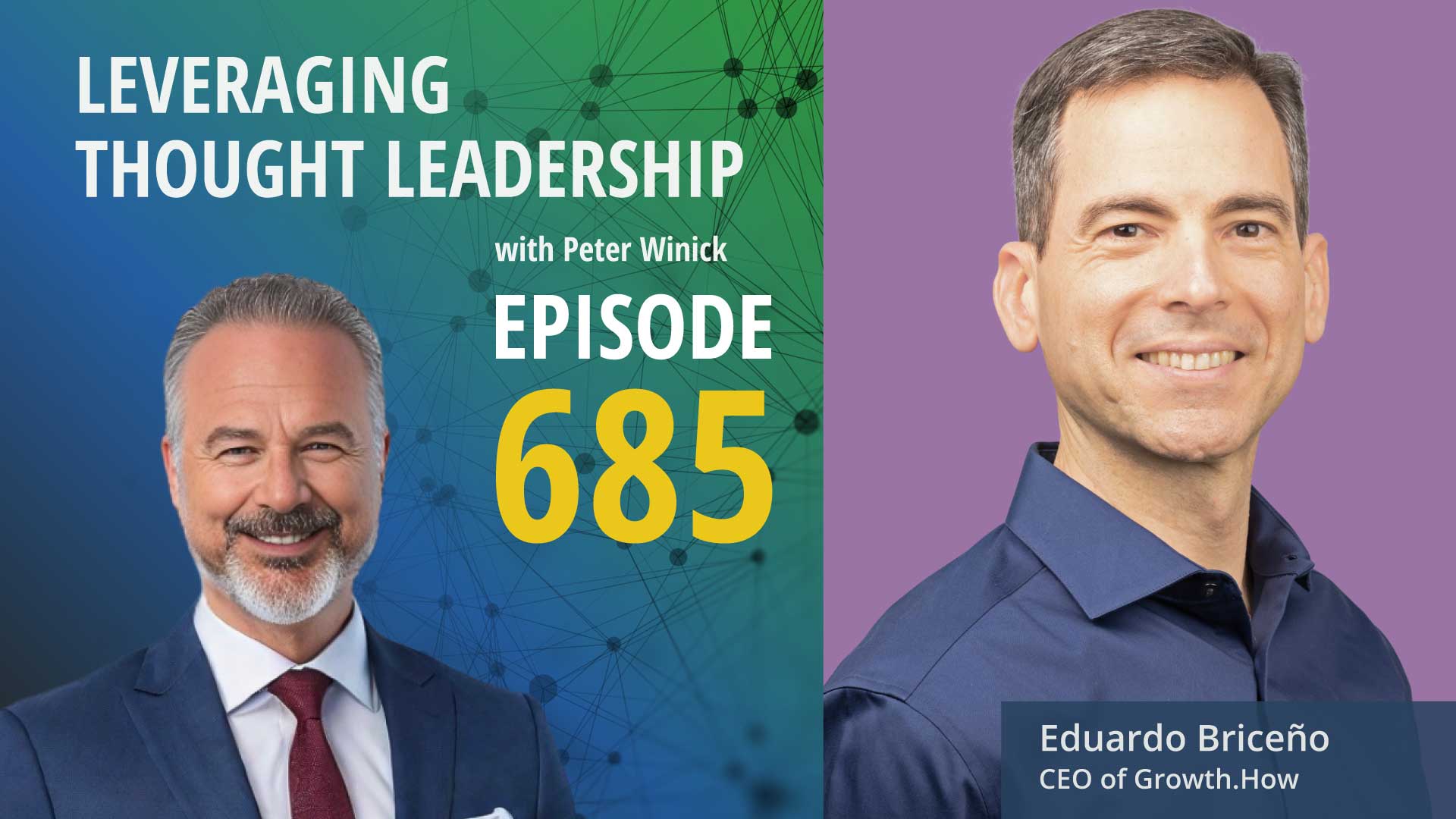



How Top Leaders Balance Learning and Performance for Long-Term Success
This episode explores the “performance paradox” and why organizations that stay constantly in performance mode quietly limit their own growth. Peter and his guest unpack the difference between the Learning Zone and the Performance Zone, showing how leaders can intentionally design time, systems, and culture for learning instead of just chasing results. They also dig into how to turn growth mindset from a buzzword into practical frameworks, keynotes, workshops, and long-term programs that change how people work every day.
Are your top performers actually holding back your organization’s growth?
Today on Leveraging Thought Leadership, Peter Winick talks with Eduardo Briceño, global keynote speaker, CEO of Growth.How, and author of “The Performance Paradox”. Eduardo is one of the leading voices on growth mindset in organizations, building on 16+ years of work with Carol Dweck as co-founder of Mindset Works and two TEDx talks that have each passed 4 million views. Together, they unpack how leaders and companies can move beyond one-off inspiration and build true learning cultures that deliver sustained performance.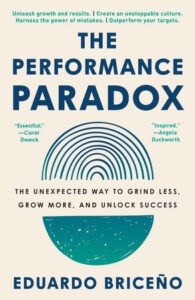
Eduardo explains his core framework: the Learning Zone and the Performance Zone. Most organizations live almost entirely in performance mode—chasing metrics, staying “on,” and delivering
results. He shows why that approach quietly caps growth, and how deliberately creating Learning Zone time is the unlock for innovation, resilience, and long-term excellence.
You’ll hear how he designs keynotes and workshops like a master teacher, not a showman. Eduardo starts with clear learning objectives, then engineers’ experiences that shift how leaders think, behave, and make decisions. It’s not about delivering a great “show”; it’s about making sure people leave seeing their work differently and ready to act.
Eduardo and Peter also explore what it really takes to build a growth-mindset culture at scale. They talk about partnering with organizations over time, embedding the ideas from The Performance
Paradox into leadership programs, talent systems, and everyday language. Eduardo shares why well-intentioned “growth” initiatives often backfire—and how to avoid the hidden traps that send mixed signals to your people.
Finally, they look at impact. Eduardo discusses how he went from frameworks to a major Penguin Random House book, how he gathered more than 100 real-world stories to bring his ideas to life, and why he’s now focused on working longitudinally with clients instead of just doing single events. For CEOs and senior leaders, this conversation is a playbook for turning your organization into a place where people are both learning faster and performing better.
Three Key Takeaways
- Always-on performance quietly caps growth; organizations need deliberate time and space for the Learning Zone, not just the Performance Zone.
- “Growth mindset” only works when it’s operationalized—through concrete systems, habits, and experiences that teach people how to learn and improve, not just that they can.
- The biggest impact comes from embedding these ideas into leadership programs, talent systems, and culture over time—not from one-off keynotes or events.
If this episode reshaped how you think about performance and the Learning Zone, your next stop should be our conversation with Phil Geldart on Unlocking Human Potential. Both episodes tackle the same core challenge—how to move beyond “always on” performance and build a culture where learning, experimentation, and behavior change are baked into the way work gets done. Eduardo gives you the strategic lens and language (Learning vs. Performance Zone, growth mindset in action); Phil dives into how to design experiential learning that actually sticks and changes what people do on Monday morning. Listen to both and you’ll walk away with a playbook that connects big ideas about learning culture to concrete tools for driving performance across your organization.
Transcript
Peter Winick And welcome, welcome, Welcome. This is Peter Winnick. I’m the founder and CEO at Thought Leadership Leverage, and you’re joining us on this version of our podcast, Leveraging Thought Leadership. This is our LinkedIn live version. And today my guest is Eduardo Briceño, who is a colleague and a friend and someone I’ve known and admired for several years now. So just brief background on Eduardo as a thought leader. He’s got a TEDx talk that he’s done. That’s done amazingly well. He recently in the last year and change had a book come out that if you haven’t gotten it, go get it. It’s called The Performance Paradox. He is the CEO of growth.how. He was the CEO and co-founder of Mindset Works with Carol Dweck, and he’s done a lot of other interesting things along the way. So welcome, Eduardo, thanks for coming on today. Thanks Peter for having me. So let me ask you the sort of the setup question. How the heck did you get here, right? So Stanford MBA. You did your tour as an investment banker because it’s sort of mandatory. If you graduate Stanford, you got to go do that. But then here we are a couple of years later and how did all this unfold?
Eduardo Briceño Well, a lot of unexpected twists and turns. And actually, I did invest in banking before Stanford. So, I went to Stanford to leave the investment world, but I started not really having any particular interest. And in school, I ended up not being very interested in what I was learning or anything in particular. And so I, had no better idea than just try to get good grades and try to get to a good university and try to study something where I could get a job that pay well. So, I ended up in Wall Street in New York, and then I spent five years in venture capital in Silicon Valley, investing in technology companies, and I learned a ton. You know, like just meeting with entrepreneurs all the time who were pitching us their ventures and working with colleagues who A were like super nice, but also like had a couple more decades of experience than I did. But eventually I started like, so what actually happens and like my body got sick. One day, I just started experiencing pain and I didn’t think much of it because I wasn’t afraid of pain. I was used to like working through pain. I had a lot of perseverance, but with this particular thing, it was kind of my form was flaring. And it was getting worse and worse and worse. So I went to the doctor and the doctor said, oh, this looks like a repetitive strain injury, you need physical therapy. So I started doing physical therapy twice a week. And it ended up being something that was really, really difficult to diagnose. Like I ended up seeing lots of doctors, acupuncture, spiritual things, yoga. I tried so many different things until eventually was diagnosed as something called myofascial pain syndrome. And, and I learned a lot about the root cause I had to not only change. So before that, I saw doctors as mechanics, you know, I abused my body. I go to the doctor, they fixed me, but I realized I actually, like doctors in this case, couldn’t just fix the issue. I had to fix the issue, but also the root causes and to fix the root causes I had, to change lots of things like how I was eating, how I sleeping, exercise. But one of the things that I learned is that something that was missing in my life was a sense of purpose in a sense of meaning, a sense of doing something useful that was making an impact on somebody else.
Peter Winick So if I were to pause here and say, but wait, at first you said you want to go to school, study, get a good job, make good money. So you’re doing all these things. Check, check, check. So you should be thrilled, right? You’ve got a nice paycheck, you’ve got good job and it’s good from the outside. But you’re hollow, you’re miserable, your body’s telling you stop this, right.
Eduardo Briceño Before my body broke down, I thought, wow, I just won the lottery, right? I mean, you know, I’m in working in 3000 Sand Hill Road, this beautiful place, and getting paid all this money and this interesting job. And I grew up in Venezuela, everybody I knew, like nobody had worked in this kind of job before that I knew. And I didn’t know any entrepreneurs. And my dad worked for like an oil company for 30 years. So it was, it was I was not exposed to a lot of these things. And, and so I think what happened is, yeah, my sense of purpose before that was to get good jobs, to get promoted, to, get great reviews. And once I did those things and once I had kind of, and I had the money I needed, like, you know, my wife and I are not big spenders. We like to live below our means. I looked, okay, if I spend 10 years, 20, 30 years in this job, am I going, like, what am I going to feel like I’ve gone, you know, in, in 20 to 30 years. And for a lot of people, I think that can bring a lot of meaning and purpose because I think they’re being useful. They’re serving on boards. They’re your wisdom. They’re helping these organizations succeed. I actually felt the sense of, like lack of authenticity because I was sitting on boards without any operating experience. Just repeating what I heard in other board rooms and I didn’t know what I was saying was a good idea, you know, so I was
Peter Winick Where did you go with that then? So obviously, I mean, I can say this with, because I know you, you’ve definitely found your purpose and you’re definitely crushing it there. How did you close the gap? Like were the things that you tried and said, ooh. Yeah. Do a farm out or whatever. But how did you find your way?
Eduardo Briceño Well, first it was like a big tempest. I didn’t know, right. It was like I was lost. And I saw my wife, Alison has switched jobs a few times. She became a teacher and she, when she became a teacher, I saw a change in her that I realized I had, she had found her sense of purpose and I didn’t have that. So I wanted that. So I went to Stanford to grad school. To explore what that purpose could be for me, what I could be doing that was meaningful to me. And so there I got a master’s in education because Alison had gotten me interested in that. I got an MBA and I worked on a few different like social entrepreneurship ideas and projects and there I met Carol Dweck and I was introduced to her because, and I think this is relevant. I had shared with my classmates what I was interested in. We know what kinds of things I was interested in, so when Carol was looking for somebody with a business background, she was spreading the world. Hey, do you know somebody with this type of background? When one of the professors asked one of my classmates, the classmate thought of me, right? Because I had been vocal.
Peter Winick I want to unpack that because I think that’s really interesting in that a lot of folks on their journey to find purpose, they keep it quiet. Hey, if I don’t know, let me just stay on my way and find it on my way, but by kind of broadcasting in it, well, not, I wouldn’t say broadcasting, but sharing with those that you trust that those that you admire colleagues, people you respect, Hey, here’s kind of what I’m thinking, I don’t really know the answer. Um, sometimes the answer comes to you because you’ve had the courage to share.
Eduardo Briceño Absolutely. That was the case for me, you know, like a professor went to one of my classmates, I say, Hey, this other professor in the school of psychology, who’s looking for somebody like this, you, know anybody. And, you now out of 300 classmates, he thought of five people who might fit that mold and he, he reached out to the five of us. And so then I met with Carol. I started meeting with her every two weeks to get to know each other. And we ended up, you no partnering and co-founded mindset works together. So that was, that was the beginning of kind of my work on growth mindset six, you not 16 years ago.
Peter Winick Well, just to back for those that don’t know, I mean, Carol Dweck is a legend in her own right in terms of the book growth mindset, and then you were on the business side of that, not the IP creation side of it, so you, you kind of very few people in this business, I can think of two or three really start more as back of the house on the business site and then move to the front of the House. So you, your own version of thought leadership is, I would say sort of growth mindset is kind of foundational to that. But then talk about your journey as a thought leader where you came in front to come up with your own work.
Eduardo Briceño And that was also kind of not planned and unexpected. So when I, when I co-founded mindset works with Carol, my idea of what I would do was I would be an entrepreneur and I would lead software as a service company that serves schools to help schools foster cultures of learning, growth mindset cultures, and I led that company for over 10 years, but a few years in one of our OR members came to me and said, Hey, Eduardo. You need to get out, you need to get outta the office. We’re trying to evangelize growth mindset. Nobody knows who you are. And I grew up very, very introverted. And I also, we were bootstrapping the company because I didn’t want to raise money because I had the impression that investors were not very patient, right? And we saw this as a marathon, as a life journey. So we bootstrapped the company and we were under resourced. And those were some mistakes that I made there too. But I was just kind of like heads down in my office working and, and a board member said, you have to get out there. And, and, so a couple of months later, Carol was asked to do a TEDx talk and she couldn’t do it so we, so then I said, okay, like, this is a good opportunity for me to put a lot of effort into it, it could, it could be something that helps us evangelize and spread out the word. And so I did a 10 minute TEDx Talk. And just if we’re talking about my kind of journey as a, as a speaker, cause now that’s the main thing I do. In those 10 minutes, that first kind of public speaking experience that I had, I was so anxious and uncomfortable that first, like I wrote the script and memorized it really well. I thought if I get to stay so I can just for 10 minutes I can just spit out what I memorized. But also a strategy that I used is I just looked at the back wall of the room. I didn’t look at anybody because I thought I would get flooded with like trying to figure out what people were thinking and I’ll start. Yikes. Just, you know, just losing my train of thought. And so I got out there, I spit out the words for 10 minutes and I got off stage and I was very relieved. And after that, the talk became viral. It’s been watched by over 4 million people. And so then I started getting asked to do more public speaking. At that time, it was more in school districts, which were our customers. And so, I started doing a lot more of that. I got more comfortable. I got better at it.
Peter Winick I was in here a second because I mean, this is the, a human example of the growth mindset. Right. So you’re like, wait, there’s this whole new thing. I never fancied myself a speaker. I mean a lot of times when I, in my work dealing with hundreds of speakers, you know, some of the stories they tell, they were the three-year-old at the Thanksgiving table, getting up and acting and speaking or the extrovert or they did theater or they, they did improv, they whatever. And now all of a sudden you’re the sort of the, the executive, the, you go at the adults in the room and like. Now you got to literally be thrust on the stage and not just a little stage, but the TEDx stage, and then it takes off. Now it’s like, there’s two reactions. Can people could have to like, oh my God, that was a fluke or let me figure out how to master this crap. I kind of dig this because it’s in service of the mission. Sounds like you kind of went the latter route.
Eduardo Briceño Yeah, it was, I digged it because it was in service of the, of the mission. And this was all surprising that as I started doing it, and at the beginning it was more, some of the events were after that were kind of smaller and interactive and discussions and more of like a, a teaching experience, right? So I was more like a teacher and I really, it’s surprising to me, I really enjoyed being… In direct conversation with people rather than kind of leading and managing people who did the work, I really enjoyed getting into the psychology, into the domain and crafting experiences that would take people from one, from where they were to where we wanted them to be and to help them make progress. And so A, that I enjoyed it was surprising to me and B, that I, I started becoming good at it and people were really appreciative of what I was doing and, and part of that was when I got a master’s in education, I studied the science of learning and that really served me really well in crafting kind of the expedience…
Peter Winick Keep there a minute. In my experience, there are really two types of keynoters. There’s the, and I’m using a general terms here, right? So there’s the showman, right, where it’s all about them. Everything is stage. Everything is this lights, camera, action. They go on, get introduced and bang, they put on the show and the energy is there and the charisma is there and whatever. However, the audience is just an object, right. They, they’re, you know, whether they’re in front of a hundred people or a thousand people. It’s all about what they’re doing and how they’re delivering it. Then there’s folks, and this is the category I’d put you, they’re really teachers who happen to speak. And the teachers are more interested in, as a result of the 30, 40 minutes an hour that I’m going to spend and have the privilege to spend with this group, I want them to walk away seeing, thinking, believing, behaving, doing something differently than they did at the getting it’s not entertainment, you know, because there’s this whole It can be entertaining, but it’s not like bravo, bravo. I just saw a good play and then whatever, whatever you want to shake them up a little bit and get them to think and get him to learn. That’s a very high, it’s a much higher bar in my opinion.
Eduardo Briceño Yeah, well, it is definitely what I seek to do. It is why people hire me. And so one thing that I learned in working with teachers is that it’s really important to start lesson plans or to plan lessons with the learning objectives. Like that’s where you start with the goals, right? Sometimes people go in and, okay, I’m just gonna go on stage and talk about something. Like it’s very important. To understand and align with the clients on what are we trying to achieve? What are the goals? And then the sign back and obviously what’s the context? You know, what, what are people, where are people now? What is the context and then how do we, how do we make progress from that to the goals. And so I enjoy that having said that, you know, the, the entertainment and the energy is also really important. It’s something that, that I’m working to grow. So recently I spoke at, um, universal studios in Orlando and it was a full day. Of different keynotes and they had me open the day. And when I was speaking with them that they hadn’t, they hadn’t decided to, to hire me yet, you know, they were really excited about my work, but they said, the only thing that I’m not sure about that and I want your perspective on that, they asked me. We, this is an opening of the day. We want people to get energized. We want to get jazzed up for the day, you know, do you think you can deliver on that? And, and so I said, yes, I think I can do that because I, I’ve done it before, but it is more of a challenge. It’s more of an growth area for me. And I, and I spent a good amount of time planning for those kind of first kind of six minutes and, and They, they went really, really well and, and the day was amazing and people were like super jazzed and now they’re going to have me go to their Hollywood location. Like, so it’s, but it is a growth area and it is important, but I think, you know, the, the reason people hire me is because they are trying to have their people, whether it’s the leaders or other professionals grow, right? Learn something useful and change in some way, transform and make progress in the process of transformation. And for that, I think they need like powerful insights. They need to learn like powerful strategies and in an effective way. It’s not just me telling them all this stuff. Right, and it means getting this in their brain.
Peter Winick Yeah, it’s not just charisma and stories and all that. So stay with them. So now the journey is you go from sort of the operator to running the business to learning the skills to be on the front. And now fast forward a bit, you’re focused on growth mindset. Where does the idea of the intellectual property underneath what now lives in the performance paradox come from? Where did that come from?
Eduardo Briceño Sure. So, what happened is that I started doing a lot more public speaking, keynotes and workshops, and also getting a lot more interest from businesses. Cause after Microsoft started being very interested in growth mindset in 2014, I started working with them and then other companies became interested. And in doing workshops with especially senior leaders, I, I shared different frameworks that I came up with trying to help them in one of the frameworks in particular. Was super helpful. It got people’s lights, you know, eyes to light up and it led to great insights and discussions and that, you know, I saw that that was something worth sharing. So, I went back to the curators of my first TEDx talk and I said, Hey, I have this other idea and framework that is really useful. How about I do another TEDx talk about that? So, I did. And that talk is also now being viewed by over 4 million people. And that’s about the difference between the learning zone and the performance zone. And that is the basis of the performance paradox. And so, but, but part of how I had come to that insight is just in working with Carol and others in that, you know, in order to grow and to be motivated and effective learners, we need to not only believe that we can change and grow, which is a growth mindset, we also need to understand how and build the systems and habits to do that. And often people think that the way to improve is just to work hard. And that’s not the case. And so that that’s what we unpack in the performance paradox. And so it’s, you know, frameworks associated with that. And we can talk more about that, but that’s in learning from people like Carol Dweck, like Anders Ericsson and others, and then from practitioners. And then in supporting people in workshops and keynotes in seeing how these ideas were useful, that’s when let that’s. Then led to the talk and to the book. And the book was an opportunity to dive a lot deeper into the research and to stories and interview people and continue to evolve my thinking. And obviously share the world.
Peter Winick If you’re enjoying this episode of Leveraging Thought Leadership, please make sure to subscribe. If you’d like to help spread the word about our podcast, please leave a five-star review at ratethispodcast.com/ltl and share it with your friends. We’re available on Apple podcasts and on all major listening apps as well as at thoughtleadershipleverage.com/podcast.
Peter Winick Let’s go backwards on the book a little bit, because you and I met, I think it was right at the beginning of the pandemic. Yeah. Maybe moments before. That’s right. And then the, so this is, you know, so four plus years ago, whatever, and the book wasn’t on the radar at that point. And then all of a sudden this book opportunity was thrust at you, and just, and I don’t want you to tell the story, but just to give people sort of the setup here, you know most people pitch and pitch and pinch a book to a major publisher and it could take. Months, years, whatever. And then they’ll decide on alternative publishing routes and whatever, whatever, you weren’t really even in book mode then. You had developed the models and the frameworks and the ideas that now live in performance paradox of this performing zone and learning zone, which are interesting, because there is a time to put the points on the board. And that’s not a time when we’re learning. That’s when we were doing what we do. Then there’s a time to be backward and say, hmm, need to grow a little bit. But then there’s Book thing again, this is the theme of like nothing was really linear or planned and but it’s connected. How did that come to be?
Eduardo Briceño Yeah, for me, that was not planned either. What I was pursuing is the purpose, right? The impact of like helping promote a world of learners and learning organizations. So yeah, I did not plan to be a speaker that I used to explain how that happened. I did no plan to an author. What happened with that is I was in the process when we met of transitioning out of Mindsetworks because my job had become public speaking. I was full time doing that. And I really enjoyed it. I got a lot of fulfillment from it. So we did a multi-year transition process where my close partner, Lisa Blackwell now, now leads mindset works. And, uh, in that process, I reached out to you because I wanted to become a thought leader in a deliberate way. Think about strategy, learn from experts like you about how to do things well. And, and so I was in that. Process. I didn’t even have a website at the time. I didn’t have anything. And in, in that process, when I was evaluating kind of how to, how to proceed, I reached out to Chip Conley, who I had read his book what peak and it had impacted me. I had never met him before, but I, I asked him a very simple question, like, Hey, you know, do you have a recommendation for a consultant on thought leadership that you’ve worked with before? And he, I just, I was just hoping that he would just reply to my email, but he replied saying, Hey. You know, happy to talk about that. I would love to learn about your work too. How about we have a 20 minute call. So that was so generous of him. And then in that call, he suggested, Hey, have you thought about writing a book? I was like, well, you know, maybe like in a few years in the future, like that’s, I just didn’t see myself as somebody who was ready to write a book. And, or I didn’t think that a publisher would be interested in, in publishing a book for me. But he said, Hey, like, do you, you know, I think I know somebody who could be possibly interested, who knows, like do you mind if I introduce you? And so he introduced me to a literary agent who, who happened to be interested and happened to know, uh, the editor of Carol Dweck’s book, and she was interested in a book to follow up mindset. And so it was, it just happened that the plan is aligned and they were interested in the book for me. And a month after that, without a proposal, we had a contract, right? So it’s all of a sudden I went from. Not even considering a book to a month later, I have a contract, I have to deliver on a book, so I had to draw off everything, strategy website, you know, I didn’t have a website for a couple of years after that still, and yeah, just, just dropped everything to work on the book.
Peter Winick Well, a couple of, you know, lessons there in that, you know, Chip to me, I’m actually halfway through his latest book, learning, learning to love midlife. Yeah. Which I resisted until I realized like, listen, look in the mirror, I’m in midlife with like, um, but Chip’s been a friend and a client as well. But it’s really interesting that when you reach out to folks, particularly in this thought leadership community, that you love their work, you admire their work or you’re just curious and whatever. The level of generosity that I’ve seen behind the scenes, because there’s nothing in it for Chip, per se, to do this or that or whatever. And what an amazing outcome, right? So most, I would say, of any profession I’ve ever been exposed to, thought leaders are far more generous and willing to say, I got it, you have to talk to so-and-so, or let me make an introduction or whatever, but they wouldn’t do that or couldn’t do that unless you’re able to articulate to them where you’re at, where you are stuck. It’s not just. This braggadociousness of look how great I’m doing, but here’s kind of what I’m thinking, or you know, you admiring Chip because he’s accomplished so much as a thought leader and in business and in so many domains that when he planted that seed in your, in your head, you’re like, Hmm, that’s someone I should listen to that someone I respect.
Eduardo Briceño Absolutely. And, and he’s been so generous. He’s become a close mentor. He, he’s supported me on the book and other things. And, um, and I have experienced the same thing, you know, uh, thought leaders and speakers and authors, they definitely support each other, which is fantastic.
Peter Winick So talk about the book journey, because I always say that writing a book for an author is kind of like doing a home renovation. No one ever comes back at the end and said it was done under budget and took less time than I thought, right? And actually, I would also say that with a book, the finished product is never exactly what the vision of it was early on, where with a home rental, at least maybe you thought you were adding a room or the kitchen’s gonna be blue or whatever, but what did you learn in that journey? Because that was a fairly long process for you.
Eduardo Briceño It was. So when we started, the team came together and we got the contract. We wanted to do the book in a year. And, uh, so I was like, wow, that sounds really aggressive. I, and I feel like I’m not ready. That’s why I wasn’t working on a book in the beginning with, but I’m going to give it all. You know, I’m gonna draw up everything else and give it. One thing that I thought, and, I agree that I think it’s true that I was particularly weak on was stories. I mean, I had stories. But I didn’t have like deep stories. I didn’t have super interesting stories. I didn’t have the usual stories. And so one of the first things I did is I interviewed over a hundred people. Uh, and that was super great to, to uncover stories, but also to explore frameworks and to, and, and to think about things and to observe people’s stories and make, come to conclusions on that, but, also I worked with. Like expert Writers and editors. And so, you know, I was the content expert, but it was really helpful to also work with book experts, right. And it was the collaboration that I think definitely takes longer, but ended up in a much better product. So one of the things I learned, for example, was just my voice for this book, you now, what was it supposed to sound like, how, how deep on the stories or the ideas should I go? Well, what, what should be kind of the pace of it? How quickly do I move from one thing to another? What kind of language should I use? And that took a lot of like a lot of feedback and revisions. And we probably took a year just for me to get a sense of what the book was supposed to sound like.
Peter Winick So a couple of thoughts there in that there are, we look at it on a continuum. There are some nonfiction business books that are very model process. Call it six sigma as an example, right? It’s process methodology, agile framework, whatever. And your book could have fallen into that trap if you wanted, because that’s the part of the richest that you bring to the conversation there is you’ve got these beautiful models and frameworks and such, but when it comes to a book, because I’m a human, right. I need the stories to bring it to life. So what you did was brilliant. A, you’re self-aware enough to rely. I don’t have a lot of stories. So most people would say, well, let me think of the stories that I know, me, my world to fill in the models, the better way to do it is what you did, let go out and interview a whole bunch of people. And that wasn’t just random. You didn’t go through the proverbial phone book, but you, you were very thoughtful in how you selected those people say, Ooh, I need 10 stories that match up to this model’s 10 stories, that match up with that. And that’s what makes the book brilliant and rich is you’ve got the combination of the stories that are so eclectic and broad and diverse, connected to the model, and you’re sort of pulling those things all together. And I would also imagine you developed a lot of friendships and relationships from those calls.
Eduardo Briceño For sure. Yeah. So it was really fun to reach out to what I prioritize was reaching out to people who are fantastic kind of learners and performers, people who are fantastic getting better and delivering excellence. So I reached out to those people in different domains. And then I would always ask, Hey, do you know, and I asked other people I knew, do, you know people who were fantastic at learning and at performing? And so I actually I never finished it, but I have like a mind map of how I reached all these hundred people and it’s really fun to see like, you know, who introduced me to whom and you introduced me to a bunch of people and they introduced me to others and they introduce me to other people. And so, but yeah, my publisher is Penguin Random House. So they wanted something that was broadly appealing, not something that was generally appealing to kind of people who just wanted theory and frameworks. And so that’s one reason why the stories were really important to make it accessible and also that makes it accessible for my clients, companies, to be able to like make big bulk purchases for their people and then for the book to be a useful resource for them as they build a learning culture.
Peter Winick So the book’s done, it’s been out a year and a half, something like that.
Eduardo Briceño It’s been out seven months.
Peter Winick Oh, okay, I thought it was a bit like, been on my desk for longer.
Eduardo Briceño Yeah, yeah, I definitely sent you an early version.
Peter Winick Yeah. So talk about what’s next now. So now at seven months, you’re past the intense promotional stage. We always want to promote books. And I’m a big believer in going long on a book and not just going on three months of promotion, but you know, this is an evergreen book. I don’t even remember what year Growth Mindset was published, 15, 20, over 20 years ago? 2006, so almost 20 years. Almost 20 years, right? And that book is just as relevant today to the right person as it was the day it was published. I see the same path for yours, so now why? Now you’re in sort of world-class published author, speaker, the patterns that I see and the non-patterns here are there’s a gap and you grow and you learn and then you excel. What’s next? What’s around the bend for you?
Eduardo Briceño Well, on my work, first on the book, you know, I got an email yesterday from an editor that they are now getting ready to plan for the paperback version. So I’m excited about that. There’s been 10 foreign publishers who have bought rights and it’s going to come out in other languages coming up, but like you said, the promotion now is, it’s just embedded into the work I do when I do keynote through workshops, then the book is just embedded in that rather than doing things like specifically for the book. Most, I mean, around the launch of the different versions of the book in different languages. There might be specific things like that I do for the media, but that’s, that’s the book, uh, most of the time I am doing keynotes on workshops, which is the core work that I did, but what I’m most interested in growing and I’m working with you on this. Serving organizations more deeply and more longitudinally, right? For a long time, rather than in an event that has a very specific time. And often when people hire me, they have an initiative going on to develop a learning culture. They have people internally that are going to do things after, you know, I activate and I educate and I am part of a bigger, much bigger initiative. But I want to explore how I can support more broadly in that bigger initiative in different ways. And I think we’re early in that process, but I’m collaborating with you on that. And yes, that’s where I’m trying to push myself and grow.
Peter Winick Well, I think that’s a, I just want to unpack that a little bit in that most thought leaders, speakers, authors, et cetera, get the market pushes them to be event-based clients pay you X to do Y common, you know, come to San Francisco or come to Miami and do this thing for this group for an hour and maybe there’ll be a follow on or something like that, but to have your intellectual property embedded into the fibers of an organization, whether that’s as licensed and part of a hypo program or as part of an onboarding or wherever it may be part of the language, you know, growth mindset has become part of a lexicon, a business, like a trusted advisor or something like that. But as a business model to really embed your work there, as opposed to an event, leads to people developing the capabilities and growing and learning. I always look at events as really awareness. You know, now people are aware of these ideas and they can either choose to lean in or not. They might say, Hey, that’s interesting, but not for me. Or that might work here, but. But when they lean in, I love this embedded. Model that, you know, that we’ve been working on. And I think it’s really, really a great way to sort of move forward because it’s not just about income. You know, if we circle back to the passion, passion is connected to impact. So if I say to you, how do you know I’m a gym bug gab, you can say, well, I sold a lot of books. Okay. Or I spoke in front of 50 groups last year and each group had X number of people, but now when you think about the impact of how many people inside of larger organizations that are going to get exposed to your work in bits and pieces and programs over the years, that’s pretty cool and exciting.
Eduardo Briceño It is, you know, and you’re right, it is about the impact. And yeah, if you’re trying to evolve culture, right? Like a culture of learning or a growth mindset culture, then it needs to be embedded into all the systems and habits and behaviors of the organization. That means it also, it means that it can’t be like just a third party hero, you, know, who comes and does things like the organization needs to. Be genuinely interested in this and put resources on it and partner, but, but what I’m hoping is that, you know, I can be a partner in a resource, right. To help kind of guide and provide useful resources and, and feedback and consulting along the way, because there, there are a lot of things in this that are counterintuitive. You know, you might think that you might do something that you think is promoting a growth mindset. It actually like has counterintuitive negative consequences. And so having an expert along the way. Is helpful to increase impact, to make sure that what you’re doing is having the impact that you hope it has, but it also can’t be done just by the external person, it has to be a partnership.
Peter Winick Right. They have to own it. So as we start to wrap, what advice, either do more of, or don’t do, or something in the middle, might you have for someone who is in your shoes five years ago, 10 years ago? Right? Like they’re on the journey, but there’s lots of other things. They haven’t hit the levels of success that you’ve had. What would you suggest to that person?
Eduardo Briceño Well, you know, I, I think you, you, I would, I’m going to ask you the question because I think, you’d know a lot more about this than I do, because for me, I didn’t plan to be doing what I’m doing right now, right? What I did is I became passionate about a particular purpose and impact. And I went to pursue it in different ways. I, uh, I was an entrepreneur. I wasn’t trying to become a speaker or an author, and I was in many ways like in the right place at the right time at key moments. And so for, for somebody who wants to become kind of a speaker or an author, I, I don’t have a lot of insight, right? Uh, I could have hypothesis, but that’s not what I’ve done. And, and, I think it is very difficult, like, you know, Anders Ericsson, the late Anders Erickson said, if you want to build skill. Deliberate practice is super useful and super reliable. You can build skill, you can build knowledge, but that doesn’t really translate to building fame or often not even building wealth. Like those are different things. They also involve luck and circumstance. And I think to be a thought leader, you need competence, you need commitment, but you also need credibility and you need to differentiate yourself from other people. And I think that’s something that I don’t know how to do in a deterministic way. Like there are a lot of people who have a lot of expertise and they’re not kind of in the, in the ice of the market. They’re not differentiated. I’m going to hire this person and pay them a lot of money because they are different from everybody else. And so how do you differentiate yourself and build credibility? I don’t know. I would ask you that question.
Peter Winick Just like a teacher to turn a question around with a question, I don’t think there’s one way to do that. I think that that is, the answer to that is what is the right strategy for you so that you have the clarity that you need so that can make the choices that you to. Because I think part of what happens is when you are passionate, one of the risks of being passionate, because passion’s a good thing, but anything to an extreme not so good, right? One of the risk of being so passionate is we say yes to everything or we don’t have structure and discipline. Like even you made deliberate, incredible discipline during the process of writing the book saying, I’m willing to turn away a lot of business. I need, this is my priority and it’s going to cost me a lot in opportunity costs to have my mind clear to sit and think and research and whatever. And, and that’s, that’s important. Right. So I think it’s having the clarity that you need to effectively prioritize what you’re going to do and how you’re gonna do it, because too thought leaders. Because they’re passionate and they’re good people just say yes to everything. And there’s lots and lots of spinning plates, but is there, activity is not productivity. And I think you’ve been really, really good around what are the activities that lead me to be productive directly to where I wanna go. And we all like to think we control the world being incredibly open to serendipity, luck and all that. So I think it’s a combination. That’s how I would answer that. Yeah, that resonates. Cool. Well, there’s been a lot of fun. Always enjoyed talking to you. One thing I would say as we close here is I’ve been around this, this space for 20 years almost now. And there are very few that I’ve seen that are so client focused and so, I don’t want to say perfectionist cause that makes it seem like obsessive, but like your focus is never about, Oh, what did they think of me? But what is the outcome the client wants? What are they hoping to achieve and how do I help them get there? And I love the way that you come up with ideas and tweak them and You know, I’ve had the privilege of seeing you present live and then obviously remotely and all that for lots of years. And it’s amazing stuff. And I wish you the best on the, on the journey.
Eduardo Briceño Thanks, Peter. It is a true joy and pleasure and privilege to work with you. So I look forward to continue your journey ahead.
Peter Winick To learn more about Thought Leadership Leverage, please visit our website at thoughtleadershipleverage.com. To reach me directly, feel free to email me at peter at thoughtleadershipleverage.com, and please subscribe to Leveraging Thought Leadership on iTunes or your favorite podcast app to get your weekly episode automatically.
